
Dancing on the Volcano: Dr. Heger
Dr Heger Continues to Shine After a Change of Generations
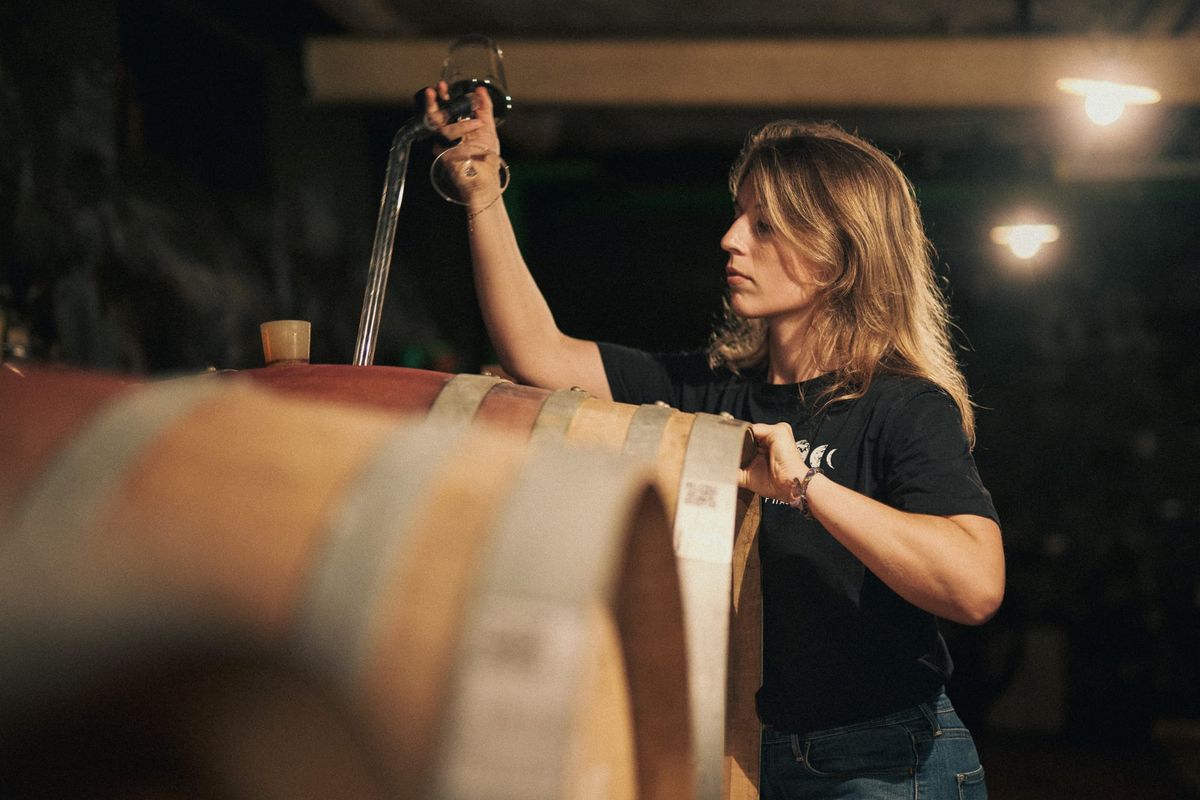
By Frank Ebbinghaus - last revision: 09.07.26
Anyone wishing to fathom the soul of Kaiserstuhl wine – indeed, of Baden wine as a whole – cannot fail to visit the Dr Heger winery in Ihringen. One reason lies in the estate’s family tradition stretching back more than ninety years; it is now run by the fourth generation and, since 2020, has been in the hands of women for the first time. This continuity has gone hand in hand with a strong commitment to quality, which at Dr Heger has long set the benchmark for Baden wine altogether. The Dr Heger wines exemplify all the ideals (and perhaps also the clichés) of Baden wines to a tee: their inviting sensuality and generosity, in which one seems to discover the landscape and the people. Also their elegance and finesse, which one would otherwise expect to find a few hundred kilometres to the south-west in Burgundy.
Ever since Joachim Heger began taking the reins bit by bit in the early 1980s – fully assuming control ten years later – this winery has steadily developed into one of Germany’s leading estates. Joachim Heger was not only able to rely on his great talent and skill, but also benefited from climate change. It’s hard to believe, but even in the supposedly warm climate of the Kaiserstuhl, the Pinot varieties sometimes used to fail to ripen fully. Stuart remembers Joachim Heger telling him at the end of the 1980s that the definition of a poor vintage was the Pinot varieties not achieving 13% alcohol in the top sites, and that happened in years like 1980 and 1984.
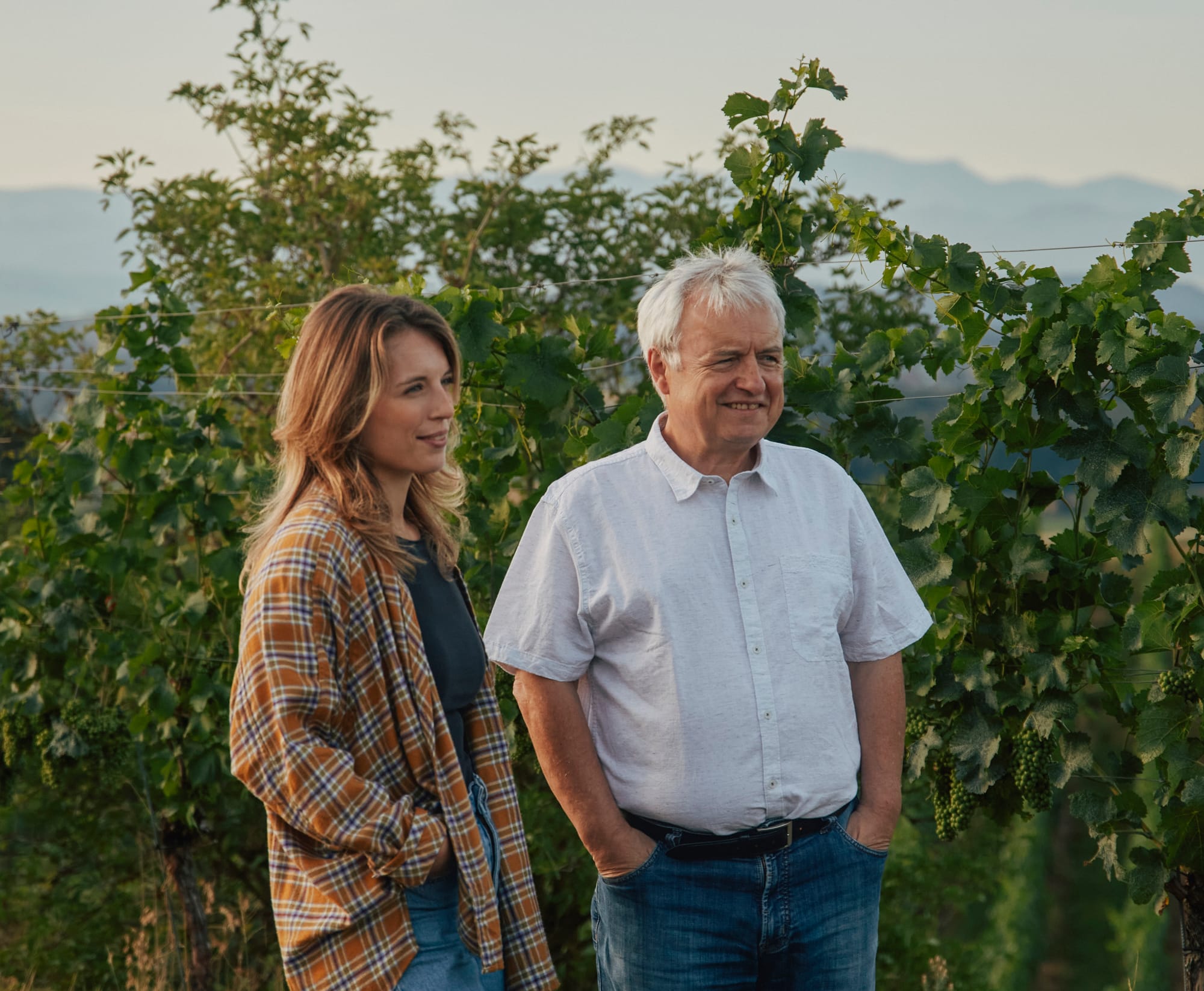
Even today, Rebecca Heger, who runs the winery together with her sister Katharina, reports sometimes late-ripening grape varieties remain green on the vine – although the Ihringer Winklerberg vineyard site is by no means cool climate. In fact, it is one of the warmest vineyard sites in all of Germany due to its sheltered position and warm air coming up through the Belfort Gap from the South of France. Today, climate change is causing a certain degree of unpredictability regarding weather conditions, particularly during critical phases of the ripening process. Rebecca told us that several times in recent years, immediately before the harvest the vineyards were hit by heavy rainfall, which scuppered all the plans she'd madefor picking.
Winemakers cannot influence the weather. But they can influence everything else that’s conducive to producing fresh, balanced and elegant wines with the sensuality of the Kaiserstuhl. And in this regard, the winemaker Rebecca Heger (her sister Katharina handles the marketing) has already achieved outstanding success. The wines that Stuart and I tastde at the estate in early April leave no doubt as to Rebecca’s ambition and skill. She came across as very focused and precise in our long conversation.
There is much room for speculation about a harmonious generational handover at the estate, and one should not always trust everything people say about themselves. Yet with Dr Heger, the extent of continuity is very striking. Rebecca is not a young Wild Thing, but a young winemaker who deeply values her heritage and continues to successfully refine her craft, producing elegant, fresh and balanced terroir wines from the warm Ihringer Winklerberg and Achkarrer Schlossberg sites.
This was particularly evident when we compared one of Rebecca’s wines with the 2017 Ihringer Winklerberg Hinter Winklen Gras im Ofen Grauburgunder GC – a wine which Joachim Heger made – it demonstrated just how refined, even noble Grauburgunder from the Kaiserstuhl can taste (97). The 2023 vintage counterpart, for which Rebecca was responsible, is almost as good and, with additional aging, perhaps every bit as good. The collection of white GGs from the 2023 vintage is of very consistent high quality The same applies to the 2022 Pinot Noir reds, which, moreover, display enormous finesse. At the very top is the extremely refined, seductive Ihringer Winklerberg Wanne Häusleboden GG 2022, which is comparable to top Burgundian red wines.
Speaking of terroir: these days, the word sometimes rolls off the tongue all too easily. It does not simply refer to the vineyard site or the soil on which the vines grow, but to the complex interplay of altitude, aspect, microclimate and soil type – in short, what makes the wine characteristic, or even unique. Many winegrowers use the T-word in their marketing under the motto: a great wine is made in the vineyard; humans cannot add anything decisive to what nature provides. Taken to such an extreme this is, of course, nonsense. After all, the grapes grow in the vineyard. And if the winegrower lets nature take its course, they will fall to the ground and turn to vinegar. Almost every good wine has aromatic or textural components that seem to lend it a terroir-driven flavour. Currently, it is in vogue to regard the „saltiness“ derived from the grape skins as the ultimate sign of terroir. However, working to extract this from the grapes is a winemaking decision.
Particularly with winemakers from the Kaiserstuhl region, who are not only blessed by the sun but are sometimes plagued by by too much of it, one should put this to the test. The loess soil, often metres thick, which stores heat and water, guarantees ripeness and richness; with the right ambition and skill in the vineyard and cellar, this can lead to attractive wines that are not just big and bold.
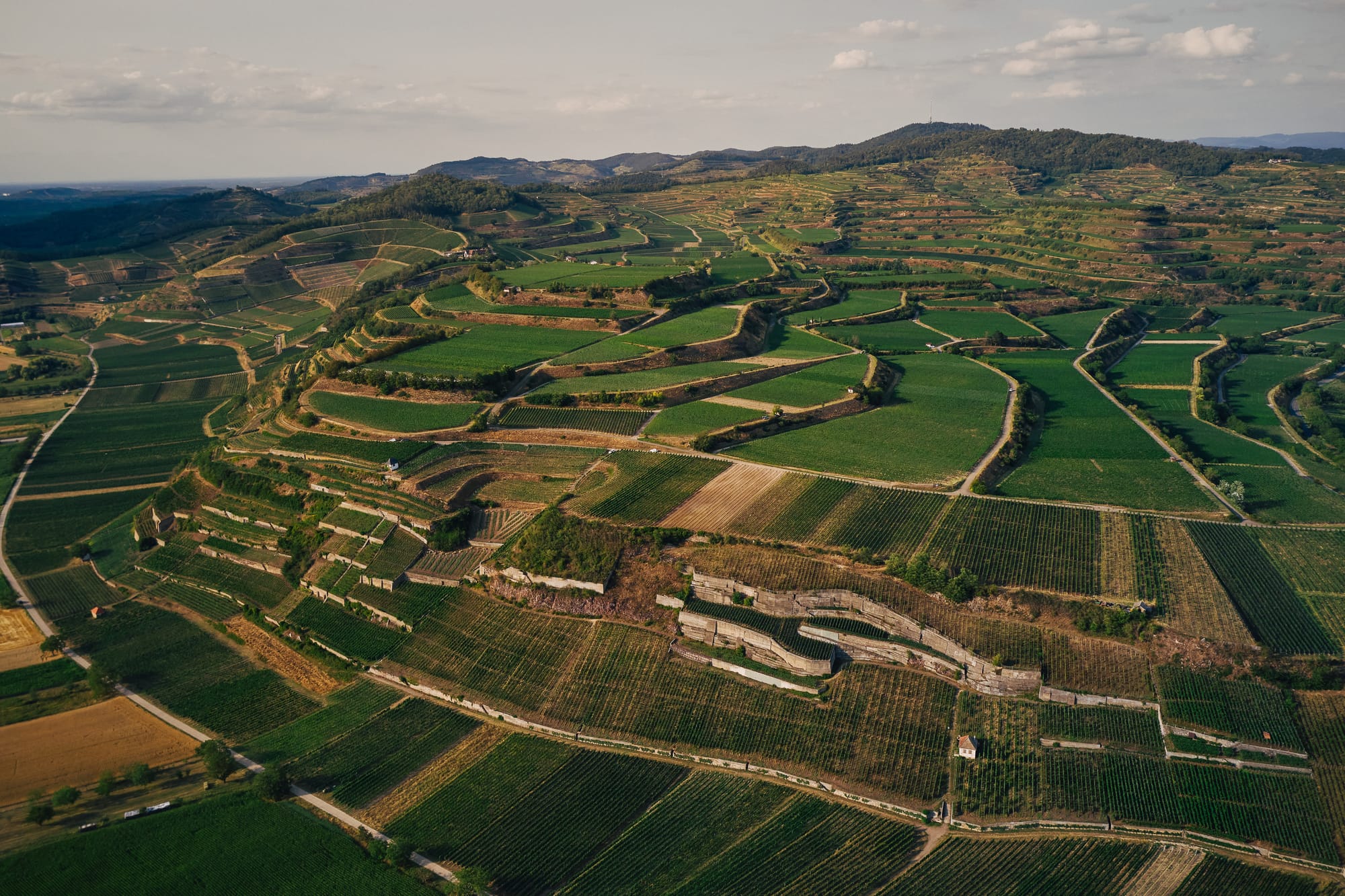
True terroir wines are grown in the Kaiserstuhl, particularly where the loess layer is thin and the vines take root in volcanic rock. For example, on the Ihringer Winklerberg – Dr Heger’s ‘local hill’ – with its four sub-sites: Vorderer Winklerberg, the Wanne Häusleboden, Hinter Winklen Gras im Ofen and Winklen Rappenecker’, all of which are classified as VDP. Große Lagen for GG production, the German equivalent of Grand Cru. Why this complexity? The Winklerberg is over 200 hecatres in size! „So, we made the decision to vinify thedifferent sub-sites separately,“ Rebecca told us.
The Kaiserstuhl is the stump of an ancient volcano,and these top sites lie where the Southwest corner of the Kaiserstuhl slopes steeply down towards the Rhine to the south and west. The Winklerberg is a terraced vineyardsite on volcanic tephrite – partly interspersed with veins of limestone – barely covered by a thin layer of loess, and perfectly exposed. No less impressive are the wines from the equally steep and terraced vineyards of the Achkarrer Schlossberg, another VDP. Große Lage for GG production, with similar soil, which produces slightly more robust wines.
It is this volcanic character that gives many of Dr Heger’s wines a very subtle yet distinctive spiciness, which together with their effortless generosity, makes them unmistakable.
NOTE: In case there's any doubt, Weissburgunder (sometimes written Weißburgunder) is the German name for what the French call Pinot Blanc and the Italians refer to as Pinot Bianco. Likewise, Grauburgunder is the German synonym for Pinot Gris / Pinot Grigio, and Spätburgunder (sometimes written Blauer Spätburgunder) is the German synonym of Pinot Noir / Pinot Nero. These wines are always dry, unless otherwise stated on the label.
22 wines tasted. Of these 21 scored more than 90 points and nine were 95 or more points.
THE STANDOUT WINES
Dr. Heger Baden Grauburgunder Ihringer Winklerberg Hinter Winklen Gras im Ofen GG 2023 – 13% / Slightly smoky (reductive) aroma, then juicy, with a delicate acidity that gives the wine a lively quality. Hardly any fruit, but delicately creamy and stony with a very refined, intensely mineral finish. 96 (FE)
Dr. Heger Baden Chardonnay Ihringer Winklerberg Hinter Winklen Gras im Ofen GG 2023 – 12.5% / Very subtle aroma of Asian pear. Lovely mineral acidity, herbaceous with little fruit, but hints of melon and exotic notes in the background. Intensely mineral, refined and effortlessly full of tension, almost ethereal. 96 (FE)
Dr Heger Baden Spätburgunder Ihringer Winklerberg Wanne Häusleboden GG 2022 – 13% / Everything about this wine is exquisitely refined and distinguished, beginning with the very delicate nose with hints of raspberry, a touch of cassis, a hint of cherry and a subtle sweetness. Develops beautifully in the glass, with silky tannins, simultaneously incredibly seductive and very elegant. From a vineyard planted in 1956 with a massale selection from the Burgundian Grand Cru site Clos Vougeot. 97 (FE)
TRIAL MONTH HAS ENDED. To read all the tasting notes please sign up for a PAID SUBSCRIPTION. Producers please note that you cannot use the notes and scores published on this site for PR or publish them on your website without a PROFESSIONAL SUBSCRIPTION.