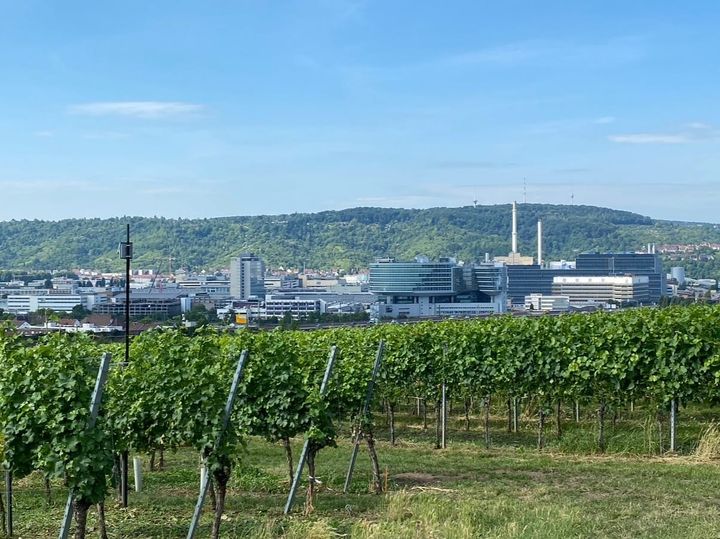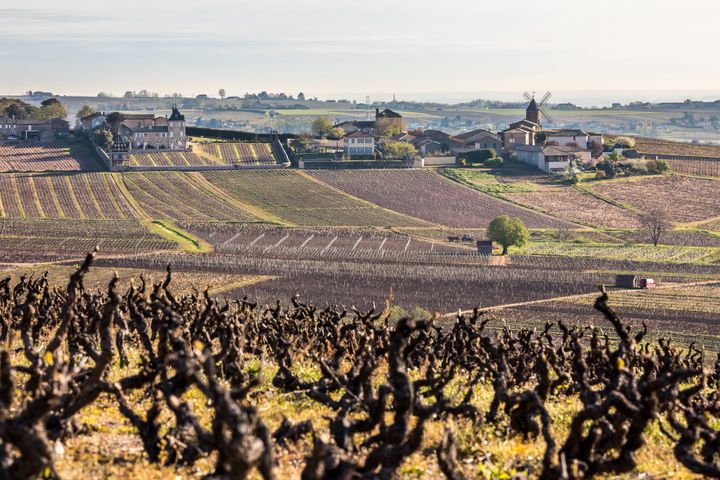
Text: Stuart Pigott / Title photo: Thomas Florscheutz
Not long ago I told a couple of friends that my life story wasn’t worth telling and they vehemently dissented: “what about all those great stories you tell?” So, here it is. Constraints of space mean that I can’t tell all those “great stories” here, rather just the outline within which they happened. Don’t worry though, I will be telling those “great stories” shortly on my new website:
Those of you who’ve met me or seen me on the screen may find it hard to believe, but until I joined the school theatre group aged 12 I was a shy and introverted child. The background to this was the ever-present threat of violence at Langley Park School for Boys in the leafy London suburb of Beckenham. That made me an anxious 12 year old, but I somehow I sensed that the stage might help me escape from intimidation and bullying.
For that production I was given the smallest speaking part, but my parents didn’t believe that I could pull even that off. Somehow, I did, and I was given a much more important parts for the following productions, until, finally I was made the male lead. The important thing about this was how, step-by-step, a new Stuart Pigott stepped out of the old one and onto the stage. It is he who writes these lines.
My old introverted and anxious self hasn’t entirely disappeared, remaining as a slimy residue in a dark corner of my mind. When things go badly wrong, he reappears and I turn to jelly. However, this strange state never lasts long: my transformation into a player on the stage of the world has long been almost complete. Of course, in my 65 years many other things changed, not least my transformation from a child totally disinterest in wine into an adult who is fascinated with it, and sometimes obsesses about it.
It would make writing this biography easy if I could tell you that there was one life-changing incident that pushed me in the direction of wine, but life isn’t a movie! The reality is that between a school exchange visit to Germany in April 1976 and the publication of my first article about win, in the April 1984 issue of Decanter magazine, I stepped, slipped and slid into wine.
Although that article was a turning point, shortly after it another article of mine on a totally different subject appeared in the contemporary culture magazine ZG. It was never only wine that I wrote about. When I do so what I learned during my cultural history studies at the Royal College of Art in London 1984-86 makes me continuously aware that wine always exists in multiple contexts. (Thanks to my professor, Sir Christopher Fraying!)
I did not get on well with my father, because he wanted me to realize his unfulfilled dreams. However, I didn’t expect him to die of a brain tumour aged 52. I was just over half that age when it happened and occasionally I still feel after-tremors of this earthquake. That word isn’t an exaggeration, because within the space of a couple of weeks I learned that he would die, was dropped by my girlfriend and lost my place in the shared student flat and went into psychological meltdown.

At the very beginning of 1989 I finally got firm ground back under my feet when I rented a flat in Bernkastel/Mosel and began learning how that German wine region ticked. It was just emerging from the crisis prior to its present one. I would have travelled to experience the collapse of communist East Germany, but chronic back pain caused by multiple slipped disks kept me in Bernkastel. My first visits to Berlin in July 1990 were a turning point. I pursued the wrong girl, but ended seeing Roger Waters play The Wall where the Berlin Wall once stood, and I fell in love with Berlin.
It took some time for me to move there, but from the 1st January, 1994 I was an official resident of the city and of Germany. For the twenty years beginning in late 1992 I was together with the sommelier, and later food and wine journalist, Ursula Heinzelmann. In many ways and for many years we were a great team, and I couldn’t have written the string of wine books I did without her help and support. (Thanks to Ursula, for everything!)
The first of those books in German (published by ECON in Düsseldorf in 1994 – see below for all German language book titles) catapulted me to B grade national fame thanks to the controversy it caused. Wie eine Wildsau or like a wild boar, was the title of the story about me in Spiegel magazine, and it was a quote from aristocratic winemaker Michael Graf Adelmann. Another winemaker sued me, but I think he greatly regretted that when the court vindicated the publisher and I. Nobody attacked me like that ever again.
For more than a year in 1998-1999 I worked on and off as a presenter in the TV documentary film Ein Weinjahr that was later aired on Norddeutscher Rundfunk, the public service broadcaster of Northern Germany. I was a bit shaky at the beginning of the shooting, but by the time we finished work on it I was confident enough to philosophizing about wine in German while riding a bicycle between rows of wine barrels in a dark. (Thanks to filmmaker Thomas Struck, also for Hauenstein about whom you can find out by read the stories below).
During the first decade of this century I wrote a trio of books about wine and globalisation (published by the S. Fischer publishing group in Frankfurt in 2003, 2006 and 2009). The research for these books took me to new winegrowing locations like China, India, Thailand, the Dakotas in America, Denmark and Norway. These journeys of discovery were mind-expanding, and I became a much better writer through this process. These books might have been hailed as a revolution in wine journalism if they hadn’t only appeared in German. (Thanks to my editor at S. Fischer, Martina Seith-Karow).

To research another wine book I attended the Geisenheim Wine University as a guest student for two semesters in 2008-2009 and also produced an experimental wine in a steep vineyard in the Franken section of the Tauber Valley. (Thanks to Professor Hans-Rainer Schultz in Geisenheim, and to winemaker and chef Christian Stahl).
That book was never published because S. Fischer dropped me, but this entire process radically changed the way I see wine. It led to the marriage of wine science and the art of winemaking in my mind. They aren’t opposites as commonly supposed, but can be complementary if the path of dogma is rejected, as I decisively reject it. On a practical level, by the end of this I’d also undertaken almost every aspect of vine cultivation work and the winemaking process, giving me a deep respect for those who regularly do this hard work.
My winemaking experiment resulted in a meeting with Prof. Dr. Thomas Gruber, then the Director General of BR, Bavaria’s public service broadcasting station. Three seasons of a TV series entitled Weinwunder Deutschland were filmed 2010-2012, and through them I learned the basics of filmmaking from the team. (Thanks to director Alexander Saran, cameramen Sorin Dragoi and Florian Schilling, soundman Peter ????, and camera assistant Flo Bschorr for that great and challenging time).
Not long after this I shot, with some professional help, my own 65 minute movie Watch Your Back, a mockumentary about my life as a wine journalist. It’s premier was at Michael Moore’s Bjiou movie theatre in Traverse City/Michigan in July 2014. Another product of what I call my New York period had just been published, the book Best White Wine on Earth (Stewart, Tabori & Chang). Sadly, it was my last original wine book. (Thanks to Michael Jacobs of Abrams in New York, and to Ralf Frenzel of Tre Torri in Wiesbaden who published the German language edition as Planet Riesling).
My four years exploring New York City culminated in a series of articles about The Hipster Somms of New York published on www.grapecollective.com that caused a tidal wave of criticism from somms and hipsters. My sociological and anthropological approach plus my satirical humour made many of them to spit venom in my direction, and one of them even accused me of being the devil incarnate! I always felt comfortable with this kind of criticism, because it leaves no doubt that you really had an effect. (Thanks to Christopher Barnes of Grape Collective for sticking his neck out and publishing this Gonzo extravaganza).

Between September 2016 and December 2025 working for the James Suckling website led me to explore much of France (Beaujolais, Burgundy, Bordeaux, the Rhône, Champagne and Alsace), Spain (Ribeiro del Duero, Rioja and Catalunya) and Italy (Alto Adige/Südtirol, Trentino, Campania and Sicily) intensively. It took me to Chile and Argentina for the first time plus back to California and Australia, plus I also visited Hungary, Serbia and Israel during this period. (Thanks, James Suckling and the current team, plus ex-team members Claire Nesbitt, Nathan Sloane and Nick Stock).
And now a new period begins that will doubtless bring many surprises. Building something new is always more complicated than expected. Germany is not a friendly place for innovation, nor do its bureaucrats smile on independent action. However, my wife Alexandra Pigott is always there, and with that support I know that I can handle any problems that come my way. (Thanks Alexandra for everything!)
29.03.2026, Eppstein/Germany