HESSIGHEIM: Episode Two
We can be Heroes!
By Frank Ebbinghaus - last revision: 05.06.26
Lassak
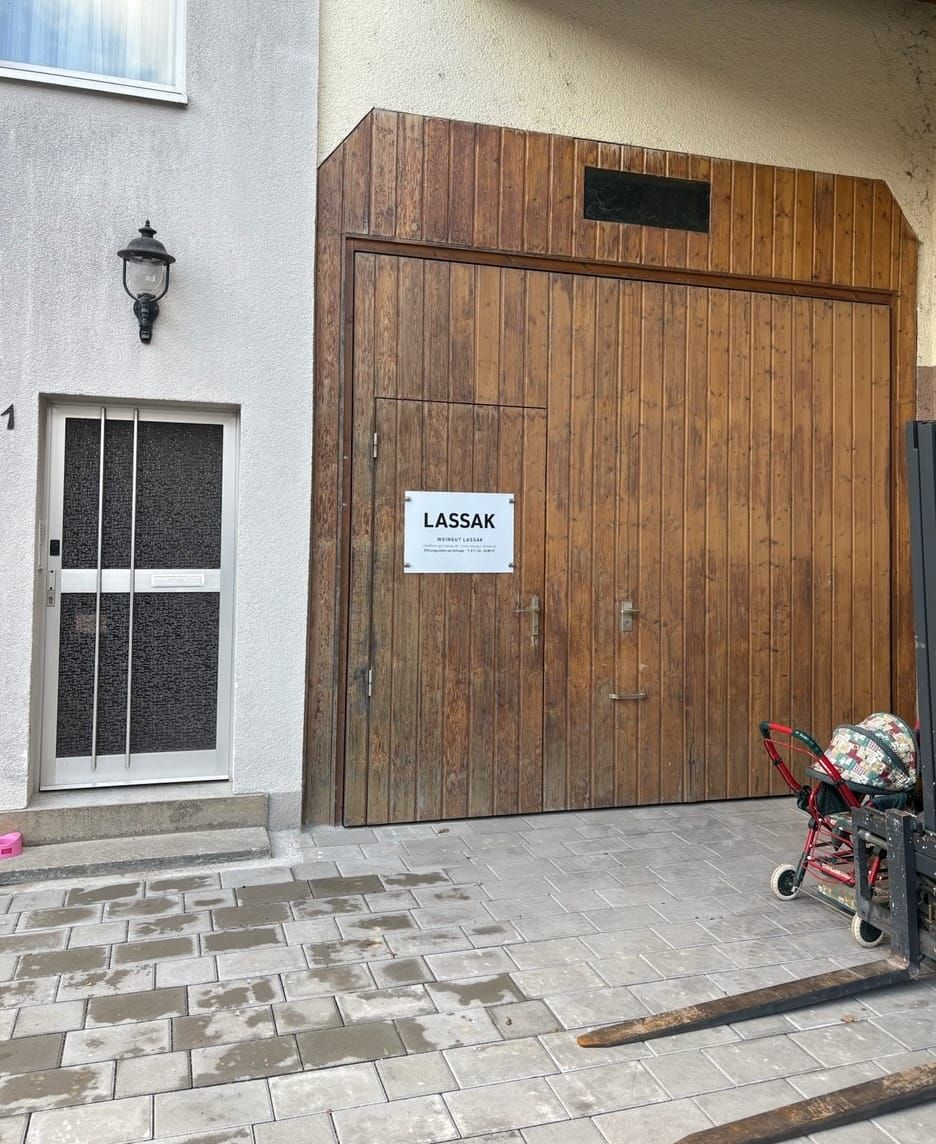
A narrow courtyard, bordered by an unassuming house and an even more nondescript outbuilding; to the right, a steep staircase leads up to the small, new tasting room. Nothing suggests that some of Württemberg’s most sought-after wines are produced here. Fabian Lassak, a native of the nearby Remstal valley, discovered his passion for wine at the Herzog Winery in distant New Zealand, which also runs a gourmet restaurant with an impressive wine list. He travelled to Europe several times with the Swiss owners, tasted the great wines of the world,and caught the wine bug. His training at the Weinsberg Wine University was followed by practical experience at the VDP-affiliated Ellwanger winery in Württemberg. There he met his wife Stefanie, who’d studied at the Geisenheim Wine University in the Rheingau. From 2013 to 2020, Fabian Lassak was cellar master at Schnaitmann, one of the top Württemberg wineries that emerged during the late 1990s. Then, Stefanie inherited a farm and a few vineyards from her grandparents in her home town of Hessigheim and the foundations of the Lassak winery were layed.
Since 2016, the couple have been running their vineyard, which now covers around four hectares. Their trump cards are old vines in the vineyard sites of Hessigheim sites with stony limestone soil, which are organically farmed and give tiny yields. They are planted with one third each Riesling, Pinot Noir and Lemberger. All their wines are spontaneously fermented, have a low sulphur content and are bottled unfiltered. For Fabian Lassak, the finesse of the tannins is particularly important for the reds. They are extracted very slowly and ppessed in a basket press, stopping at the first signs of astringency. Today the wines are characterised by the utmost finesse and freshness, yet Fabian Lassak says, the beginning was difficult. Not everyone could or wanted to even understand their idiosyncratic Rieslings. Then the Stuttgart wine merchant Bernd Kreis tasted them, and suddenly there was a great deal of attention for the Lassak wines, which seems to unsettle Fabian a little. What lies ahead? Step by step. Despite the hype of the hype of the last years, the Lassaks want to stay true to themselves. Considering that their winery is just ten years old, I can only marvel at the level of quality already achieved.
Eisele
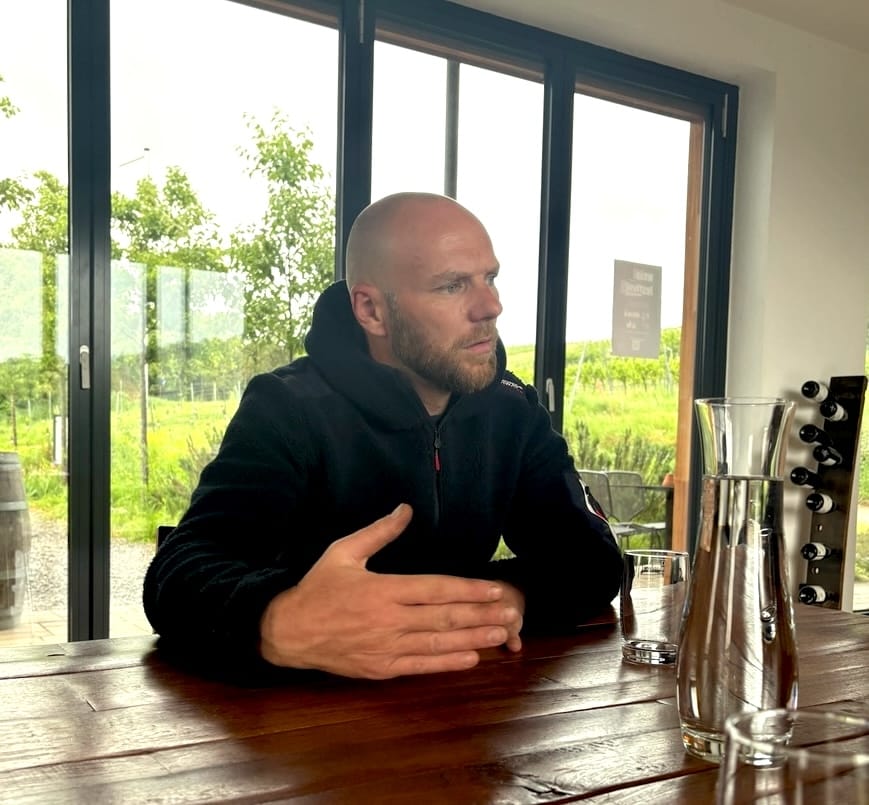
Alexander Eisele grew up in the vineyards. His grandfather used to supply grapes to the cooperative, and his father set up his own business in the 1980s. Alexander Eisele’s path to becoming a winemaker was thus already mapped out. He completed his master’s qualification at the Weinsberg Wine University, then gained experience working at several wineries in Württemberg before taking over his parents’ vineyard in 2014. He then did everything differently. Organic, of course, and he's been biodynamic since 2022. He now cultivates 7.7 hectares with his wife Eva, producing around 40,000 bottles a year.
Behind Alexander Eisele’s approachable and friendly nature lies a radical perfectionist. “Anyone who works the way we do wants to achieve perfection,” he told me. This is not just a catch phrase, but a conviction that's put into practice. Thedry Riesling spends 18 months on the lees; the red wines 30 months or longer. Everything is spontaneously fermented, with no lees stiring and bottled unfiltered.
The red wines of the 2023 vintage are currently about ready for bottling. They still have a slight, wild, pungent aroma, which, however, can hardly conceal their great finesse and sensuality. And Alexander Eisele continues along the path towrads perfection: with the 2025 vintage he has reached a new milestone. In the highest internal quality category (Goldkapsel), there are now three Rieslings and three Lembergers, each of which is marketed under the name of the vineyard site and parcel. Previously, he marketed the wines under the names of the soils on which the vines grow. “It simply takes years to get to know the vineyards,” he said. We must still be patient. The new wines will come onto the market over the coming years, I therefore haven't yet rated them. But the tasting clearly indicates that Eisele’s wines have reached a new level. However, it would be amistake, in anticipation of what is to come, to overlook the excellent current wines!
Siggi
Siggi’s real name is Siegfried Mayer. On the outskirts of Hessigheim, right nextdoor to the Eisele Winery at the foot of the prestigious Hambach vineyard site, he runs a five-hectare winery with his wife, the agricultural economist Dr. Amanda Eigner. The family has always made wine; his great-grandfather was a founding member of the cooperative, and his grandfather sold wine to local restaurants. After training as a cooper, Siegfried Mayer studied winemaking at the Geisenheim Wine University, then worked at leading Rheingau wineries like August Kesseler and Schloss Johannisberg, plus the von Othegraven winery in the Saar sub-region of the Mosel. Then, he worked as cellarmaster and estate manager at several wineries in Württemberg before finally returning to Hessigheim and his family's vineyards there. The Siggi winery was founded in 2014, as he himself puts it, "from scratch".
Starting from scratch meant having nothing, but he did have a side job. Siegfried Mayer set up a youth centre for the Caritas charity, then ran it. That, he says with a laugh, allowed him to manage his time well. When it rained, he opened the youth centre; when the sun shone he was in the vineyard. Back then, when he was looking for vineyards with old vines the cooperative winemakers laughed at him. For old vines mean a lot of work and give little yield. However, Siegfried Mayer, is interested only in quality, never quantity. From his own family, he still knows the stories of the prosperity that the vines once brought, but he knows that has little to do with the present or future of viticulture in Hessigheim.
The Siggi wines taste a touch riper and fruitier than those of Lassak or Eisele, but they are equally refined and mineral. Siegfried Mayer knows exactly what he’s doing: he produces his Cabernet Sauvignon from vines that he has grafted with clones from the famous estates of Comtes von Neipperg in Bordeaux. In the Wurmberg, he has grafted Blaufränkisch clones from Burgenland onto Trollinger rootstocks. The first wine comes from the 2022 vintage and tastes breathtaking. Siegfried Mayer is currently switching to organic farming, which could bring a further boost in quality.
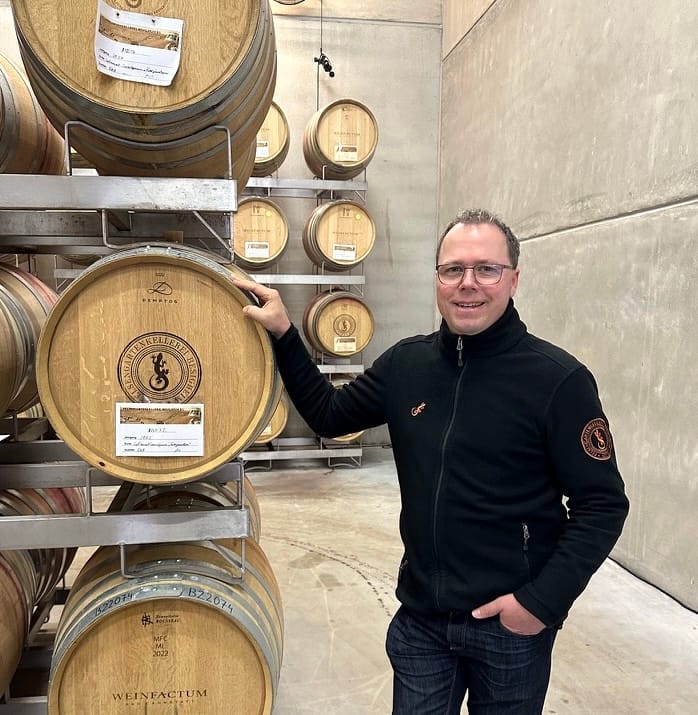
Felsengartenkellerei Besigheim Cooperative – Sebastian Häußer
Sebastian Häußer is not the face of the Wine Crisis, although the Felsengartenkellerei is also fighting. But it is still in relatively good shape, he told me. Sebastian Häußer has been working with the cooperative for 19 years now. As part of the management team, he is responsible for oenology and operations. So he knows a great deal about winemaking. And he knows how the cooperative members tick. If you put both of these together and add „crisis“ to the mix, an outsider could quickly lose heart. The roughly 300 winegrowing members cultivate 550 hectares, mostly as a sideline. 300 members means 300 opinions. And particularly in difficult times like these, everyone probably thinks they know BEST, but Sebastian Häußer is not a man to despair over this. He knows he has to deliver although the days of easy prosperity are over. Payments to the members should be adequate, however they are currently below that level and need to rise again.
The wine market is evolving at a rapid pace, but a winegrowers’ cooperative, however, is by its very nature a slow-moving organisation. It is difficult to keep pace with the changes, yet Sebastian Häußer is the epitome of calm, because he’s following a plan. In short it means: moving away from the ruinous price wars at the discount stores. The cooperative members cannot win those anyway, given their steep slopes that are costly to cultivate. Instead of cheap wines, the focus is now on higher quality, seeking a firm place in the food retail sector. So Rewe and Edeka instead of Aldi and Lidl – the starting price for consumers: from €4.30. And wine lovers are set to get their money’s worth too: ambitious wines are produced across an area of around 50 hectares, for which consumers will have to fork out €40 or more per bottle. This corresponds to the ‘Großer Gewächs’ standard of the Association of German Prädikat Wine Estates (VDP); a real statement from the cooperative comrades! The barrique cellar at the Felsengartenkellerei looks impressive. The wines are not (yet). But Sebastian Häuser knows he has a tough nut to crack, but is determined to do it.
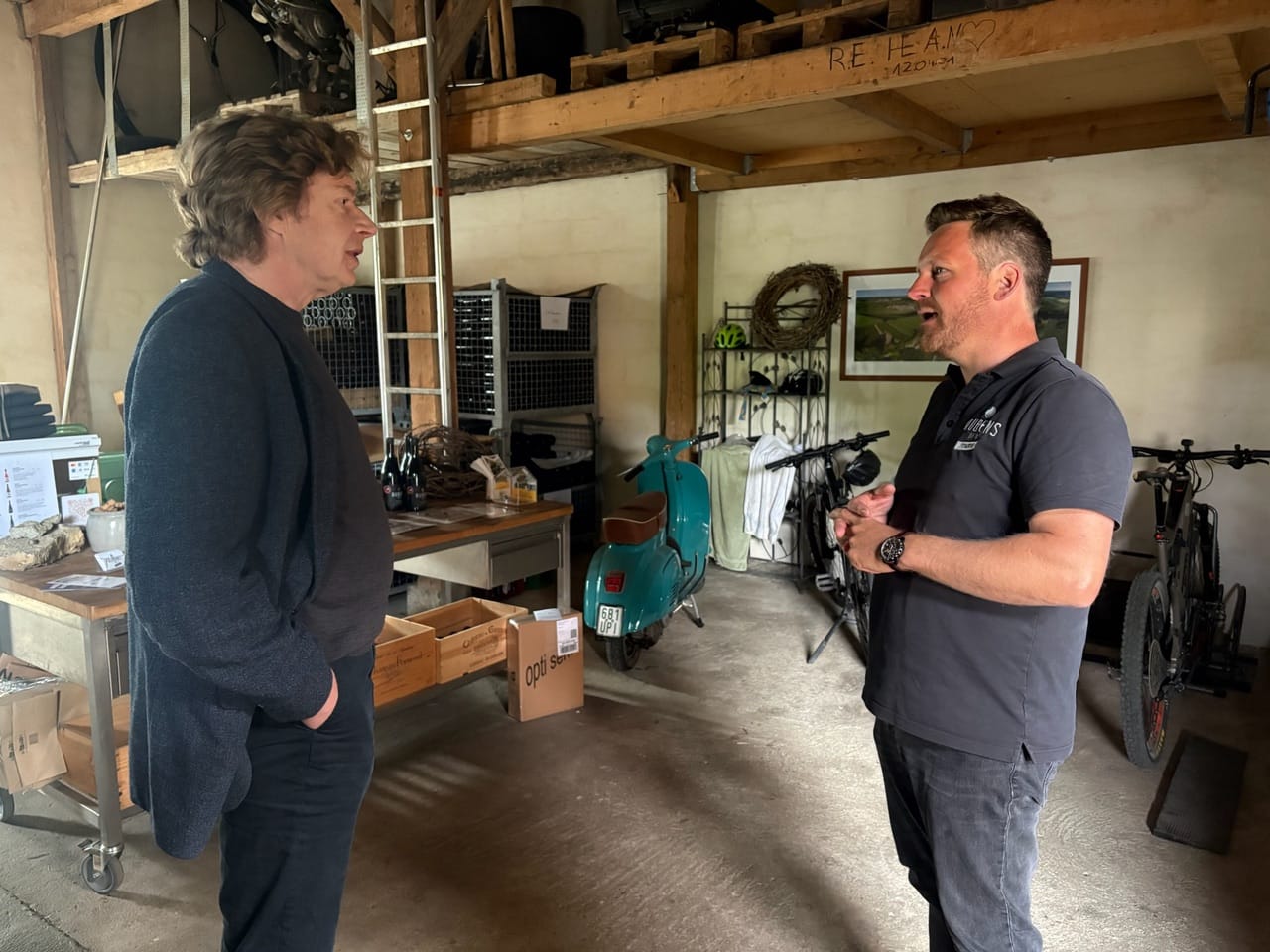
Ruben’s Wine
Ruben Eisele welcomes us into his detached house in Hessigheim and we immediately notices his unpretentious, almost childlike passion and enthusiasm for wine. It would be easy to dismiss this as the ramblings of an amateur, but to do so would be to overlook the ambition and professionalism with which Ruben Eisele approaches wine. Like his wife Tatjana, his main job is at Bosch. But he is no mere hobbyist. Wine has gripped him, and thoroughly so. He studied winemaking at the Weinsberg Wine University alongside his day job, graduating as a master winemaker, and founding his own winery in 2021. “We have our vision, and we pursue it with great determination,” he told us. The tasting proves it. Ruben’s is a mini-winery, with just 1 hectare of vineyards, but that doesn’t mean they think small here. “We make premium wines,” Eisele explains confidently. He produces what he himself likes to drink: “Mature, full-bodied wines, all aged in barriques.” At least half in new oak, all spontaneously fermented and bottled unfiltered. The alcohol content rarely falls below 13%. The antithesis to Lassak, Siggi and his namesake Eisele, but an important asset to Hessigheim, for his wines demonstrate in their own way what’s possible here. For his small-scale production, Ruben Eisele has developed an original marketing strategy: for tourists, he and his wife Tatjana organise covered wagon tours through the vineyards and the surrounding area. During these tours, he serves Ruben’s wines. His guests love it. Neighbouring restaurants have also added Ruben’s wine to their lists. Ruben Eisele has found his niche.
ExNicrum Weinmanufaktur
Anyone looking for the ExNicrum Weinmanufaktur in Hessigheim will find themselves at a small, charming hotel. Fabian Alber runs both. “Running a winery and a small hotel has always been a dream of mine,” says Alber. The fact that this dream has come true is down to the dedication of Herbert Müller, the former head of Ernst & Young in Germany. Müller planted vines on the steep slopes of Hessigheim with friends a good ten years ago. In 2021, he founded the ExNicrum Weinmanufaktur together with Fabian Alber. They cultivate 6.5 hectares of vineyards, 2.5 hectares of which are steep terraces. Fabian Alber is a consummate professional. He too studied at the Weinsberg Wine University, and worked for major names such as Beurer in Württemberg, Johner in Martinborough/New Zealand, the Rheingau wineries Barth and Leitz, and Willi Bründelmayer in Kamptal/Austria.
In conversation, he leaves no doubt that he proceeds with the utmost care in both the vineyard and the cellar. Dwarf sheep mow the grass in the vineyard; the harvested grapes are processed at a maximum of six degrees, and only briefly crushed. A four-tonne, 1,100-litre granite vat from Spain was purchased for the ageing of certain wines and the dry white Albarinho produced matures in a 450-litre clay amphora … You get the impression that every single step is planned with the utmost meticulousness and care. So, why do the white wines taste so insipid, so technical and artificial? Is it down to the high yields of an average of 80 hectolitres per hectare? The red wines from newly planted grape varieties such as Sangiovese, Tempranillo, Marselan and Syrah are considerably better, providing an exemplary glimpse of the future in times of global warming.