The Glass Never Lies: Dr. Bürklin-Wolf's Nicola Libelli
The Italian Soul of Pfalz Riesling
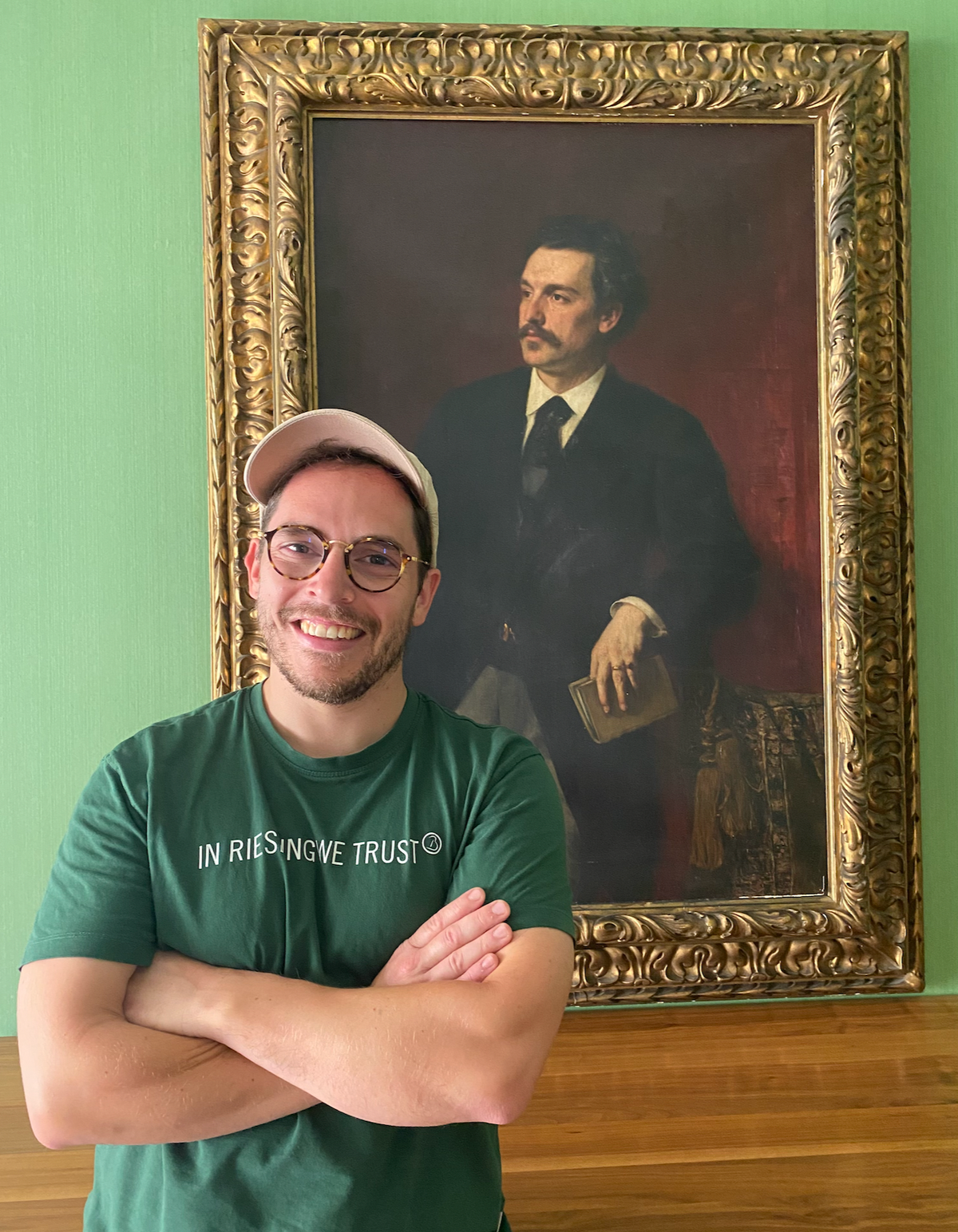
By Tim Eichelberger - last revision: 24.04.26
In July 2024, Stuart and I travelled to the Pfalz to taste the 2023 vintage from Weingut Dr. Bürklin-Wolf in Wachenheim, one of the famed three B wineries of the region, alongside Dr. von Bassermann-Jordan and Reichsrat von Buhl (both in nearby Deidesheim). These producers are central characters in the story of the Pfalz, a story that is written across some of the most splendid vineyard sites in the Pfalz and Germany: Ungeheuer, Pechstein and Kirchenstück.
The Kirchenstück GG 2023 from Bürklin was a near miracle: vibrantly fresh, yet honeyed and toasty despite its youth. It was an experience of pure joy; one of those wines that reminds you why you fell in love with wine in the first place. Every wine lover has these moments of inspiration along the way, and they can be transformative, as this was for me. Don’t let anyone tell you perfection doesn’t exist; this was a perfect expression of dry Pfalz Riesling!
That said, Bürklin is one of those rare producers that offers exceptional quality at every level of their Riesling range. An excellent example is the Deidesheim Village 2024, which offers stunning structure, beautifully balanced acidity and a never-ending finish. It is a delicious introduction to the Pfalz for under €30 in Germany.
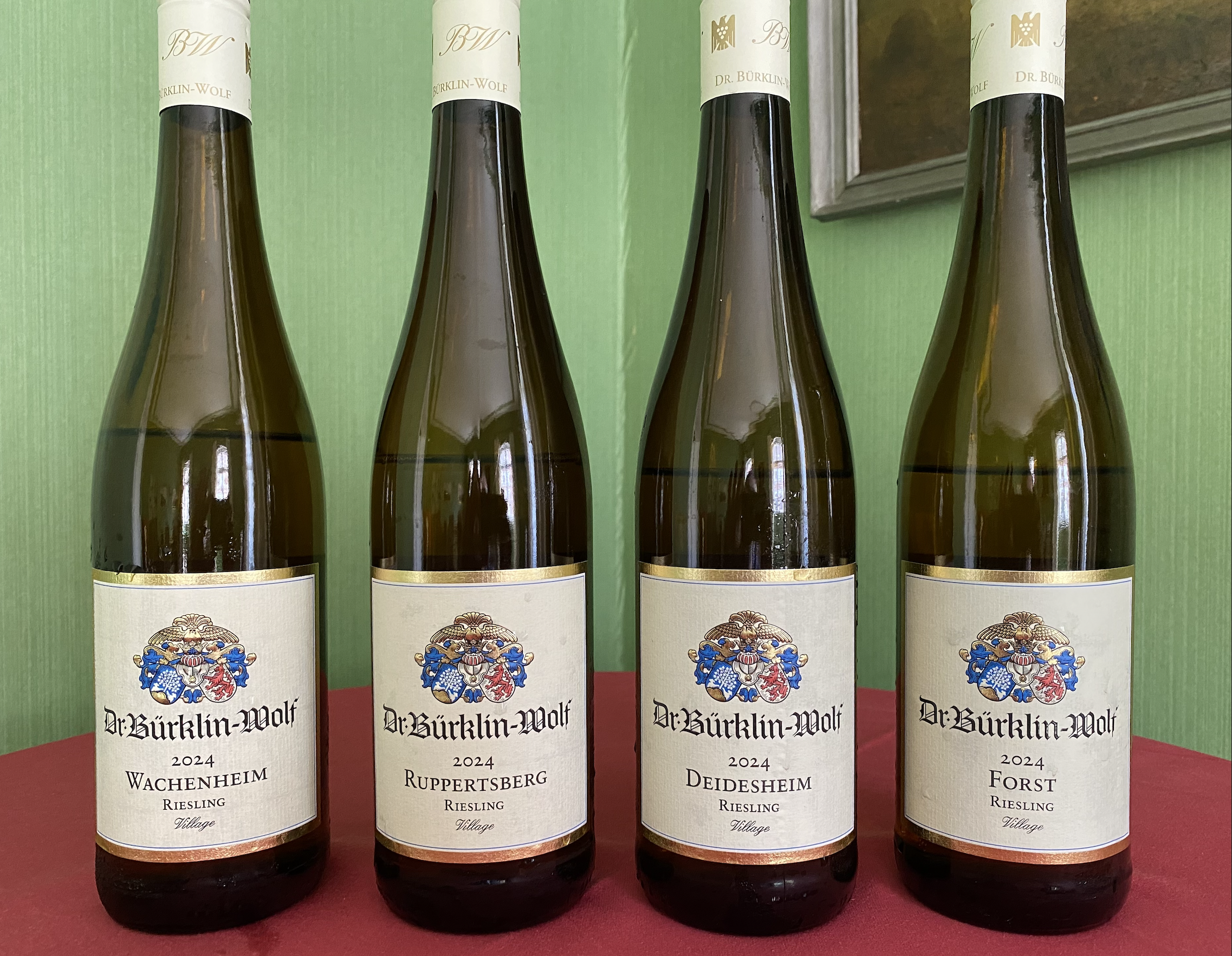
Among the notes for the 2024 vintage wines below there is a staggering diversity. There are, of course, examples of classic Pfalz Riesling that fans of the region will expect, the Rechbächel Wachenheim PC Monopol 2024 is an excellent example. But the Gaisböhl GC Monopol 2024, a particular favorite of mine, is excitingly racy and brimming with smoky apricot, white pepper and honeysuckle. It’s a true shapeshifter, changing rapidly in the glass, and could challenge what you assume about Pfalz Riesling.
Here pushing boundaries does not come at the cost of tradition. In fact, it preserves and pays homage to everything the region represents. That Bürklin leads in innovation should come as no surprise; they have been successfully riding the line between innovation and tradition for decades, for example, being the first major producer in the region to go fully biodynamic back in 2005. Every great wine begins with great viticulture, and Bürklin boasts some of the best vineyard sites in the region. The old line attributed to Aristotle feels apt here: “Excellence is never an accident. It is always the result of high intention, sincere effort and intelligent execution.”
In July 2024 Nicola Libelli carefully walked us through the particulars of each vineyard site as we tasted. Speaking about the Schlossberg, a higher-altitude site just south of Wachenheim that’s new in Bürklin’s range, he eplained the ways in which the woods of the Haardt mountains that surround the site seem to communicate with the vines, lending a special something to the Riesling that grows there. Recent research into the interconnection of plants with mycorrhizal fungi in the soil has shown that this is not just a theory. What is sometimes called the “wood wide web” is a complex symbiotic relationship the trees have with other vegetation, both within and on the periphery of the woods. This network allows trees to “communicate” with other vegitation like vines, sharing nutrients and much more besides.
I was rapt as Nicola spoke of each of the Bürklin vineyards as though it had its own personality, some more mercurial, others more generous. His fascination and love for nature are palpable when he speaks. He and vineyard manager, Jan Hock, have clearly spent a great deal of time pondering these characteristics, and the result is the diversity in the wines to which I referred above.
Deep reflection and a passion for nature seem to be prerequisites for the ability to produce sensational wines, and this passion for both nature and for the pastoral life, is also a thread that runs throughout Nicola’s lifestory. As a child, Nicola spent summers in the mountains just north of his native Piacenza (in Emilia Romagna), a beautiful Italian city with medieval and Renaissance architecture. There, he often joined his uncle for walks through the woods, foraging for porcini, fishing and observing the work of farmers. It was already clear to Nicola that farming would be the life for him. He jokes about being badly behaved in school and thinking himself better suited to manual work. I imagine that, like many intelligent and talented people, the confines of traditional education were not broad enough for him to express his full potential.
Then, thanks to his friend Davide, he had the opportunity to participate in a wine harvest at Cantina Barattieri, just outside of Piacenza. Nicola was 15 years old, Davide was 16, and both boys fell in love with the life of wine. At the time, it was more of a love for the work involved; love for wine as something aesthetic would come later, helped along by one of those transformative moments of inspiration: his first taste of a German Riesling.
This was another introduction which came through friendship. A visiting Swiss friend brought a bottle of 1992 Kinheimer Rosenberg Riesling Spätlese from Weingut Alfred Merkelbach in the Mosel. The experience changed the direction of Nicola’s life: a life in Riesling. Now, the label from that first bottle sits framed, close at hand in his dining room. Looking at that label behind glass is, for Nicola, a bit like Proust’s madeleine. It transports him back to that moment in time, a freeze-frame of his tipping point.
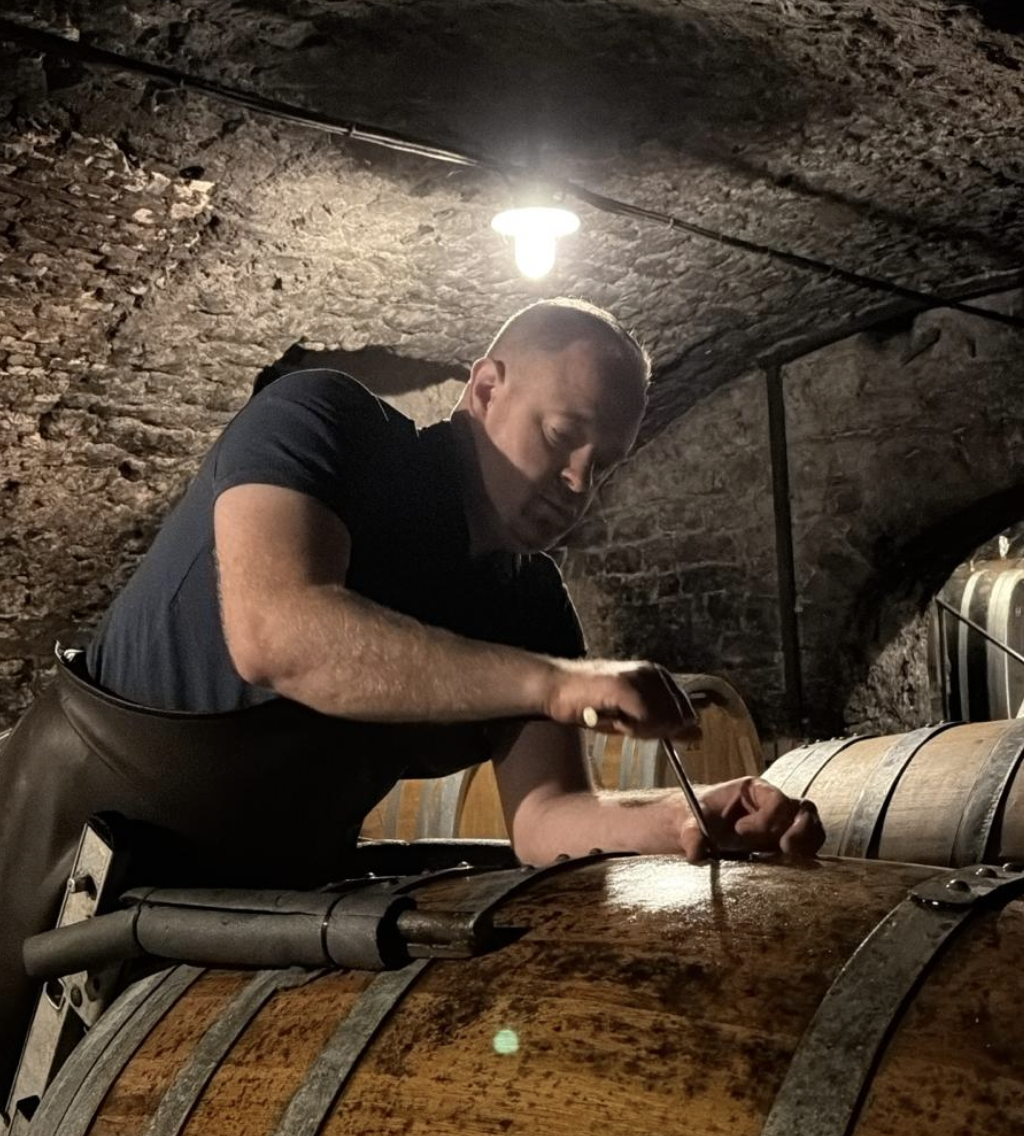
It is worth pausing here to note that in my conversations with Nicola, we moved back and forth between different languages. I subjected him to my strongly accented Italian; we swapped into English when my vocabulary let me down; and we spoke a bit of German too. I lived in Germany the last eight years and am generally comfortable with the language, but I could never imagine attempting to speak in Hessisch, the local dialect of my little town just outside of Frankfurt. Nicola, on the other hand, has become as much a Pfälzer (as natives of the Pfalz are called) as an Italian, effortlessly speaking a mixture of Pfälzisch (as the local dialect is called) and High German, combined with the enthusiasm associated with Italians! He’s a true cultural mix , but in the wine world this sort of cultural syncretism - or call it a mishmash, if you will - is perfectly normal.
Wine transcends international borders, but each winemaker brings a unique perspectives from their own cultures to their work. This sounds good, but winemaking is not always a friendly business. Intense competition exists between regions and producers within each region, and some regions are more open to outside influence than others. Nativism is, unfortunately, a human characteristic that requires a level of openness to resist. Dr. Bürklin-Wolf and other producers in the area have deep roots in local history and tradition, and you might imagine that the traditions of the Pfalz would be jealously guarded. But this is yet another way in which the Pfalz distinguishes itself: openness is the rule, rather than the exception.
Once, as I sat sipping Riesling with Nicola and his winemaker wife, Yvonne, at their home another prominent winemaker from the region stopped by with a few bottles and joined our conversation. They shared thoughts on various problems common to winemakers both within and outside the region, told inside jokes and laughed like fools. I asked if this community spirit is a common feature of the region, and both answered with an emphatic “yes.” so, how did Nicola end up where he is now?
He came to the Pfalz as an intern in 2009, after having returned from another internship with the Hartford Family Vineyard in the Russian River Valley, where he met Yvonne. She is a Mittelhaardt native. Today, Yvonne and her brother Martin Lucas own and operate Weingut Margarethenhof in the neighboring village of Forst, where they produce excellent biodynamic wines. More about them is coming soon, so watch this space!
After meeting Yvonne, Nicola applied for the internship in Germany and found himself at Bürklin, under the instruction of Fritz Knorr, the longtime cellar master. Fritz may have been the cellar master of a winery with a 400-year history, but he was anything but dogmatic, something Nicola internalized. He remembers being asked for opinions and ideas, Fritz welcoming innovation and new perspectives. This was Nicola’s introduction to the winemaking culture of the Pfalz, the region he calls home.
But Nicola’s time with Fritz was to be short-lived. His teacher suddenly died in 2012, just three years into Nicola’s time as intern, then assistant cellar master. With barely enough time to think about the way forward, or to mourn the loss of a friend and mentor, Nicola was asked to take on the massive responsibility of cellar master. I cannot imagine how daunting it must have been to contend with both the loss and the extremely intimidating task of carrying on Fritz’s work.
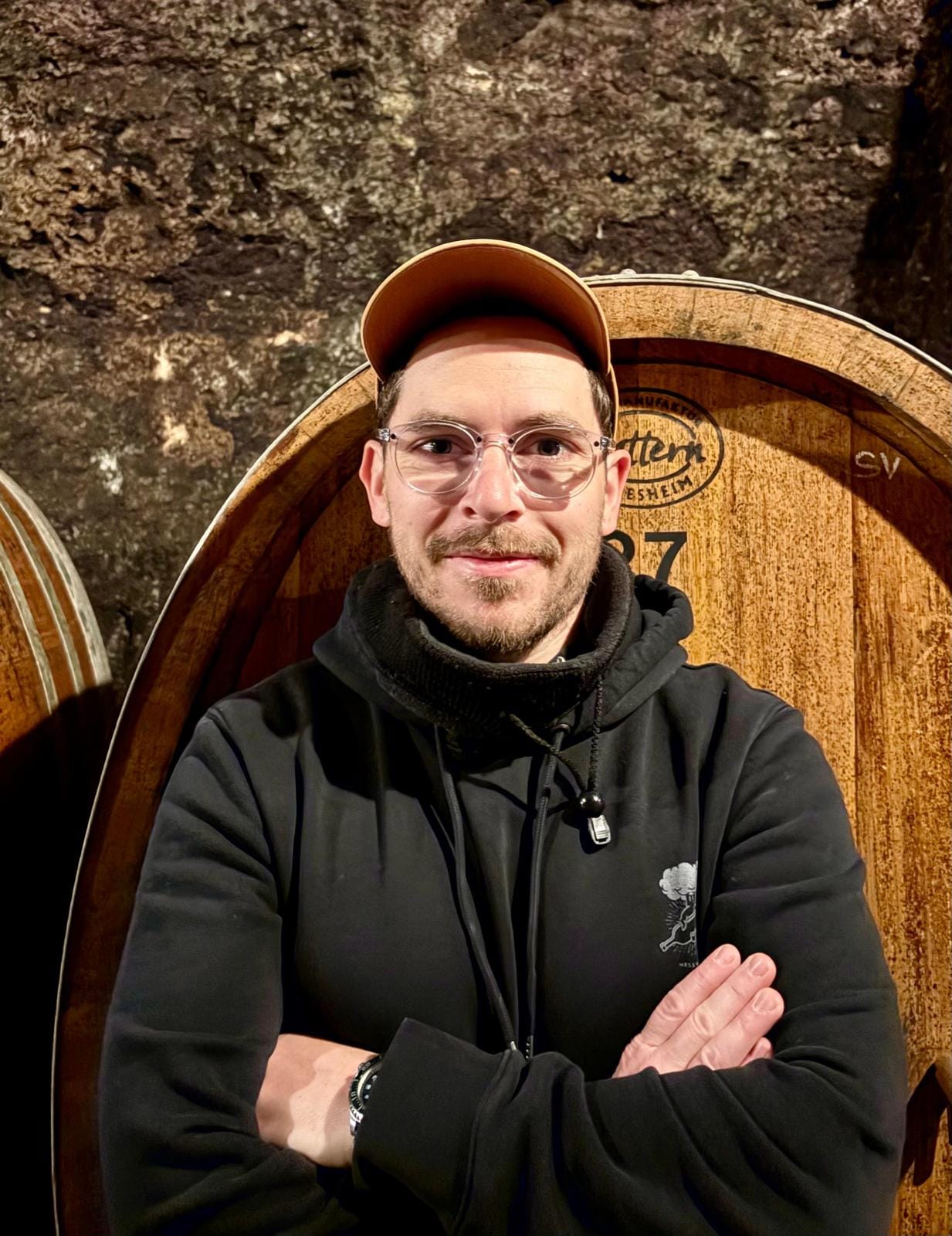
A new winemaker inevitably brings fresh perspectives, but they must be brought with respect for existing tradition if continuity is to be maintained. For Nicola, winemaking is all about getting the “spirit of the wine” into the glass. This starts with respect for nature, then the ability to make the best use of what the vineyards give you to work with. If you did everything right in the vineyard and had a good harvest, but the wine still does not work, then the explanation is simple: there is a disconnect between the cellar and the vineyard. Lessons like these sound simple, but they are hard-earned - Nicola has experienced both connection and disconnect. And as he says, “the glass never lies.”
That, to me, defines the experience of tasting Bürklin Rieslings: connection, openness and a quiet refusal of dogma. The wines show the full range of the Pfalz, and offer an expression of Riesling for anyone open to dry wines. Earlier, I mentioned that a love of nature and the pastoral life is one of the threads running through Nicola’s story. Another, just as clearly, is friendship. It was friendship that first brought him into the vineyards near Piacenza, friendship that introduced him to German Riesling, and friendship (and love) that eventually led him to the Pfalz. On one level, there is no question that Nicola is responsible for the excellence of the Bürklin wines, but he would be the first to call it a shared effort. For great wine, it takes a village: a community with a common purpose.
21 tasting notes, two with 99, one with 98 and three with 97. All these wines were tasted by Tim and Stuart in a single session
END OF THE VERSION AVAILABLE FREE OF CHARGE
ADDITIONAL MATERIAL ONLY FOR PAYING SUBSCRIBERS
But please read on as this is TRIAL MONTH and ALL CONTENT IS FREE!
2024 RIESLING
Dr. Bürklin-Wolf Pflaz Riesling Hommage à Luise 2024 – 8,5% / This is a remarkably charming off-dry Riesling shines with bright acidity, perfectly balanced with just the right touch of sweetness. Garden herbs and white tea give it a personality all its own. Summer in a glass. Enjoy this delightful, youthful Riesling sitting in the sun! 91 (TE)
Dr. Bürklin-Wolf Pflaz Riesling Trocken 2024 - 12%/ The Pfalz in a glass. A classic dry Riesling brimming with pear, lemon and mandarin orange blossom together with a lovely, chalky finish. This beautifully balanced wine is a great introduction to this famous producer! Fans of crisp apple will love the refreshment. 92 (TE)
Dr. Bürklin-Wolf Pflaz Riesling Ruppertsberg Village 2024 – 12%/ This beautifully floral, crisp Riesling is a tropical holiday in a glass. Notes of fresh sliced pineapple and peach charm you, as you enjoy a lovely and generous finish. The warmth and length of the finish keep you coming back for more. 93 (TE)
Dr. Bürklin-Wolf Pflaz Riesling Wachenheim Village 2024 – 12% / This stunningly focused Riesling boasts a structure and minerality that leans more toward the quality of a single-vineyard wine. The racy, generous finish continues to surprise you with every moment it spends in the glass. 94 (TE)
Dr. Bürklin-Wolf Pflaz Riesling Deidesheim Village 2024 – 12% / There is no end to the surprises this gorgeous, complex dry Riesling delivers. This wine has everything: stunning structure, extremely well-balanced acidity and a finish that seems never to end. This level of complexity in a wine so young is extremely difficult to find. 95 (TE)
Dr. Bürklin-Wolf Pflaz Riesling Forst Village 2024 – 12% / This is an exciting, spicy village Riesling with a exceptionally powerful and invigorating finish. The warmth and toastiness of a peach cobbler with baking spices leave you barely expecting the refreshing citrus of dried orange peel, on the unbelievably long finish. The 10-year-old vines in the Jesuitengarten site, which have yet to produce a GG were included in this cuvée, lending elegance and complexity to this sensational wine. 96 (TE)
Dr. Bürklin-Wolf Pflaz Riesling Hoheburg Ruppertsberg PC 2024 – 12% / Elegant jasmine flower and Amalfi lemon shine in this beautifully structured single-vineyard Riesling. It’s beautifully balanced with ripe nectarine and a light grassiness on the long, silky finish. Give this some time to develop in the glass as I did, and you won’t be disappointed. 95 (TE)
Dr. Bürklin-Wolf Pflaz Riesling Altenburg Wachenheim PC 2024 – 12% / This excitingly austere, pleasantly flinty Riesling displays the coolness and freshness of a high-elevation vineyard and gives way to freshly cut garden herbs, sea salt and lemon peel. The cool, minty finish makes this Riesling a conversation piece and shows the remarkablediversity the Pfalz is capable of. 95 (TE)
Dr. Bürklin-Wolf Pflaz Riesling Schlossberg Wachenheim PC 2024 – 11,5% / This sleek and elegant Riesling is anything but typical. Floral honey and fresh lemon peel give way to a surprisingly dry and herbal finish. Add to that a brilliantly integrated acidity and a grassy freshness straight from the Haart forest that surrounds this brilliant vineyard. 95 (TE)
Dr. Bürklin-Wolf Pflaz Riesling Böhlig Wachenheim PC 2024 – 12% / White stone fruit and floral honey grant a succulence and elegance to this beautifully balanced Riesling, together witha silky minerality and luscious nashi pear on the bold, generous finish. 96 (TE)
Dr. Bürklin-Wolf Pflaz Riesling Rechbächel Wachenheim PC Monopol 2024 – 12% / An extremely elegant, refined and well-structured Riesling – from the cool pear on in the glass to the warm and spicey finish. This is everything you expect from the Pfalz – forthright and ample yellow fruits and plenty of warmth. 96 (TE)
Dr. Bürklin-Wolf Pfalz Riesling Gerümpel Wachenheim PC 2024 – 12% / This Riesling showcases deceptively warm aromas of sun-dried straw and a hint of lemon, then is fresh and zesty at the finish. Needs a bit of time to open up in the glass to relieve the tension that makes this wine so energetic. Perfect for fans of sharp, well-structured acidity with bite. 94 (TE)
Dr. Bürklin-Wolf Pfalz Riesling Goldbächel Wachenheim PC 2024 – 12% / There is such a lot going on in this stunningly elegant, dry Riesling. Scads of yellow fruit, terragon and dried flowers make this a great pleasure. This is certainly a wine to think about, as the longer it spends in the glass, the more complexity it reveals. 95 (TE)
Dr. Bürklin-Wolf Pfalz Riesling Reiterpfad Ruppertsberg GC 2024 – 12,5% / This is very subtle and sleek Riesling is brimming with tension. It’s racy and exciting while remaining elegant and charming. Spiced plum and fresh herbs lead you to a stunningly long, silky finish. 97 (TE)
Dr. Bürklin-Wolf Pfalz Riesling Gaisböhl Rupertsberg GC Monopol 2024 – 12,5% / Very flinty on the nose just out of the bottle, but after some time breathing in the glass the youthful nervousness wears away, then smoky apricot, white pepper and honeysuckle develop. 95 (TE)
Dr. Bürklin-Wolf Pfalz Riesling Langenmorgen Deidesheim GC 2024 – 12,5% / The way that the smoky, earthy and mandarin orange aromas of this gentle Pfalz giant are intertwined is stunning. Deep, concentrated and salty, this makes a bold impression without being in the least heavy. Cool, wet-stone and herbal finish of excellent length. 96 (SP)
Dr. Bürklin-Wolf Pfalz Riesling Kalkofen Deidesheim GC 2024 – 12,5% / There’s a striking combination of creaminess, roundness and darkness to this imposing and very concentrated GG. Even more spectacular at the finish, than at the beginning. And after a little aeration and an aroma of gunpowder that deftly fits the final impression on the palate. 97 (SP)
Dr. Bürklin-Wolf Pfalz Riesling Hohenmorgen Deidesheim GC 2024 – 12,5% / How can a dry Riesling marry this kind of enormous concentration with such delicacy, freshness and finesse? That’s what makes this one of the dry Riesling stars of the vintage in Germany. So graceful and precise at the super-long finish. 98 (SP)
Dr. Bürklin-Wolf Pfalz Riesling Ungeheuer Forst GC 2024 – 12,5% / It might sound contradictory, but this is deep and rich, but extremely clean and straight. Built for the long term and on an almost monumental scale. Giant finish with quite serious tannins that’s still very youthful. 97 (SP)
Dr. Bürklin-Wolf Pfalz Riesling Pechstein Forst GC 2024 – 12,5% / The bladerunner minerality and energy of this are electrifying! For some that might be all too much at this very early stage in the wine’s life, but for us that’s incredibly exciting. So focused and pure. Incredible drive at the super-long and racy finish. 99 (SP)
Dr. Bürklin-Wolf Pfalz Riesling Kirchenstück Forst GC 2024 – 12,5% / Although this wine is extremely subtle and some will say that it’s intellectual, I don’t see how (assuming you like dry white wine) that you wouldn’t find it delicious. Please be patient, because it’s at the astonishing finish that the wine reveals it’s true greatness. There it glides off pulling a train of pure silk behind it that stretches almost to infinity. 99 (SP)