
VILLÁNY: Multiple Personalities
Yesterday, Today and Tomorrow in the Glass!
By Stuart Pigott - last revision: 24.05.26
When I began seriously exploring Hungarian wines in 2009 and 2010 the Villány region was the big red wine success story. In contrast to Tokaj that reinvented itself as the country’s great white wine region by building on tradition, Villány seemed to sign up for Full-Throttle Parkerism and to adopt the motto, “anything Bordeaux can do, we can do better!“ I’m not saying anything new with these words, in fact those are the very things about Villány that a good part of the international wine scene finds a TURN OFF to this day. And in case anyone doesn’t already realize it, that sort of wine isn’t my personal preference either.
On the other hand, this website rejects all forms of prejudice and accepts that excellent wines can also be made in styles we personally don't like. And we are always trying to find out what is actually happening NOW, rather than clinging to what we thought was happening at some undefined point in time called "recently". These things, together with the desire to reconnect with a bunch of talented winemakers I hadn’t seen since March 2022 (my last visit, while working for James Suckling) were the reasons I just spent a week in Hungary. Here is the first in a series of stories about the New Wine Hungary.
PART ONE: The Old "New" Villány
At first glance Villány looks easy to understand: a red wine paradise on the last range of hills at the southern tip of Hungary, that has become a second Holy Land for red Bordeaux grapes. The truth is that although Villány lies at 45.5° North like the northern end of Bordeaux its Mediterranean climate is as different from that of Bordeaux as Napa Valley in California or Bolgheri in Italy! In contrast to all of them there are no large bodies of water anywhere near Villány; the whole of Croatia separates the region from the Adriatic!
And the traditional main grape variety of the region is not a Bordeaux grape, but Kékportó aka Portugieser, which arrived here with German settlers in the 1740s. It is still important enough that the regional designation „Redy“ was created for Portugieser-based blends. However, only one such wine was shown to me, plus one varietal Portugieser. That means the variety was almost invisible, which is strange considering that there are still more than 300 hectares planted with it! The contrast to Cabernet Franc could hardly be more dramatic, not just in terms of numbers - I tasted 17 wines including blends dominated by this grape - but in the many impressive results, the majority of them under the designation Villányi Franc (introduced in 2006) that demands 100% varietal purity.
Of course, all of this is important to understanding the wines, BUT while I was talking to winemakers from the region during I suddenly realized that another factor was exerting a much more profound effect upon them and the region as a whole: GENERATIONS.
The generation that built up Villány during the years after the end of the Communist state in 1989 were motivated by the great opening up to the world that followed it. I well remember seeing on TV how thousands of Hungarians poured over the border with Austria immediately after it was opened, so, of course, winemakers looked WEST for inspiration. These developments coincided with the most dynamic phase of the Great Bordeaux Boom, which began with the 1982 vintage, so no wonder the ambitious new winemakers of Villány turned to BDX for everything from winemaking techniques to oak barrels. At this point all the major critics were praising the most powerful and concentrated Bordeaux wines to the heavens, so this idea was also imported.
The resulting wines enjoyed a huge success in Hungary, capturing the resurgent nationalism and quickly becoming status symbols for the nouveau riche. However, they only slowly gained some recognition in the West, often being gently derided as derivative of Bordeaux and/or Califronia (the latter comparison resulting from the high alcoholic content of many ambitious new Villány reds). The exceptions to this were the Villány Cabernet Francs, which already during the late 1990s were praised by Michael Broadbent MW; the official seal of approval of the conservative British wine establishment. I am sure that Michael would have enjoyed the best Cabernet Francs I tasted if he could have joined me from beyond the grave. The Malatinszky Kúria Villány Cabernet Franc 2017 was the most amazing - at once compact, self-confidently dry, yet very precise - but this was no surprise after the fabulous 2013 vintage of this wine.
During my visit to Hungary in March 2022 it became obvious to me that the new generation of Hungarian winemakers see everything very differently to their parents' generation, which is hardly a surprise. However, the way that - for understandable reasons - a large part of the Liberal West turned its back on Hungary during the 16 years of the Orban regime means that awareness of this is not widespread. I felt like I was starting to catch up. Unfortunately I wasn’t able to return during the following years to deepen my understanding of the New Wine Hungary that was already taking shape.
PART TWO: Beautiful Shocks
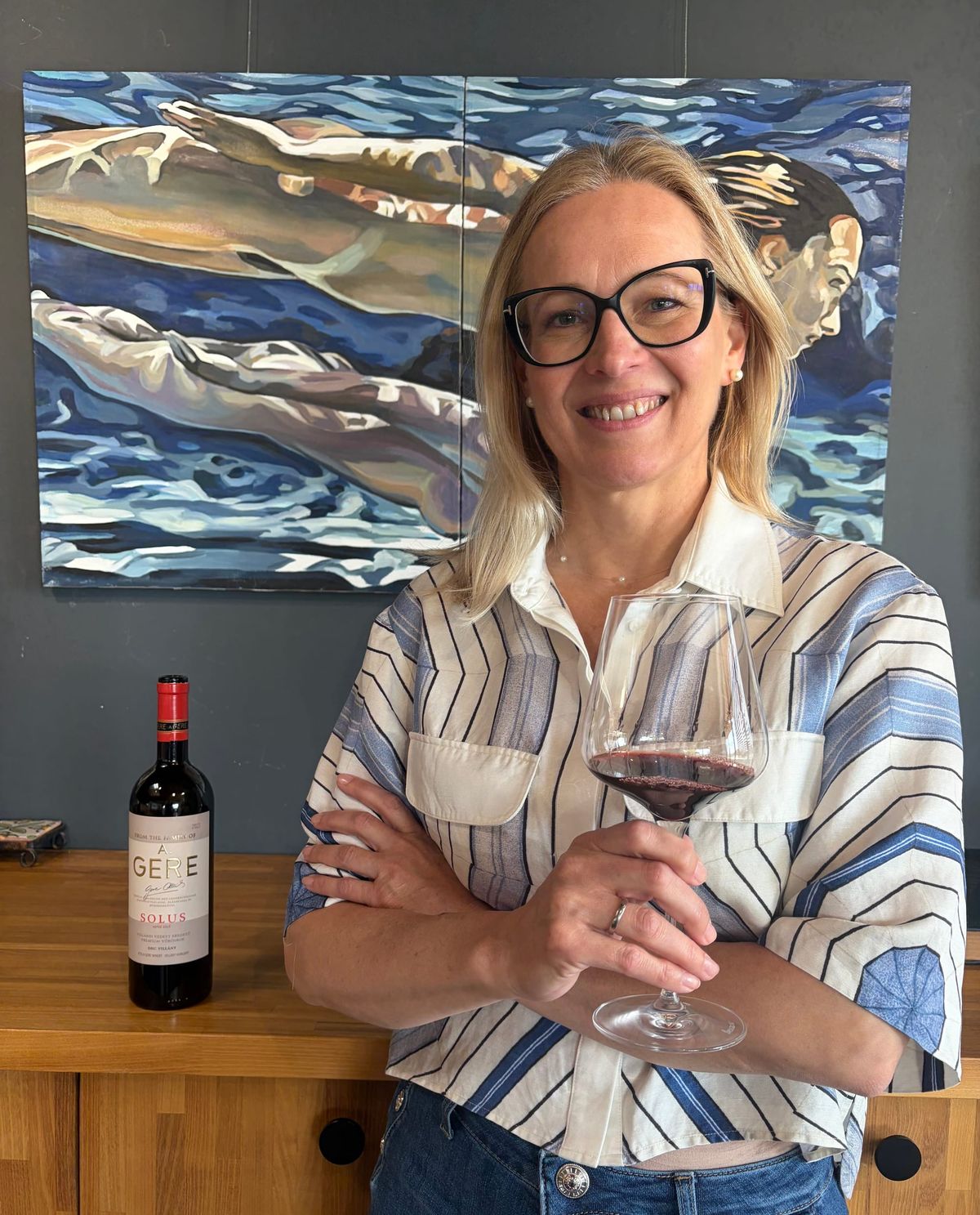
Whether you want it or not, reality not only has a way of catching up with you, but can do so in sudden, abrupt jumps. And that’s what happened when I tasted the A. Gere Villányi SOLUS Kopar Dülö 2023 with Andrea Gere. I was hypnotized by its breathtaking elegance; the energy and filigree at the finish off the scale. And yet it has an enveloping nose of exotic fruits and flowers! And then I realized that it’s a pure Merlot. „I hate Merlot, but this is totally amazing!“ I told Andrea. I didn’t tell her that I’d just given it 100 points, so reading this will be another shock for her. During the tasting she mentioned that when the project started in 2000 the Tuscan Merlot Massetto was the role model. However, it’s such a different wine, much more massive wine...and almost 20 times the price of the A. Gere wine! The fact is that Masseto is a rather traditional great red wine, only the polish and precision being modern, whereas the A. Gere Solus is totally 21st century in the best possible sense.
It took me a while after this beautiful shock to fully digest the reality that my intensive Villány tastings had revealed, but then I came to a startling conclusion. In Villány a great many wines remain within the stylistic parameters that were established during the 1990, and in some cases they taste almost identical to the wines of the 1990s! However, there is now a significant number of wines that are self-confidently modern with terrific freshness and originality. Can call this diversity or schizophrenia depending on your point of view. However, this situation can also be found within single producer’s ranges, most notably at Bock and A. Gere. At Bock the use of different bottle shapes for the two groups makes this abundantly clear. Nothing could be further from Bordeaux than this situation! Each Bordeaux château has a clear stylistic direction to which all their wines rigidly adhere; a total contrast to modern Villány.
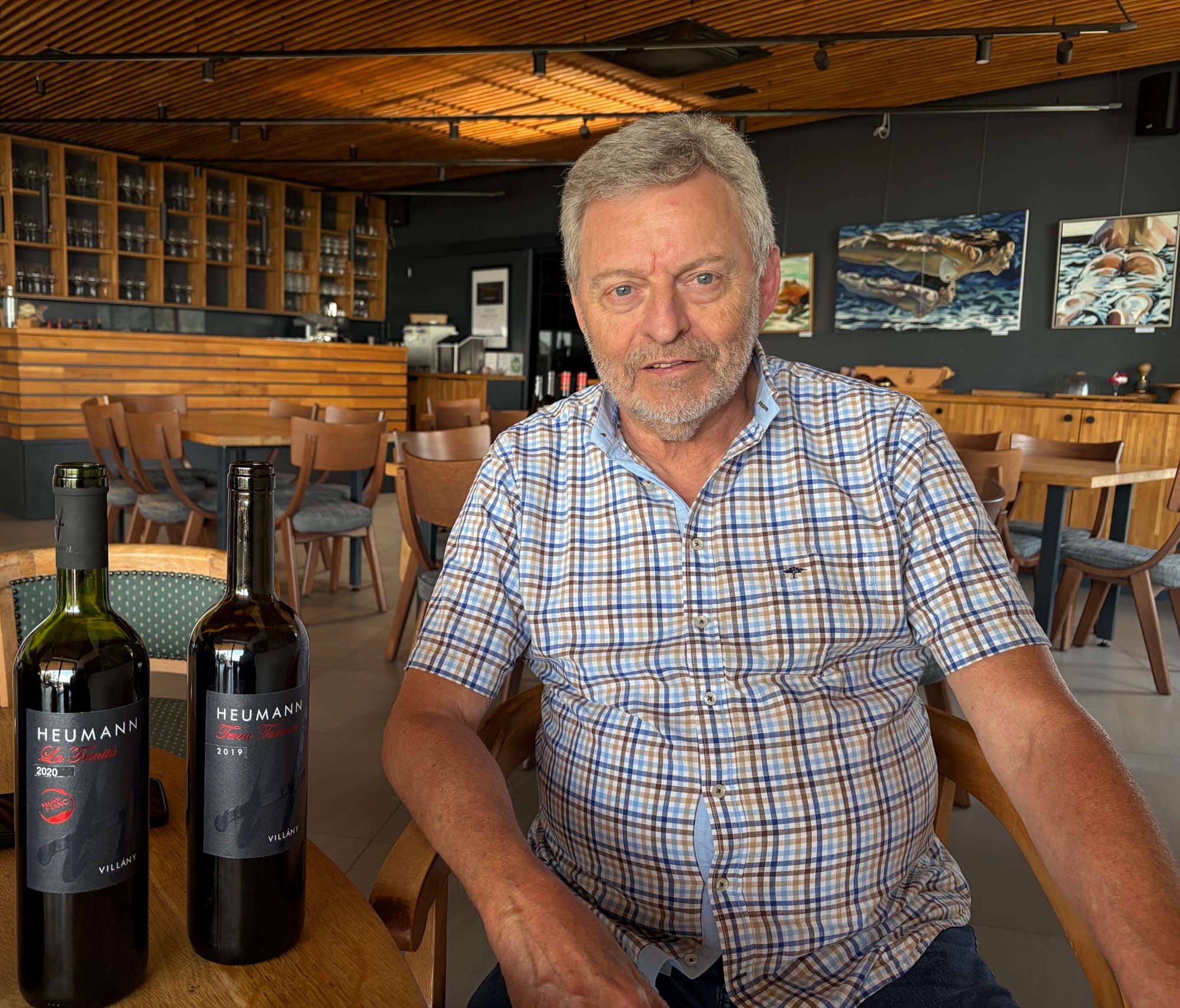
Already 20 years ago I became aware that there were alternative winemakers in Villány, firstly in the form of the then Berlin-based lawyer Horst Hummel, (who was also my lawyer for a while). Sadly, the youngest wine Horst submitted for tasting was a 2020, so I will have to catch up with his fascinating orange wines and sparkling wines another time. There’s no denying that his reds have great personality, even if they are sometimes quite eccentric in the positive sense. However, he’s not alone, as the biodynamic Wassmann wines and the natural wines from Malatinszky show. Then, there’s the Heumann winery of the Swiss-German couple Evelyne and Erhard Heumann. Their wines are clearly French and Italian-inspired, but have a completely different style to those of the local winemakers. So, contemporary Villány is a region with multiple wine personalities. Welcome to the New Wine Hungary!
PART 3: Multiple Wine Personalities
48 wines tasted, including one with 100 points and one with 98 points.
END OF THE VERSION AVAILABLE FREE OF CHARGE
ADDITIONAL MATERIAL ONLY FOR PAYING SUBSCRIBERS
TRIAL MONTH has been extended for a few days and ALL CONTENT IS FREE, but that will end with the completion of this series of reports! Producers please note that you cannot use the notes and scores published on this site for PR or publish them on your website without a PROFESSIONAL SUBSCRIPTION.
HERITAGE RED GRAPE VARIETIES
A. Gere Hungary Fekete Járdovány 2024 - 14.5% / Leaps out of the glass with aromas of anise, sushi ginger and ripe red berries. The silkiness reminds me of Pinot Noir, but the tannins are closer to Kékfrankos and they give it a self-confidently dry finish. The only commercial production from the Fekete Járdovány grape. 92 (SP)
Vylvan Hungary Csóka Variácio 2023 - 13% / An impressively structured and expressive red with a wonderful freshness balancing the dark berry fruit character. Long, robust savoury finish. 90 (SP)
KADARKA
Bock Villányi Kadarka 2024 - 12% / Striking nose of fresh herbs and dried tomatoes. Juicy, light-bodied palate with crisp acidity and a leafy freshness. From a northwest-facing vineyard on a limestone plateau. Matured in used 500 liter oak casks and bottled unfiltered. 88 (SP)
Sauska Villányi Kadarka 2024 - 13.5% / A charming and light-footed expression of the Kadarka grape. I love the rose petal aromas! Attractively creamy mid-palate, then a harmoniously dry finish. 90 (SP)
KÉKFRANKOS
Bock Villányi Kékfrankos Fekete-Hegy Selection 2023 - 13.5% / A very elegant Kékfrankos with bright red berry fruit and velvety tannins that have deftly integrated the touch of spicy oak. Lively acidity in the soft Villány context. Long, polished finish that pullsyou back for nore. Matured for a year in a 50/50 mix of new and older oak. 91 (SP)
Bock Villányi Kékfrankos KF 2023 - 13.5% / Stunning nose of wild herbs and salted liquorice. Fantastic textural complexity, plus savoury and wet earth depth. Very silky tannins through the long very subtle finish. And it has excellent freshness for this region. Matured for 14 months in 300 liter and 500 liter oak casks with quite frequent batonage of the solids. 94 (SP)
Heumann Villányi Kékfrankos Reserve 2020 - 15% / A very powerful and meaty Kékfrankos with stacks of liquorice character plus a broad, mellow tannic base. Now well matured, but no hint of alcoholic warmth at the finish. 91 (SP)
Vylvan Villányi Kékfrankos 2023 - 13% / A fresh and animating style of Kékfrankos for this region with a hint of the elegance of the 2023 vintage. Gentle tannins and a light, crisp finish. 88 (SP)
Wassmann Villányi Kékfrankos 2020 - 13% / The expressive elderberry and graphite nose pulls you into this remarkably dynamic medium-bodied Kékfrankos that has stacks of mineral energy driving the long, self-confidently dry finish. Still very young with so much aging potential! 93 (SP)
PORTUGIESER
Hummel Villányi Portugieser Gelassenheit 2020 - 13.5% / Welcome to the wild side of Villány where the grass grows higher. Some might say that this powerful and crisp Villány red is slightly faulty, but for me its exciting in a funky way with an extremely fresh finish in spite of the ample tannins. 93 (SP)
CABERNET FRANC
Bock Villányi Cabernet Franc Birtok Selection 2023 - 14.5% / A very good introduction to the Cabernet Francs of this region that combines restrained healthy tannins with generous redcurrant and wild blackberry fruit. A touch of green capsicum. Slightly warm from alcohol in spite of the animating acidity. Well integrated toasty oak. Matured in a mix of 225, 300 and 2,000 and 4,000 liter barrels plus a small amount in stainless steel. 89 (SP)
Bock Villányi Franc Essencia 2019 - 15% / Enveloping nose of roasted meat. Then, this powerful Cabernet Franc makes a very bold statement on the front palate, but there’s also a lovely freshness that comes through after that first impact. Deep, maturing blackcurrant fruit is wrapped around the huge velvet tannins. A pure Cabernet Franc that was matured for two years in small new oak casks. 93 (SP)
A. Gere Villányi Franc Csillagvögly Dülö 2023 - 14% / Very fresh and complex wine with so much energy and a transparency that’s rare in this category. Delicate redcurrant and wild herb aromas with just a hint of fresh fig. Super-fine chalky minerality at the super-long and animating finish. Matured for 16 months in 300 liter oak casks of Hungarian oak. 96 (SP)
A. Gere Villányi Franc Csillagvögly Dülö 2015 - 14% / A beautiful maturing Cabernet Franc with a wealth of forest berry aromas and a touch of graphite. Excellent balance of full, fine tannins and restrained richness. Creamy texture on the mid-palate, then a long, velvety finish that has a delightful freshness. 94 (SP)
Gere Tamas & Zsolt Villányi Franc Válogatás 2022 - 14.3% / Quite a rich and structured wine for this grape, the tannins now almost mellowed enough for good drinking. Compact tannin structure, excellent savoury complexity and mineral freshness. Long, refined finish. Not yet released, but coming soon. Matured primarily in small Hungarian oak casks. 93 (SP)
Gere Tamas & Zsolt Villányi Franc Váredo-Dülö 2022 - 14.3% / An impressive pure Cabernet Franc with a serious tannin structure that time is beginning to mellow. There’s plenty of oak in here, but the wine has absorbed it well and it’s the intense chalky minerality that dominates the long, quite compact finish. 92 (SP)
Heumann Villányi Franc La Trinità 2020 - 14.5% / Where can you find a varietal Cabernet Franc in Bordeaux that has this combination of power and aromatic complexity? It doesn’t exist. As elegant as it is concentrated with very fine tannins plus terrific freshness! Really long finish that's simultaneously silky, dynamic and savoury. Matured for 24 months in 500 liter oak casks one third of which were new, one third of which were second use and one third older. 95 (SP)
Hummel Villányi Cabernet Franc Panterra 2016 - 12.5% / What a graceful Cabernet Franc! Brimming with violets and so delicate in spite of the impressive concentration, this redefines the grape variety. Very long and energetic, liquorice and chalk finish that's so focused! 95 (SP)
Malatinszky Kúria Villányi Cabernet Franc Mchari 2019 - 14.5% / I love the combination of zesty freshness, crisp tannins and violet aroma of this very expressive „natural“ Cabernet Franc! So much good energy in spite of more than 6 years of aging. Fine-grained tannins and lively acidity drive the long,self-confidently dry finish. Excellent aging potential. 96 (SP)
Malatinszky Kúria Villányi Cabernet Franc 2017 - 14.5% / Deep, dark and mysterious, this has enormous concentration and a fabulous tannin structure that gives it decades of aging potential. Still not yet at its peak after more than 8 years of aging! So expressive and so precise! Extremely compact and self-confidently dry finish that's impeccably balanced. Bottled unfiltered. 98 (SP)
Sauska Villányi Cabernet Franc 2022 - 14.5% / This youthful Cabernet Franc has an excellent harmony of redcurrant and blackcurrant fruit with finely-etched tannins that gently build at the generous and fresh finish. The crisp acidity makes this taste much lighter than the alcoholic content printed on the label would lead you to expect. 93 (SP)
Vylvan Villányi Franc 2021 - 14% / In spite of its abundant power this Cabernet Franc has a lively acidity and bright redcurrant fruit that keep everything right on track. Then the fine tannins build at the well-structured and crisp finish, driving the wine across your palate at a brisk clip. 93 (SP)
Wassmann Villányi Cabernet Franc 2019 - 13.5% / The tension between the blackcurrant fruit, herbal freshness and savoury complexity makes this an exciting expression of this grape. Then comes the interplay of the elegant tannins and the restrained richness. Astonishingly refreshing finish for an almost 7 year old red wine! 93 (SP)
CABERNET SAUVIGNON
Wassmann Villányi Cabernet Sauvignon 2020 - 13% / A beautiful non-oaky cabernet Sauvignon with so many fresh blackcurrant and mint aromas, this leapsand bounds over your palate. Creamymid-palate, then a long, fresh and velvety finish. So youthfull for more than 5 years of age. 92 (SP)
MERLOT
Bock Villányi Magnifico 2020 - 15% / A huge wine, but then top Pomerols from warm vintages are also very full-bodied. Excellent balance of richness and abundant fine tannins plus well-integrated spicy (oaky) complexity. Just coming to its peak, but with many years of life ahead of it. A pure Merlot that was matured for two years in small new oak casks. 94 (SP)
A. Gere Villányi SOLUS Kopar Dülö 2023 - 14.5% / I love the exotic fruits - mostly passion fruit and mangosteen - and flowers, plus ripe blueberry aromas in the nose of this totally unique wine. How does it manage to have gigantic concentration, yet be breathtaking elegant? The energy and filigree at the finish are off the scale. A pure Merlot from the Kopar vineyard site that was matured for 16 months primarily in 300 liter oak casks. 100 (SP)
Gere Tamas & Zsolt Villányi Merlot 2023 - 14% / Quite a serious wine for a „classic“ Villány Merlot thanks to the very well crafted tannins that give it a very solid structure. Fine red berry, blackberry and blueberry fruit. Long, elegant finish. Only just coming to its best drinking form. Matured in 2,000 litre oak casks. 92 (SP)
PETIT VERDOT
Heumann Villányi Petit Verdot 2021 -14.5% / Blind I would confidently place this powerful and structured red in Bordeuax, but where? The maturing blackcurrant and elderberry aromas are married to deep balsamic and bitter chocolate notes, the whole underlined by serious tannins. Very long, compact finish. The first vintage from vines that were grafted over to this variety. 94 (SP)
SYRAH
Heumann Villányi Syrah 2019 - 14.5% / This has the meatiness of Syrah on the nose and a deep spiciness on the palate, but please forget the Northern Rhône, because this is a completely different expression of the grape. The fleshy body completely integrates the powdery tannins that drive this over the palate. Excellent mineral freshness at the long, crisp and complete finish. 94 (SP)
RED CUVÉES
Bock Villányi Grand True 2022 - 14% / No, you shouldn’t mistake this for a Grand Cru red Burgundy, but the Grenache in this blended red gives it a Pinot-like elegance and velvety tannins that help it glide across the palate in a very Burgundian-like style. Long,moderately dry finish. A crazy cuvée of 10 grape varieties that includes Malbec and Mourvédre. Matured for 15 months in everything from flex-cubes to 300 liter oak casks. 93 (SP)
A. Gere Villányi KOPAR 2022 - 14% / The leather, roasted meat and graphite aromas make this stand out in the Hungarian context. Also candied orange peel and black plum. Huge fine tannins, but also big maturing blackberry fruit. Extremely long, compact, but plush finish. Although this has just been released it needs many years of further maturation in bottle to reach its peak. A cuvéee of 50% Cabernet franc, 40% merlot and 10% Cabernet Sauvignon matured primarily in 300 liter oak casks for 16 months. 96 (SP)
A. Gere Villányi Attila 2015 - 14% / Very complex balsamic and savoury flavors are wrapped around quite a firm core of fine tannins in a manner that puts a Hungarian twist on an idea that undoubtedly originates in Bordeaux. At just over 10 years old,this is still very structured at the emphatically dry finish. A selection of wines fromBordeaux grapes matured in new 300 liter oak barrels. 95 (SP)
Gere Tamas & Zsolt Villányi Redy 2024 - 13.5% / A joyful with stacks of fresh red berry and cherry fruit aromas underlined by supple tannins and a lively acidity. Excellent balance and good substance for an everyday drinking wine. A cuvée based on 60% Portugieser with 30% Kékfrankos and 10% Merlot with only a hint of oak. 88 (SP)
Gere Tamas & Zsolt Villányi Páratlan 2024 - 14% / A delicious red that deftly marries the brightness and spicy complexity of Kékfrankos with the structure and generous redcurrant-blackcurrant fruit of the red Bordeaux grapes. Healthy supple tannins, but not a jot heavy or complicated. A cuvée of 50% Kékfrankos and 40% cabernet Sauvignon plus Portugieser and Pinot Noir. 90 (SP)
Gere Tamas & Zsolt Villányi Aureus 2012 - 13.5% / A very elegant elegant wine that on that level is clearly Bordeuax-inspired. However, the savoury and dusty character is very striking. Long, polished finish with a touch of meat extract character. A cuvée of 40% Cabernet Franc, 40% Merlot und 20% Cabernet Sauvignon that was matured for 30 months in small oak casks. 94 (SP)
Heumann Villányi Lagona 2019 - 14.5% / For a more than 6 year old red this still has plenty of life, plus a substantial depth of savoury and spice character. Maturing red berry fruit flavours are wrapped around the healthy tannic core of this remarkably sophisticated entry-level wine. Long spicy finish. A cuvée of 35% Merlot, 20% Kékfrankos, 15% Cabernet Franc, 15% Cabernet Sauvignon and 15% Syrah. 92 (SP)
Heumann Villányi Terra Tartare 2019 - 14.5% / A great Hungarian Bordeaux blend! Stunning blackcurrant and wild blackberry fruit for an almost 7 year old wine, and the beautifully crafted tannin structure is even more impressive. And in spite of that the very long finish has a wonderfully creamy texture. A cuvée of 40% Cabernet Sauvignon, 35% Merlot and 25% Cabernet Franc that was matured for 24 months in 500 liter oak casks, one third of which were new, one third of which were second use and one third were older. 96 (SP)
Hummel Villányi Dumbeldore 2019 - 12.5% / This youthful red has a lifted nose of violets that pulls you into the crisp, sleek and emphatically dry palate. Intensely savoury finish that’s chewy in the best way. A cuvée of Kékfrankos with Cabernet Sauvignon, Cabernet Franc and Merlot. 92 (SP)
Hummel Villányi J.M. 2012 - 13.5% / This is pretty funky, but in a very positive way, the leather character marrying well with the black tea flavour and dired cherry aromas. Dense palate with stacks of emphatically dry tannins. Very firm, dry finish. 93 (SP)
Malatinszky Kúria Villányi Kövesföld 2015 - 14.5% / This rich and seriously tannic Bordeux bland has terrific concentration and energy on the compact and velvety palate. Very fine bitter chocolatey tannins sweep you away at the very long and complex finish. A cuvée of 70% Cabernet Franc and 30% Cabernet Sauvignon. 97 (SP)
Sauska Villányi Cuvée 7 2021 - 14.5% / Compact, tannic and powerful yet fresh, this packs quite a punch, but remains animating. Impressive velvety tannins are balanced by full blackberry and blackcurrant fruit. Quite a crisp finish with good energy making it feel lighter than it really is. 93 (SP)
Sauska Villányi Cuvée 5 2017 - 14.5% / At once deep, spicy and leathery this Bordeaux blend has a enough grip to split the atom, or possibly even the entire universe open! And yet this extreme style works well thanks to the fresh acidity. Bold, long finish. Roast an ox and enjoy! Heavy glass bottle. 93 (SP)
Vylvan Villányi Gravitació 2022 - 15% / This wine is very deliberately trying to make the best statement possibel in the 21st century high-end red wine department, but this makes it all a bit too much for me,most importantly the tannins are just too dense and a bit drying. The alcohol is also perceptible at the finish. Technically well crafted, but why? A cuvée of 50% Cabernet Sauvignon, 25% Cabernet Franc and 25% Merlot. 87 (SP)
Wassmann Villányi Mundia 2022 - 13% / Extremely youthful (in fact it’s a tad reductive) with vibrant blueberry and liquorice aromas plus a zesty acidity on the crispand juicy palate. The moderately dry tannins neatly underline all this. 90 (SP)
DRY WHITES
Heumann Villányi Blue-White 2024 - 13.5% / This blanc de noirs of Kékfrankos has a Sauvignon Blanc like freshness that enables it to carry the fullish body with ease. The fresh herbal aromas deftly underline this. 89 (SP)
Malatinszky Kúria Villányi Anahata 2024 - 13% / This is a very striking skin-fermented white / orange wine. Generous tannins, but way more freshness than the norm for this style and that’s why you need to give it time to open up. Delicate caramelized quince and flint aromas that aren’t quite like anyting else in this category. Very harmonious creamy and chalky palate. Fascinating! Bottled unfiltered. 93 (SP)
Malatinszky Kúria Villányi Chardonnay Akasha 2024 - 13.5% / This great orange wine radically reinterprets what Chardonnay can be. Deep dried apricot and quince paste character are wrapped around a tightly-wound tannin structure that gives this unique wine so much energy and complexity. Very long, mineral finish. Bottled unfiltered. 94 (SP)
DRY ROSÉ
Malatinszky Kúria Villányi Cabernet Franc Ananada 2023 - 14% / For a very low sulfite wine this has a remakrable freshness as well as a silky texture. A real multiple personality wine with rosé berry flavours and an orange wine soul. In spite of the ample body and alcohol this somehow feels not just light, but almost weightless. Very long gentle finish. Bottled unfiltered. 94 (SP)