
FLX NOW Part 1: Very Cool Personalities
Welcome to the Empire State of Riesling!
By Stuart Pigott - last revision: 19.11.26
Special Thanks to Bob Madill, a long-term resident of the Finger Lakes in Upstate New York from CANADA, for his tireless assistance with my reserach in the region since 2010!
We think and talk about Climate Change so frequently, but I fear we’re nowhere near as good at facing up to it. Most of today’s European Rieslings are riper and less acidic than a quarter of a century ago, and they’re a whole dimension away from the wines of the 1980s when I started out as a wine journalist. So where can you still find Rieslings that taste cool climate? Well, in Germany only the wines from the coolest vintages (e.g. 2021) will give you that. Your best other bet is the wines from the FLX in the other New York, 6 hours drive northwest of the city.
I first visited the FLX back in 2004 and followed the region intensively from 2014, and yes, there are less poor vintages than there used to be, also viticulture and winemaking improved, but in spite of these changes the COOL CLIMATE STYLE of the wines has remained. How many regions can say this in 2026?
That’s decisive for all the white and rosé wines, also very significant for the reds. However, we are beginning with Riesling, because that’s the FLX’s strongest suit, also something that didn’t change since 2004. By this I not only mean theseare the FLX wines that most frequently excited me - that could be because statistically it’s the most widely planted Vitis vinifera variety there - but also it’s the one that wrote THE MOST AND BEST HEADLINES, including my own.
Charisma is something that you can’t really be quantified statistically (although it’s possible to measure some of its effects). And when it comes to wine it’s totally clear to me that a lot of things must go right before the end product is widely found to be charismatic. I’m not only talking about winemaking - from grape processing through to bottling - also which genetic material is planted, plus what happens in the vineyard and how the winemaker responds to that, right up to the harvesting.
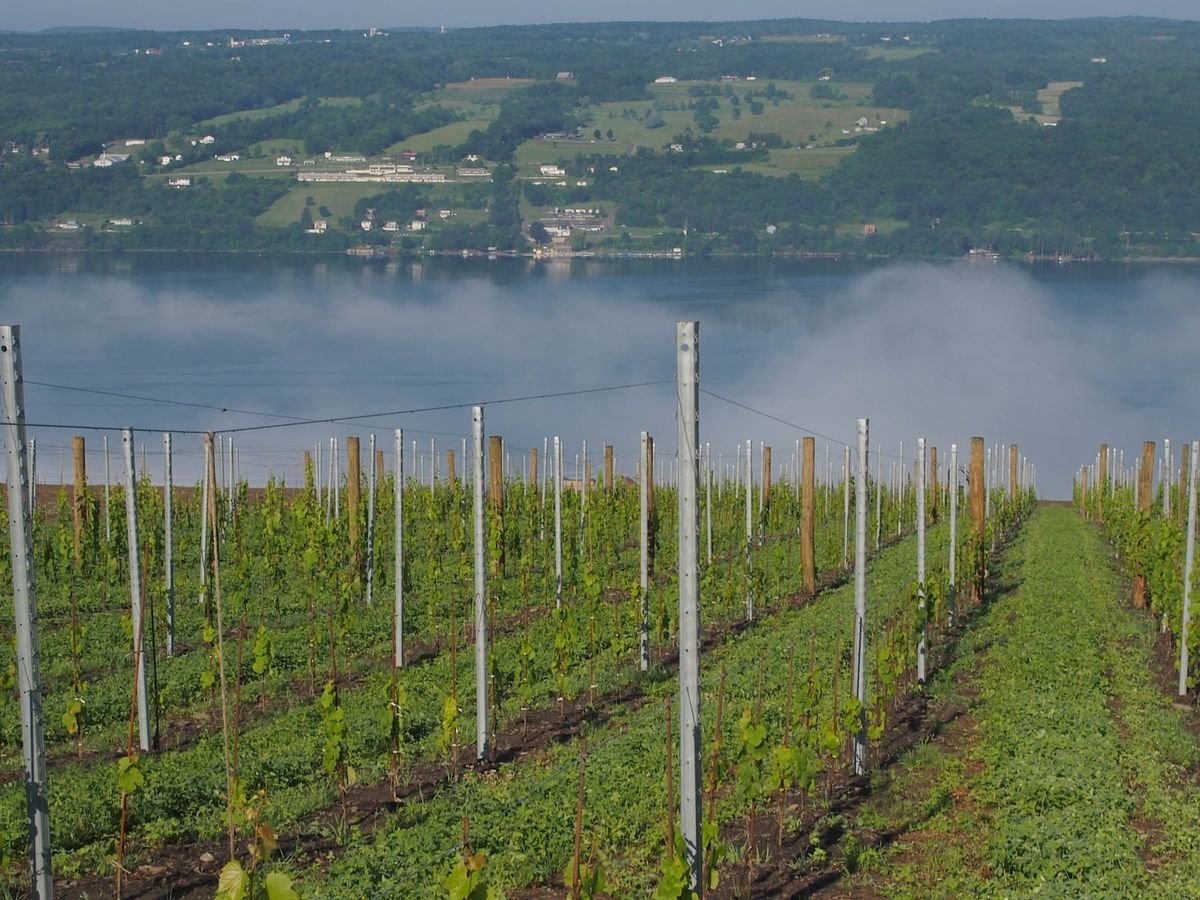
The FLX is beautiful, but also not easy to understand. However, the most important point is easy to get: how short and intense the growing season is, aka THE UNIQUE CLIMATE. Generally, spring comes here later than in Europe, then the summer nights are so warm the vines are doing photosynthesis at a brisk clip as soon as there’s light before sunrise. Summer are generally humid to very humid, and there can be huge storms the locals call gully washers. I experienced one of these in July 2015, and the sky was black as night at 4pm! Of course, warmth + water = rot (of various kinds).
The shortness of the growing season in the FLX is the reason that when physiological ripeness arrives the grapes in the FLX still have plenty of acidity. The acidity numbers for Riesling there are similar to those of the northerly regions of Germany in a cool year. This makes the wines sleek, cool and racy even when they reach 13% plus natural alcohol. For those vineyards where summer or early autumn rot is avoided the final ripening phase can then be long and slow, particularly if conditions are cool. Oh, and the winters can be bitterly cold to the point of killing many of the dormant vines buds, drastically reducing the next year’s crop. The fact that the two largest and deepest lakes - Seneca and Cayuga - almost never freeze over means they help protect the surrounding vineyards. However, the snow can be very deep as I experienced in March 2015. Inplaces snow ploughs had piled it up much higher than I am tall!
At best I’ve made the FLX sound like a rollercoaster and at worst like a borderline syndrome wine region. The rollercoaster metaphor isn’t mine, I got it from Morten Hallgren of Ravines winery who said to me, „I call it the Finger Lakes roller coaster ride with the changes from vintage to vintage.“ This makes clear the most important factor for the region I’ve so far failed to do is mention: human ingenuity and determination aka THE UNIQUE PEOPLE. They were thin on the ground back in 2004, but now they’re the FLX’s biggest strength and they’re what keeps pulling me back year after year.
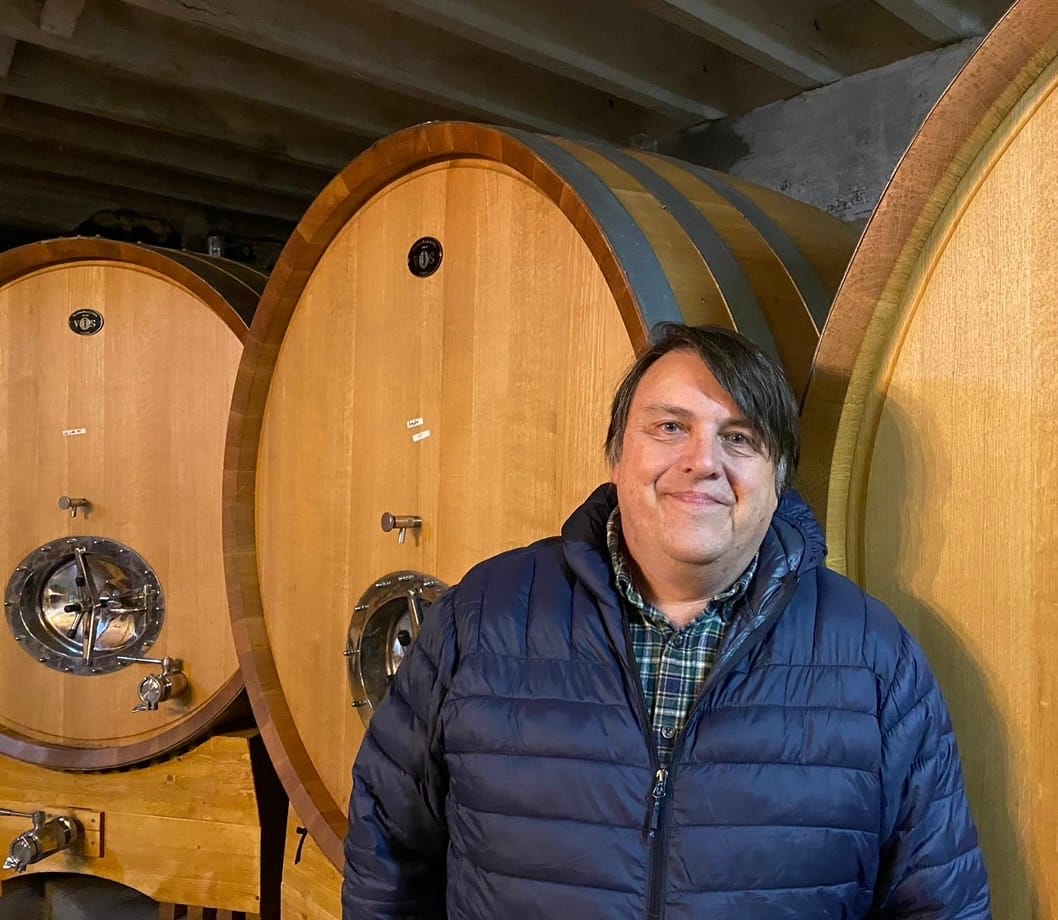
Morten is an excellent example. He's from SWEDEN and had just started his own FLX winery back in 2004. It was tiny compared to the beautiful old building (with a new cellar) Raviens now occupies. However, Morten's not the only Swede here. Oskar Bynke is also Swedish and got his doctorate in agronomy in Gautamala, and he runs Hermann J. Wiemer with local boy Frank Merwarth (from neighboruing Pennsylvania). You might think that two Swedes would do things similarly, but not at all. In recent years the Ravines dry Rieslings became less austere, while the Hermann J. Wiemer dry Rieslings became drier and more mineral. Both these developments are positive, meaning there is not One True Path.
Hermann J. Wiemer himself was nicknamed Hermann the German, because he comes from the Mosel/GERMANY. From the winery's first vintage in 1979 he displayed the talent for balancing racy acidity with a hint of nautral grape sweetness that he brought from his home region. Peter Weis is a much newer arrival from the Mosel and is turning heads with the astonishing speed he's turning his winery into a major player in the region. Johannes Reinhardt comes from Franken/Germany and built his small Kemmeter winery literally from the ground up, vineyards and all. Probably even me saying that his wines have great finesse, will be too much for Johannes, who doesn't want any journalistic comment on his wines.
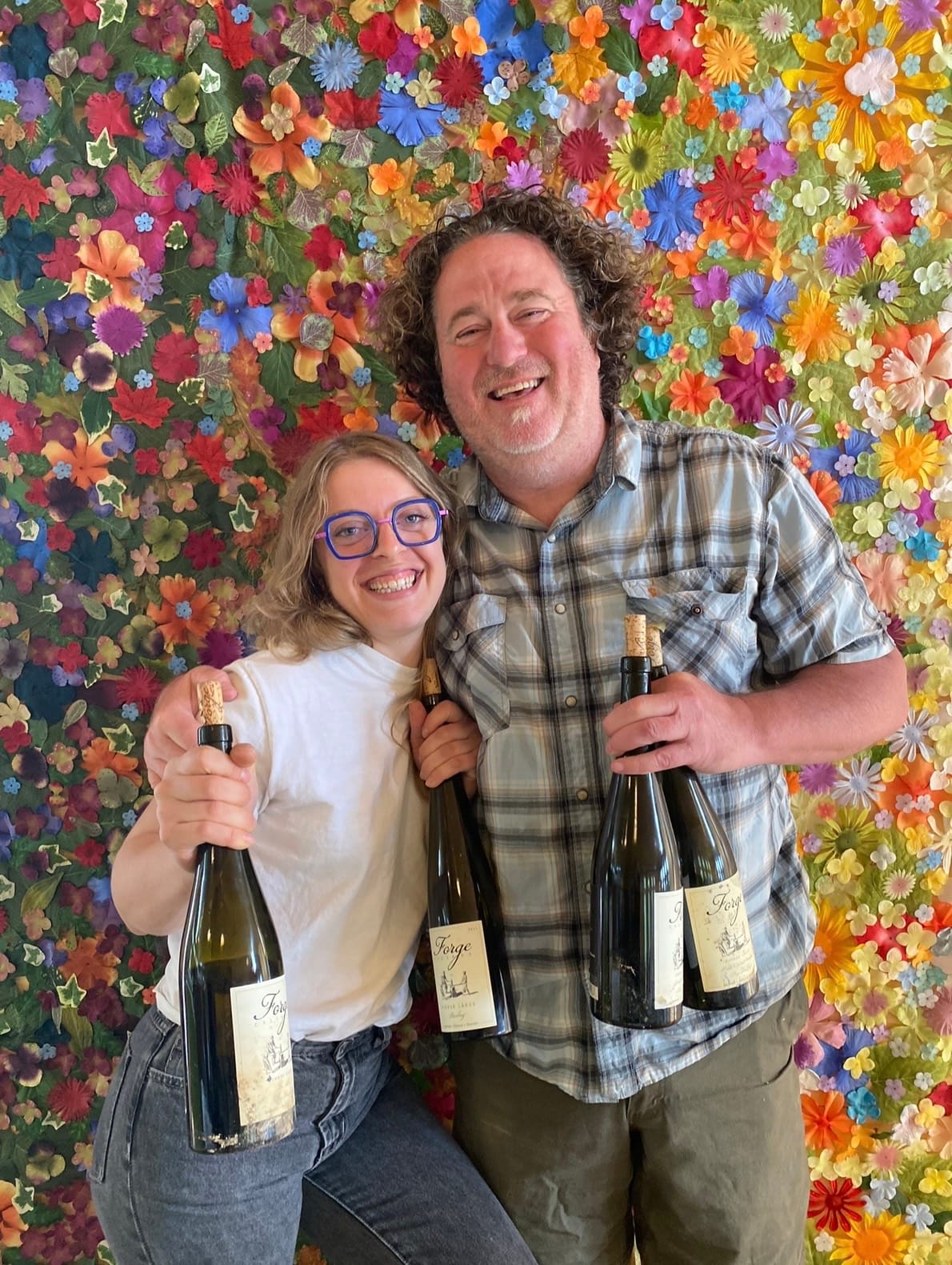
FRANCE is also well represented. Rick Rainey came to the FLX from Florida via Philadelphia and his partner at Forge Cellars is Louis Barruol of Château de Ste. Cosme in the Sothern Rhône/France. Rick's winmaker is Léana Godard whos comes from Grenoble/Franceso, of course, their unique style of dry Riesling is self-confidently francophile. Some of these wines were always remarkable, but the consistency of high quality increased dramatically.
The most extreme European immigrant to the FLX was undoubtedly Dr. Konstantin Frank, who made the first Rieslings in the region's history at his eponymous winery on Keuka Lake in 1962 (also his first vintage). Konstantin was a German-speaker from UKRAINE who brought with him a wealth of experience in growing vinifera grape varieties in regions with cold winters. His great- granddaughter Meaghan Frank is successfully reinterpreting her family's tradition for the second quarter of the 21st century.
Some also came to the FLX from the West too. Nancy Irelan left CALIFORNIA and a well paid job with industry giant Gallo to found Red Tail Ridge winery with her husband Mike, an accountant who has become a great grape grower. More about her in the story that includes sparkling wines.
There are also aserious number of immigrants from NEW YORK CITY, most notably Peter Becraft of Anthony Road, Bruce Murray of Boundary Breaks, plus self-taught Pinot Pioneers Tom and Susan Higgins of Heart & Hands. As you will find out by reading the tasting notes below and in the subsquent two stories, all of these people have achieved great things during the last years. Nova McCune Cadamatre MW also belongs in this group, although she's been in the region (on and off) since she started studying at Cornell in 2006. She does winemaking consultancy for a number of wineries in California and runs Trestle 31 winery ith her husband Brian J. Cadamatre.
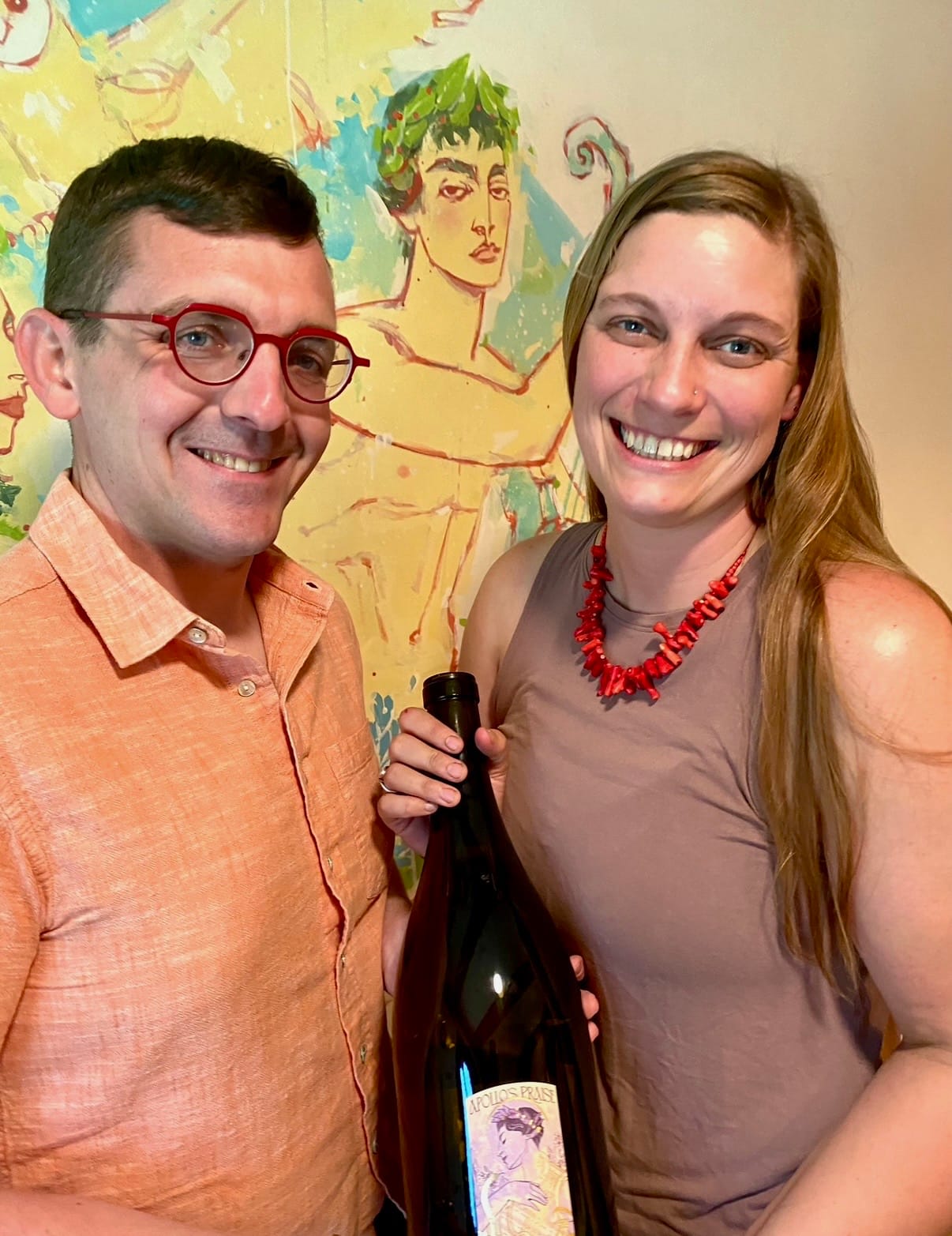
SELF-TAUGHT, i.e. without a degree in winemaking, is common in the region. For example, Julia Hoyle is the chief winemaker of Hosmer, and wth her husband Kelby Russell she founded the Apollo's Praise winery. Their story says so much about this phenomenon, that they almost define it. Yes, they both worked at Fox Run where they learned a great deal from then winemaker Peter Bell (which young winemaker in the region didn't he train or assist at some point?) but both make wines stylistically far removed from Fox Run.
Kelby is a local boy, but studied political science and economics at Harvard. He wanted to go into orchestra management, then discovered wine and from 2013 to 2023 was the chief winemaker at Red Newt winery. Julia is from Philadelphia, studied French and womens' studies at William Smith College in Geneva/FLX, then was assistant winemaker at Sheldrake Point before joining Hosmer late 2016. In 2023 she and Kelby purchased the ?? hectare Lahoma Vineyard on the West bank of Seneca Lake and launched Apollo's Praise a winery with two winemakers using rented space in two cellars. And they are amongst the most exciting new wines in the region.
The wines from flying winemaker Paul Hobb's daring FLX project Hillick & Hobbs also fall into this category. Local girl Lynne Fahey is the enormously talented young winemaker who made the 2021 - 2025 vintages there. All of thos e wines are exciting, but the 2024 vintage wines will go down in regional history as FLX milestones. Unfortunately, she left the winery on the 1st October this year before the main harvest; a rare piece of sad news from the region
So, just how did so many great things happen in the FLX within so few years?
Individual commitment and determination were very important, but far more important was the development of a WINEMAKING COMMUNITY in which experiences and information are shared without hesitation. I admit that I am guilty as charged of being a small part of that HIVE MIND.
This text doesn't tell the whole story, but we have tomove on to the 106 tasting notes I wrote between Mid-June and this afternoon. Please accept my apologies that this amount of space enables me to give you the Big Picture, but not all the Beautiful Details. You'll find more of them in the following two stories.
FLX DRY RIESLING MILESTONES
Apollo’s Praise Seneca Lake Riesling Lahoma Vineyard The Knoll Dry 2025 - 12.7% / At first intense white peach, then as this extremely youthful wine aerates it flips to yellow and pink grapefruit with notes of ginger, spring blossoms and flint. Mind-blowing concentration and wet-stone minerality on the bladerunner palate. Great tension, but also hedonism although it is bone dry! Incredibly long totally focused finish. 98 (SP)
Forge Cellars Seneca Lake Riesling Bellows 2024 - 13.5% / Very concentrated and elegant with great stony minerality. Fantastic drive in spite of all the textural richness. Graceful finish with great lime zest freshness. From the home vineyard, which is also their highest altitude site (over 300 meters above sea level) in this producer’s portfolio. 96 (SP)
Hillick & Hobbs Seneca Lake Riesling Estate North Ravine Dry 2024 - 12.5% / Look below the surface of this deep pool of pristine Riesling beauty to see the shale and slate far beneath the surface! Fantastic youthful nose of orange and peach blossom that pulls you inexorably into this extremely concentrated and pristine wine. Powerful and almost endless finish that’s totally wet-stone. 97 (SP)
Ravines Finger Lakes Riesling Limestone Springs Vineyard Dry 2022 - 12.5% / The Clos Ste. Hune of the Finger Lakes? Almost! Hang onto your hat, because this is a rich and dramatic dry Riesling. Compact without being a jot heavy. Incredible citric power at the extremely long, harmonious finish. 96 (SP)
Hermann J. Wiemer Vineyard Seneca Lake Riesling HJW Vineyard 2024 - 12% / Ripe, powerful and structured for a vineyard site that’s normally all about cool elegance. However, those things do come through at the finish with a stony minerality that builds to a stunning finale. I love the apricot and candied orange character. From vines planted in 1977 & ’78. Demeter certified. 96 (SP)
NOTE: Only paying subscribers can view the notes for all 106 wines tasted below. The ratings include one wine with 99 points.