HÖFFLIN: A Little-Known Star in the Constellation of Baden
White, Red and Orange Excellence!
By Frank Ebbinghaus - last revision: 28.04.26
Please be patient! Frank, Stuart, Tim and Pawel are currently working feverishly to input their hundreds of tasting notes for 2025 vintages wines from the Mainzer Winbörse. Here's a portrait of a star that's been slowly rising for a long time.
PART ONE: 21st CENTURY KAISERSTUHL REALITY
Hot, hotter — Kaiserstuhl! With over 1,700 hours of sunshine a year, this volcanic plateau in the Rhine Graben, north-west of Freiburg, is Germany’s warmest wine-growing region. No wonder, then, that the challenges of climate change are particularly evident here for winegrowers.
It is not just the heat of the sun that accelerates ripening. The loess and loess-clay soils, often metres thick, which cover the volcanic rock, store heat exceptionally well and release it to the vines at night. Anyone wandering through the picturesque sea of vines in the Kaiserstuhl during the summer heat feels as though they might evaporate. This landscape is like a natural thermal power station! On top of this loess is very water-retentive, and this keeps photosynthesis going in the vines even during a summer drought.
In the past, the wines produced here were predominantly characterised by excessive richness and rusticity. However, the trend towards freshness and finesse has long since spurred the ambition of the Kaiserstuhl’s top winemakers. To uphold the reputation of this Eldorado for red and white Burgundy grapes and their wines, (which they share with their colleagues in neighbouring Breisgau and Markgräfler Land,) they go to enormous lengths to ensure their wines possess excellent balance and finesse.
Meticulous vineyard work, early harvesting, painstaking grape selection, and the (permitted) acidification of the musts (just like in Burgundy) are just as important as the ability to dispatch a harvesting team to the vineyards at a moment’s notice when heavy rainfall during the harvest season throws all the winerakers’ plans into disarray. The aim is to capitalise on the benefits of climate change and minimise the risks posed by heat, increased sunshine hours and heavy rainfall, whilst achieving optimal ripeness combined with elegance, delicacyand finesse. Top winemakers are responding with a variety of strategies.
PART TWO: ORGANIC WINE HISTORY
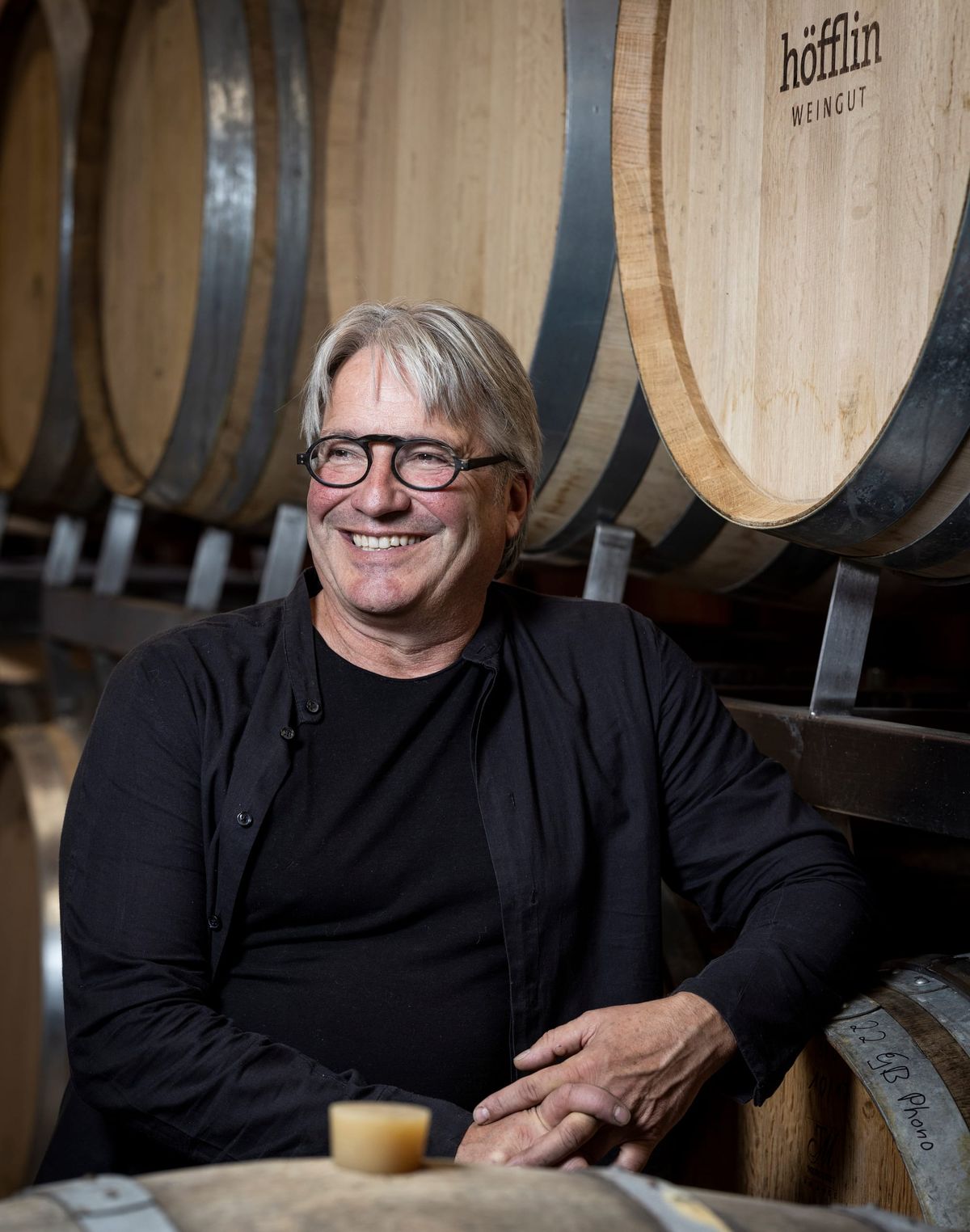
The Höfflin Winery, situated in Bötzingen in the heart of the Kaiserstuhl region, has been committed to organic viticulture for more than five decades – the winery has been certified by Bioland, the largest organic farming association, since the 1970s.
Back then, those committed to organic farming were regarded as ‘cranks’ by mainstream West German society and the wines were marketed as alternative products through alternative distribution channels. It was not until 2007 that winemaker Matthias Höfflin, who has run the winery since 1987, began to move away from this approach. The wine ranges in organic stores no longer met his heightened quality standards. At the same time, he noticed that a shift in attitude towards organic wines was taking place in the upmarket restaurant sector. Long-held reservations about overly intellectual, and/or unclean, stale or flawed wines were fading as more organic winemakers produced top-quality wines.
Matthias Höfflin, too, has worked hard to refine his style. The ‘knighting’, as he calls it, came in 2015, when the German wine guide Eichelmann named the Höfflin winery ‘Rising Star of the Year’. Since then, German wine critics have had him on their radar. Internationally, however, the 17-hectare winery is still a relatively unknown quantity, which is certainly also due to the fact that the winemaking style is not exactly in line with market trends. Only 20 per cent of the wines are exported. However, chic wine bars in Scandinavia, the USA and Japan have now taken notice of Höfflin. The famous three-star restaurant Sühring in Bangkok has been serving Höfflin wines for some time. So, word is getting out.
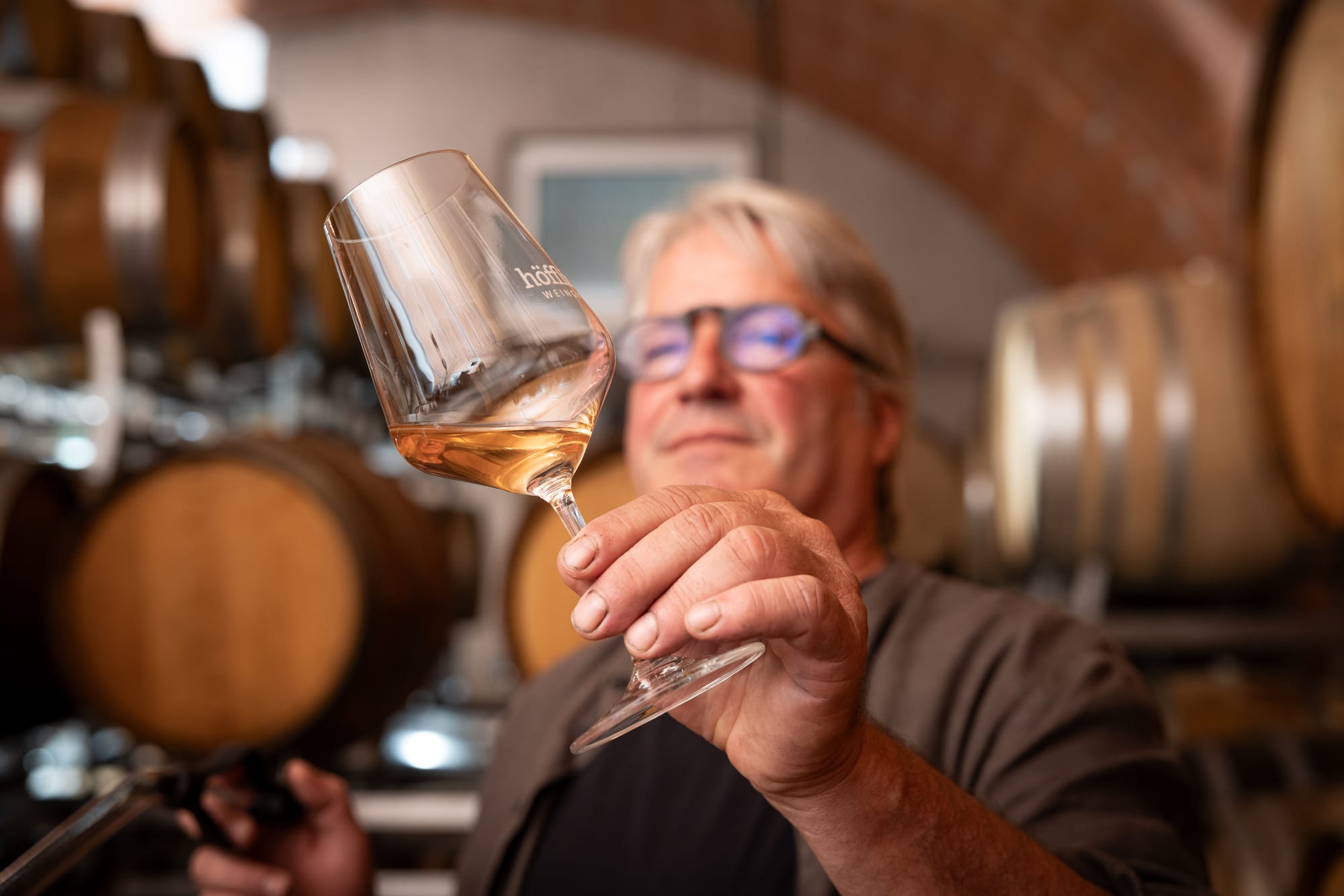
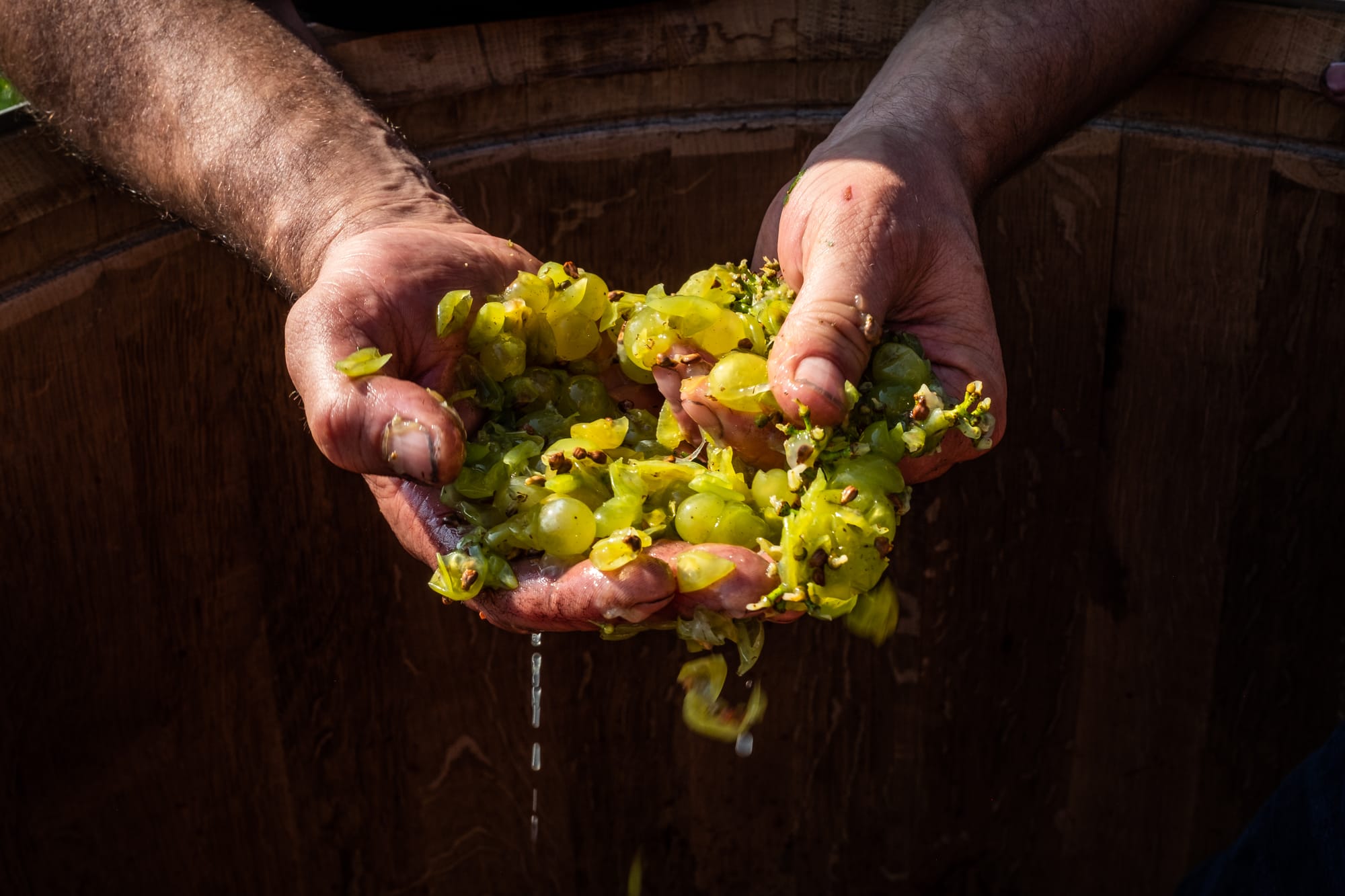
Winemaker Matthias Höfflin produces bone-dry, fully ripe wines with mostly moderate alcohol content, (some with barely more than 10% alcohol by volume), which are bottled unfiltered with only a minimal addition of sulphur. Freshness and vibrancy are ensured not only by an early harvest, but also by a certain maceration period, also of the white grapes, spontaneous fermentation (sometimes on the skins) and often several years’ ageing in barrel on the lees. The result is astonishingly fresh and pure-tasting wines that are incredibly easy to drink. This impression runs through the entire range.
Anyone who shuns orange wine and is put off by white wines with extended maceration or even skin contact fermentation with low sulphur levels should give these a try: Höfflin’s white wines rarely have oxidative notes, and when they do, these form part of a complex and attractive aromatic profile. Above all, however, they captivate with their freshness, structure and unique aromas. This is particularly true of their top range, the ‘Naturreich’ wines: they have been fermented on the skins, often spend several years in barrel on the lees, and are significantly fruitier and more expressive.
With Julius Höfflin, the winemaker’s son, the next generation is already making its mark. His own wine range is far more than a mere demonstration of talent. From early harvesting and maceration to extended yeast ageing, he has taken much from his father, yet found his own distinct style.
21 tasting notes, one with 96. and two with 95
END OF THE VERSION AVAILABLE FREE OF CHARGE
ADDITIONAL MATERIAL ONLY FOR PAYING SUBSCRIBERS
But please read on as this is TRIAL MONTH and ALL CONTENT IS FREE!
PART THREE: TWO GENERATIONS OF WINES
SPARKLING WINES
Höfflin Baden Deutscher Sekt Hofcuvée Brut Nature 2023 - 11% / Müller-Thurgau, Pinot Blanc, Scheurebe. Blackcurrant and ripe citrus notes, great finesse and freshness, a lovely, fun sparkling wine. 89 (FE)
Höfflin Deutscher Sekt Cuvée Prestige Brut Nature 2021 - 12.5% / Chardonnay, Pinot Noir, Pinot Meunier. The base wines were vinified without sulphur. Ripe apple, yellow fruits and Meyer lemon provide juicy freshness, whilst the creamy perlage ties everything together beautifully. 92 (FE)
Höfflin Baden Auxerrois Löss/Lehm trocken 2024 - 10.5% / Bone dry (0.5 g sugar), ripe pear, apple, delicate, fresh and delicately creamy due to the long yeast ageing. 89 (FE)
Höfflin Baden Weisser Burgunder Löss trocken 2023 - 11% / A hint of gunpowder, contrasting with the pear fruit, gives the wine real tension, enhanced by the delicate creaminess and superb freshness. 90 (FE)
Höfflin Baden Grauer Burgunder Löss trocken 2023 - 11.5% / Pinot Gris as a bone-dry, light wine from the Kaiserstuhl? Yes, it works here. A chic hint of reduction on the nose, hardly any fruit, but alongside all the freshness, a delicate creaminess that provides balance. Very engaging. 91 (FE)
SINGLE-VINEYARD WINES
Höfflin Baden Weißer Burgunder Waldbrettspiel trocken 2021 - 14% / Pump up the Volume: Here, the vibrant Kaiserstuhl region is at its very best, without a trace of over-the-top kitsch: subtle oak, generous spicy notes, well-integrated acidity and freshness, complex with great potential. The vineyard, named after a local species of butterfly, lies at an altitude of 325 metres; the grapes spent three days on the skins, the wine eleven months in barrels and eleven months in tonneaux. 92 (FE)
Höfflin Baden Grauer Burgunder Phonolit trocken 2022 - 13% / A hint of apple and a hint of oxidation are balanced by very fine oak, a lovely touch of acidity, delicate creaminess and phenolic notes. Very dynamic and exciting. The wine, whose grapes grew on volcanic rock at an altitude of 330 metres, spent two years on the lees in barrel, one year without the addition of sulphur. 92 (FE)
Höfflin Baden Chardonnay Goldammer trocken 2022 - 13.5% / Very complex and refined. Delicate aromas of apple, nut, oxidation and citrus fruits lend the wine a sense of tension, which remains in splendid balance thanks to its phenolic freshness. Elegant, effortless. The grapes grow on a south-facing terrace with loose soil at an altitude of 245 metres. 95 (FE)
Höfflin Baden Sauvignon blanc trocken Zaunkönig trocken 2023 - 12.5% / Give me cassis! Juicy without being opulent, very well-balanced with sufficient, well-integrated acidity. Round, yet refined. The vines are planted on a south-east facing slope at an altitude of 325 metres. 92 (FE)
NATURAL WINES
Höfflin Baden Müller-Thurgau Naturreich trocken 2022 - 11% / A hint of nutmeg, green banana and spices, with subtle tannins providing freshness. Remarkably complex for this grape variety. A prime example of what Müller-Thurgau is capable of. 93 (FE)
Höfflin Baden Grauer Burgunder Naturreich trocken 2018 - 13.5% / A hint of oxidation blends distinctively with ripe apricot aromas, other yellow fruits and a touch of vanilla. Very ripe, yet also very refined. Great tension, balanced with almost dreamlike precision. The wine matured for four years in small wooden barrels. A true Pinot Gris masterpiece! 95 (FE)
Höfflin Baden Chardonnay Naturreich trocken 2020 - 13% / Welcome to the wild side of Chardonnay: subtle reduction, a basket of yellow fruits with orange and pineapple, juicy yet serious, without a hint of kitsch, very complex, a fireworks display of aromas that lingers long. 96 (FE)
Höfflin Baden Muskateller Naturreich trocken 2022 - 11.5% / Rich elderflower, a subtle hint of tannin keeps the wine in balance and ensures freshness and a certain elegance. 93 (FE)
Höfflin Baden Souvignier Gris Naturreich trocken 2021 - 12.5% / Slightly oxidative notes combine with vanilla, nutmeg, nuts and yellow fruits to create a very lively, complex flavour profile. The fungus-resistant Souvignier Gris grape variety was bred in 1983 at the State Viticulture Institute in Freiburg. According to Höfflin, he cultivates the world’s oldest vineyard of this variety. 93 (FE)
REDS
Höfflin Baden Spätburgunder Traubenkirsche 2020 - 12.5% / Subtle oak, very delicate cherry fruit, excellent freshness and balance, very lively. Will age well. 91 (FE)
Höfflin Baden Spätburgunder Schwarzkehlchen 2018 - 13% / Although initially somewhat alcoholic, after aeration a lovely freshness provides balance, then the wine drifts towards a slightly oxidative profile. 88 (FE)
Höfflin Baden Spätburgunder Rotkehlchen 2017 - 12% / Burgundian elegance from the Kaiserstuhl: hints of strawberry and cherry, fine, mellow tannins, with a very long and delicate finish on the palate. Very lively. 40-year-old vines of Geisenheim clones. 92 (FE)
Höfflin Baden Rufus Cuvée 2019 - 13.5% / If the very lovely and initially prominent notes of cassis, meat and cherry were not overwhelmed by a wave of oxidation, this cuvée of Merlot, Cabernet Sauvignon and Cabernet Franc would certainly be a very exciting wine. Was the sample bottle left open too long? No rating. (FE)
JULIUS HÖFFLIN WINES
Julius Höfflin Baden Chardonnay trocken 2023 - 11.5% / This wine displays great finesse: ripe yellow fruits, nuts and citrus notes combine to create a very elegant flavour profile. Very well-balanced and mineral-driven. 94 (FE)
Julius Höfflin Baden Vulkanstoff 2024 – 10.5% / Delicate oak and a touch of reduction lend a Jura-style character to this wine from the Kaiserstuhl. There is plenty of tension here, yet it remains balanced: citrus notes, mirabelle plum, black cherry, plenty of freshness and finesse. A cuvée of 90% Pinot Noir and 10% Riesling. 93 (FE)
Julius Höfflin Baden Spätburgunder 2023 – 11.5% / Here, finesse prevails at every level of flavour: cherry and subtle oak contribute a delicate sweetness; everything is very light, elegant and balanced. A fine acidity provides good drive. 94 (FE)