JÓZSEF SZENTESI: Radical Hungarian Originality
Meet the Archeologist of Indigenous Hungarian Grape Varieties
By Stuart Pigott - last revision: 29.07.26
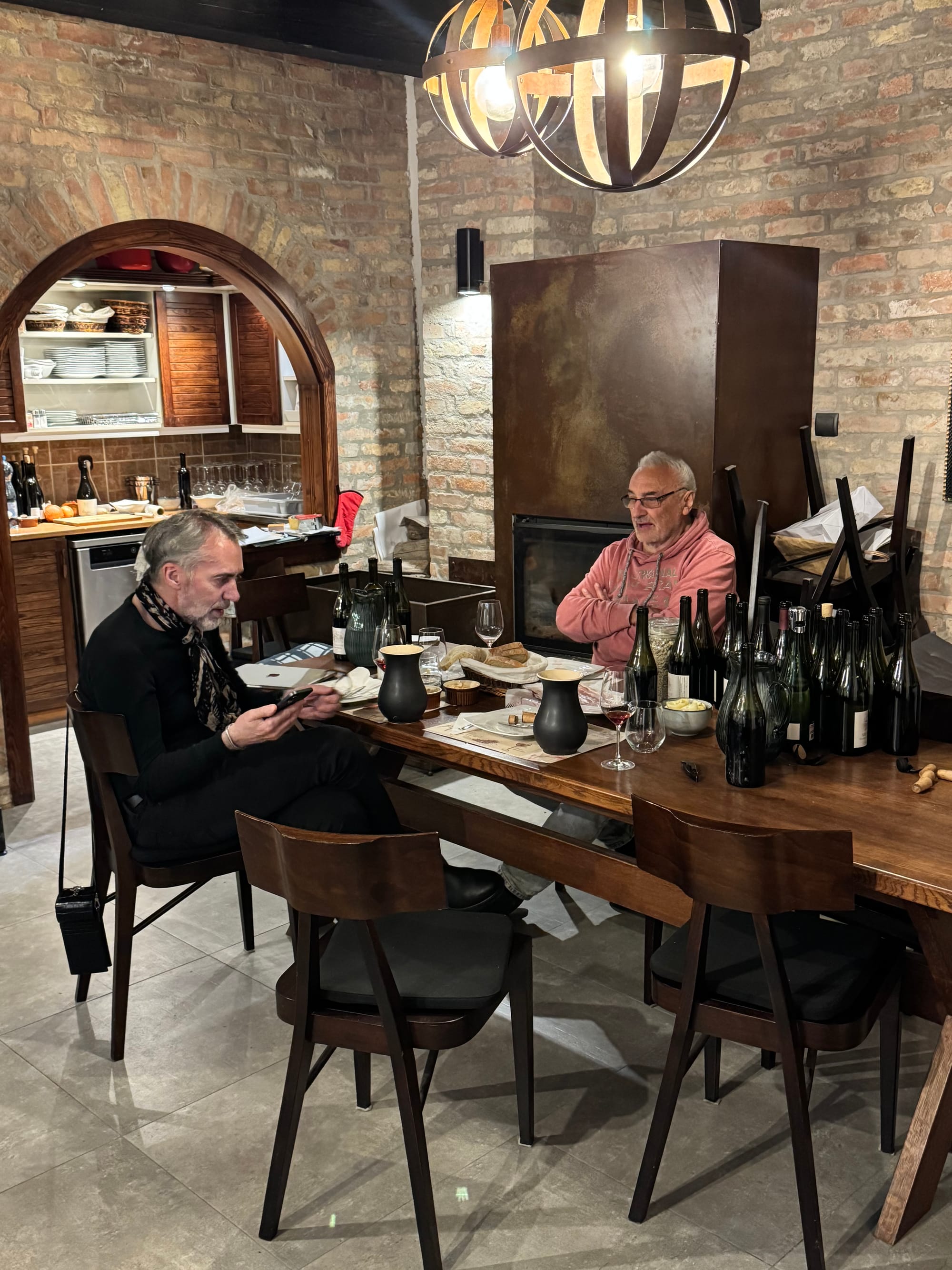
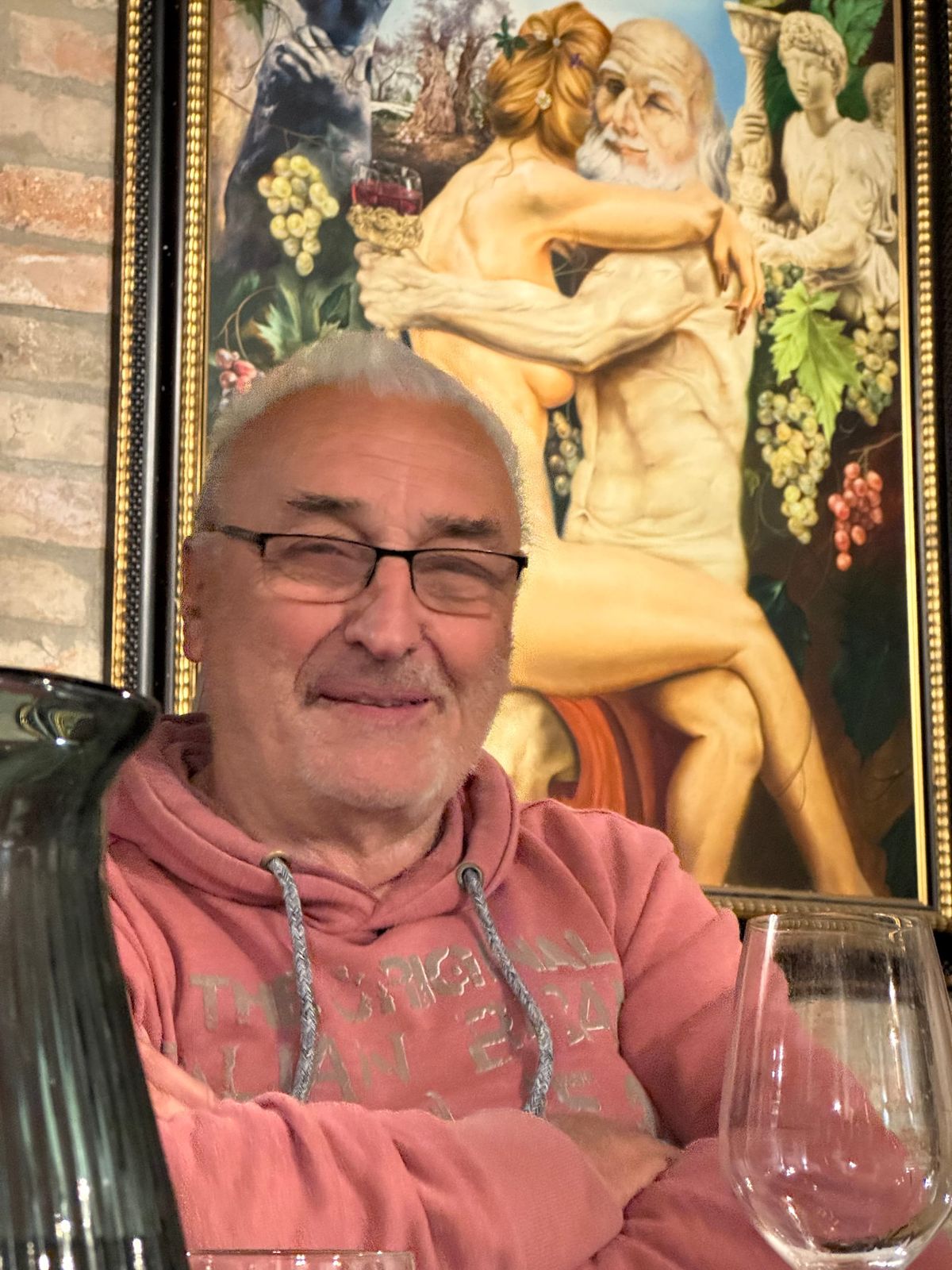
„Do you still drink wine?“ József Szentesi asked me ironically. It was a joke, of course, but he's right: we live in an increasingly wine-hostile world. The 78 year old winemaker had gained some grey hairs since we first met more than 15 years ago, but, let’s face it, so have I. We were sitting in his historic cellar in the Budapest suburb of Budaörs, where villas have replaced all of the wine cellars that used to stand here, that is all but one. That alone clearly announces the fact that József Szentesi is a complete exception.
„When I started making wine back in 1999 I had no idea about the indigenous grape varieties of Hungary, then I began to get really interested in them. At auction I bought books from the 1880s and earlier where I read about excellent grape varieties that I'd never heard of before. So, I hunted them down and planted them. Most other wine producers say I’m totally crazy!“ He’s right that there had long been no commercial production from many of these varieties, but not just during the communict period: since a plague of the Phelloxera mites devasteated almost all the vineyards of Europe during the late 19th century.
When I mentioned József's project to a number of leading Hungarian winemakers they told me the reason these varieties weren't replanted after Phelloxera is that they’re actually no good, that is they are either too sensitive to fungal disease and/or don’t give me any crop. It’s true that the red Csóka tends to give very small yields, however, I think some of the criticism of József Szentesi is based on ignorance. The desire to avoid facing up to the reality that international grape varieties often don’t give very distinctive wines in Hungary may well also play a role. (The sucess of Cabernet Franc and Merlot in Villány are obvious exceptions).
„I reduce the crop level, because I don’t have many casks and the cellar is small!“ Another joke! Szentesi Pince is 17 hectares of vineyards in which about 60,000 vines are planted (about 3,500 per hectare on average), but production averages just 30,000 bottles per year. That translates into an average of just 13.5 hectoliters per hectare, which makes Burgundy look like a high-yield winegrowing region! It could be difficult to turn a profit at this crop level, particularly with the moderate Szentesi prices. However, József is really focused on quality, even more so on RADICAL HUNGARIAN ORIGINALITY.
„I started with no knowledge of winemaking…the biggest problem in Hungary in the wine industry is provincialism. I learned a great deal from my trips to Burgundy. That’s where I discovered the winemaking path I am on.“ Everything in József’s cellar is wild fermented, and a small amount of sulfites is the only additive. His sceptical colleagues dismiss his way of working as old-fashioned, but I think it’s better described as retro. The barrles are 225 and 300 liters from a tonnelerie close to Bordeaux, but the proportion of new oak in the cellar is small. These wines only have a hint of oakiness, or none at all. The emphasis is on the fruit, spice and other grape aromas, which are intense and fascinating.
The question how József financed all this is best answered by describing my first meeting with him. It was back in the spring of 2010 in the café of Gold Centre, a fitness center in Budapest that he ran, but has subsequently sold. I was on an official excursion to Hungary organized by the Geisenheim Wine University. However, sitting in the cafe surrounded by young Hungarians playing billiards, it was one of the most bizarre wine tastings of my life. József’s daring, uncompromising approach and sense of humour were all on display that day. I was greatly impressed by the work he was doing, and it remains that way to this day.
The notes below are from my tasting with József in his cellars in May, 2026. As is easy to see, these are all striking wines, often extraordinarily expressive. All of them come from vineyards on the Velence Hills (Nadap) to the west of Budapest. The soils there are often ancient. As well as cultivating a slew of Hungarian grape varieties there (in the tasting notes the varietal name always comes after Hungary or Nadap in the wine name), he also he also has vineyards planted with the red Bordeaux grapes and Rajnai Rizling akaRiesling. These wines are also very distinctive, and sometimes brilliant.
Of course, this leads us to the question of how influential József’s life’s work has been in Hungary? Almost 50 producers have planted some of these new-old grape varieties, but they are nearly all small producers. Given the long-term nature of winegrowing experiments (10+ year timespan) a proper answer will only be possible in some years time. Also, it is still not clear how much the recent political change in Hungary will affect the fortunes of the wine industry, though I'm cautiously optimistic. However, what József Szentesi has already proved is the principal that Hungarian wine can totally and gloriously original!
TWO WINES THAT BLOW MY MIND
Szentesi Pince Hungary Rajnai Rizling Bátyus 2021 - 13.5% / Stunning Riesling nose of apricot and wild herbs with great complexity. Enormously mineral and very precise on the super-concentrated palate. Then, the finish rolls over you in one amazing flinty wave that pulls you far out to sea. From a vineyard planted on a 300 million year old geological formation in the Velence Hills. 97 (SP)
Szentesi Pince Hungary Tihanyi Kék 2021 - ??% / Right at the edge of the radar screen this Hungarian UFO is suddenly visible. Deep, fleshy and flinty nose! Concentrated and supple with a terrific wild herb liqueuer intensity, that builds to a great crescendo at the finish. A great wine from an indigenous grape variety that's Szentesi's most important rediscovery. 96 (SP)
20 tasting notes in total.