
KREMSTAL ÖTW: Uncool Greatness
Sausages in the Pan, but not much Sizzle ?
By Stuart Pigott - last revision: 27.06.26
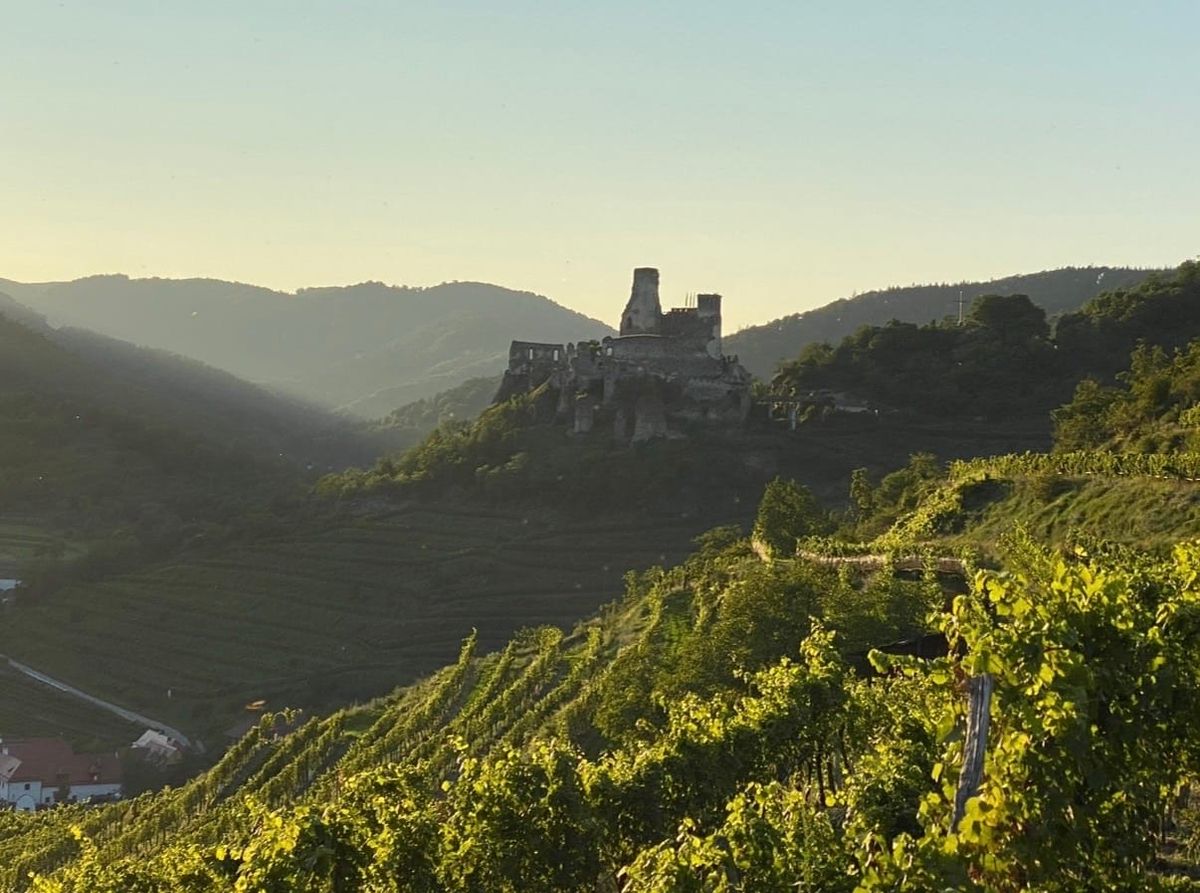
Although gthe Kremstal is quite well known, could it also be the most underrated of Austria’s wine regions. How could that be? The photograph above,which shows the ruined castle of Senftenberg and some of this small town's vineyards says everything about the region's potential for elegant dry whites. My recent tastings confirm that this potential is often relaized, but sadly wine quality don’t automatically translate into a great reputation, much less the coolness that the contemporary wine scene is currently addicted to.
Having the shinning star of the Wachau right next door doesn’t exactly help, according to the ancient Germanic principal that the best is the enemy of the good. Then there’s the large area of vineyards around the city of Krems that are planted with Grüner Veltliner on fertile loess soils that also belong to the kremstal region. They're a source of solid dry whites, but rather few remarkable wines.
This is the first in a series of regional portraits focused on the wines from the members of the ÖTW, aka Österreichische Traditionsweingüter or Traditional Winemakers of Austria, the nation’s equivalent of Union des Grand Crus in Bordeaux or the national VDP winemakers association in Germany. From their foundation in 1991 - my first tasting with them took place back in 1992 - they have been focused on vineyard classification. Since the 2009 vintage they’ve used the designation 1ÖTW for dry white wines from the classified vineyard sites. Currently there are 145 of them in 8 different regions, of which the Kremstal is only one. The great majority of the tasting notes below are for wines of this category.
Classifying your own vineyard sites might seem like an exercise in Winemaker Wish Fulfillment, but for many years the ÖTW has been collecting a large amount of data on many factors, historic and contemporary, to assess each vineyard site. These include the ratings from a large number of critics, and to their credit the ÖTW removed a number of vineyards from the list of classified sites, perhaps because my colleagues and I were not convinced that the wines were up to scratch. So, I am not casting doubt on the seriousness of this undertaking.
While the results of this process for the 1ÖTW sites in the Kamptal have been released (more on that in the next story in this series), I have not seen those for the Kremstal. However, an anonymous industry source told me that the top sites of Senftenberg in the Kremstal are rated higher in the ÖTW's internal assessment than those in the Kamptal. If this is correct then that's a big surprise, and the situation of the Kremstal region was already a complex one!
You see, those top vineyard sites of Senftenberg actually lie in the valley of the River Krems. It flows into Danube in the eponymous city on the northern side or left bank of the Donau. However, the boundaries of the Kremstal region also include a bunch of vineyards on the southern side or right bank of the Danube, far from the valley of the River Krems. Please don’t me wrong, I’m not suggesting that these vineyards south of the Danube are inferior. However, I think there’s no doubt that they’re different to those in the actual Krems Valley or those around on the terraced slopes of Krems-Stein. For example, here the soils are all primary rock, or what the Austrians call Urgestein, whereas in the south of the region there's a mix of soilt types.
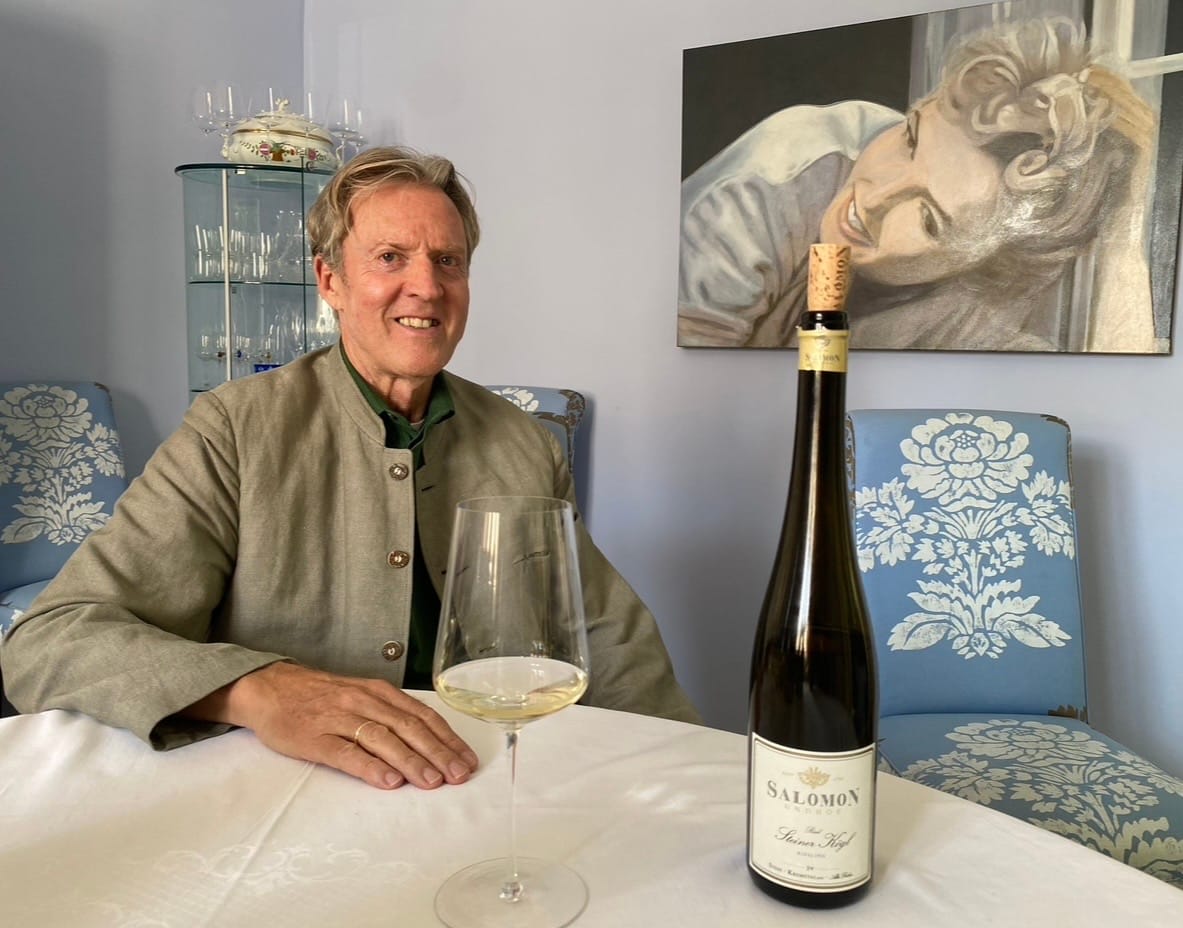
Clearly, the situation in the Kremstal cannot be to a short sound-bite, and therefore demands explanation. Sadly, the region isn't strong on charismatic winemakers to do that. Berthold Salomon of the Salomon-Undhof winery is a rare exception. So, you could say, that there are an assortment of sausages in the Kremstal pan and the pan's definitely hot, but there’s not enough sizzle to attract major international attention to all this tasty stuff.
The fact is that the neighbouring Kamptal region has grabbed the Grüner Vetlliner limelight (more about this in the next story), so the Kremstal’s biggest chance is with Riesling. However, for some years the majority of Austrian consumers have been at best Riesling Indifferent. For them, Riesling’s acidity was a bug, rather than a feature, even if it tasted intensely mineral as is the case of the Senftenberg and Krems-Stein wines. In contrast, the peppery character of Grüner Veltliner combined with medium body - if possible 11.5% to max 12% alcohol - and crispnesswas what the majority of domestic consumers wanted. For a good proportion of them that's what Austrian wine is. This tide finally seems to be slowly turning back towards Riesling, which is good news for the Kremstal.
A significant problem for Grüner Veltliner is how the peppery aroma (scientific term: rotundone) and the malic acidity in the grapes is degraded by heat during the ripening process, so the warmer it gets during the weeks before harvest the less of there are of these supposedly „classic“ markers for the grape you get in the wines. Expressive and crisp Grüner Veltliners with sub-12% alcohol are difficult to produce in the warm, dry vintages which are the New Normal. Quo Vadis Grüner Veltliner?
That's a crucial question for the Kremstal, because Austria's signature grape accounts for 59% (1,323 hectares) of all vineyards in the region. Sadly, this is a problem that the Kremstal shares with many other regions in the Greater Danube Area. In this connection the following innovative Grüner Veltliners are particularly interesting. Is this new stylistic direction a way forward for the region?
THE STANDOUT INNOVATIONS
Stift Göttweig Kremstal Grüner Veltliner Furth 2024 - 12% / What a shining and invigorating modern Grüner Veltliner with floral delicacy and a freshness that makes you feel glad to be alive. So pure and straight at the finish. 92(SP)
Stift Göttweig Kremstal Grüner Veltliner Ried Gottschelle 1ÖTW 2024 - 13% / Such a joyful and expressive Grüner Veltliner, this hops, skips and jumps over the palate thanks to its spring-like freshness. The aromas of apple and lemon blossom are well outside the Grüner Veltliner box in the best possible way! 95 (SP)
75 wines tasted, including one with 99 and two with 98.
TRIAL MONTH HAS ENDED. To read all the tasting notes please sign up for a PAID SUBSCRIPTION. Producers please note that you cannot use the notes and scores published on this site for PR or publish them on your website without a PROFESSIONAL SUBSCRIPTION.