New Beaujolais is Radical, Daring, and it's a Great Bargain!
By Stuart Pigott – last revision: 02.04.26
This is the first of a 14 part series on the wines of Beaujolais. I will try to PUBLISH DAILY. But why give Beaujolais so much space? I hear you ask. Read on and find out! As this is TRIAL MONTH the entire series including all the tasting notes can be read FREE. However, copyright remains with me. In order to use the tasting notes for PR and sales please take out a Professional Subscription.
PART ONE: Once Upon a Time in Beaujolais Everything was New, and Now it is Once Again
Beaujolais... Wait a moment, what are those three dots for? They’re an invitation and I think most readers in the 35 plus age group will already have mentally filled in a word that they feel is missing: Nouveau, meaning NEW. The fact is that untold millions of consumers right around Planet Wine associate Beaujolais exclusively with Beaujolais Nouveau. Each year this baby wine with a reddish colour (but often not much red wine character) is thrust into bottles, then unleashed on a no longer innocent world at midnight on the 3rd Thursday of November. This used to be the occasion for a Global Party and let's be frank, what other wine managed that?
Of course, that’s only weeks after the harvest and is surely a suboptimal path to great red wine. If you add to that the effect of high yields – meaning more grapes than the vines can fully ripen – as was often the case, then you have a recipe for thin wine. In my age group (I’m 65) stories about what the excessive consumption of this beverage could do to you are a generational myth. The implication always is that the (mostly male) narrator lived to tell the tale and is therefore somehow heroic. Regardless whether you enjoyed Beaujolais Nouveau or not, this prototypical Fashion Wine peaked at 105 million bottles in 1988, the bubble burst 2005 and by 2024 sales had fallen to just 14 million bottles. The Global Nouveau Party is over. Anybody want 100 million free paper hats?
That collapse had huge socio-economic implications for the region, as the drop in total vineyard area from almost 21,000 hectares in 2005 to 11,771 hectares in 2024 makes plain. In spite of the scale of this decline, Beaujolais Nouveau remains the economic lifeline for thousands of vingerons, many of whom are now struggling to make a living. However, the biggest problem for the region as a whole is the way all Yesterday Fashion Wines like Beaujolais Nouveau cast long shadows.
Let's Sing those Yesterday Fashion Wine Blues!
For example, Germany still suffers from a Liebfraumilch image problem, and the even larger Lambrusco boom of the 1970s and 1980s did much the same to the image of Italian wine, though for a shorter time. In this century Yellowtail came to define Australian wine for untold millions of consumers, and more than a decade after US sales took a downward turn it still obscures the diversity of Australian wines from millions of consumers. So, Beaujolais isn’t alone in having this cross to bear, and sometimes getting verbally crucified by those unable to look beyond long out-dated clichés.
Thankfully, it's extraordinary how the region has reinvented itself during the last 20 years. My fascination with this is driven by moments of revelations with what I call New Beaujolais, meaning innovativeBeaujolais wines in stylistic directions that range from classical to natural. The last of these moments occurred during my trip to the region at the beginning of March this year, but I’m not going to tell you which wine it was now, because suspense is a powerful tool for every storyteller.
SHE did it! And many others did too.
However, I will tell you that it was produced by Anita Neveu of Domaine Anita (located just outside the town of Chénas). For me Anita is the prototypical New Beaujolais winemaker for three reasons: 1) she had another profession before becoming a vigneronne; 2) she makes wines that are radically different to the Beaujolais clichés, 3) Anita’s a woman. In her case the other profession was cycle racing, and she was part of the winning French team at the 1996 World Championships in Slovenia. The style of her wines is powerful, deeply structured and rich, yet balanced. And she is totally her own woman, in some respects like nobody I ever encountered before.
Anita is just one Beaujolais winemaker, but I can say all three things about a row of other leading producers, and I can say 1) and 2) about a bunch of her male colleagues as well. So, on one level, there’s nothing exceptional about her in the New Beaujolais context, rather she is just one striking part of the revolution that makes this France’s most dynamic wine region.
On another level, what I just told you about Anita only hints at the human story. Wine journalism mostly falls flat, because all that’s at stake is how good the wine in certain bottles tastes. Love and death, fear and longing are the stuff of great stories, and, exceptionally, they’re all present here. You can find much of this on Anita Neveu’s Facebook page, and I prefer to let her tell her own personal story. Suffice to say that from the beginning there were trials and tragedies. However, it is essential to point out here that the label of her most famous wine Coeur du Vigneronne features a fractured red heart. It has been produced since Antia’s first vintage, 2013, and the name refers to the heartbreak of her divorce. It’s her reaction to that pain; her way of turning the negativity into something positive.
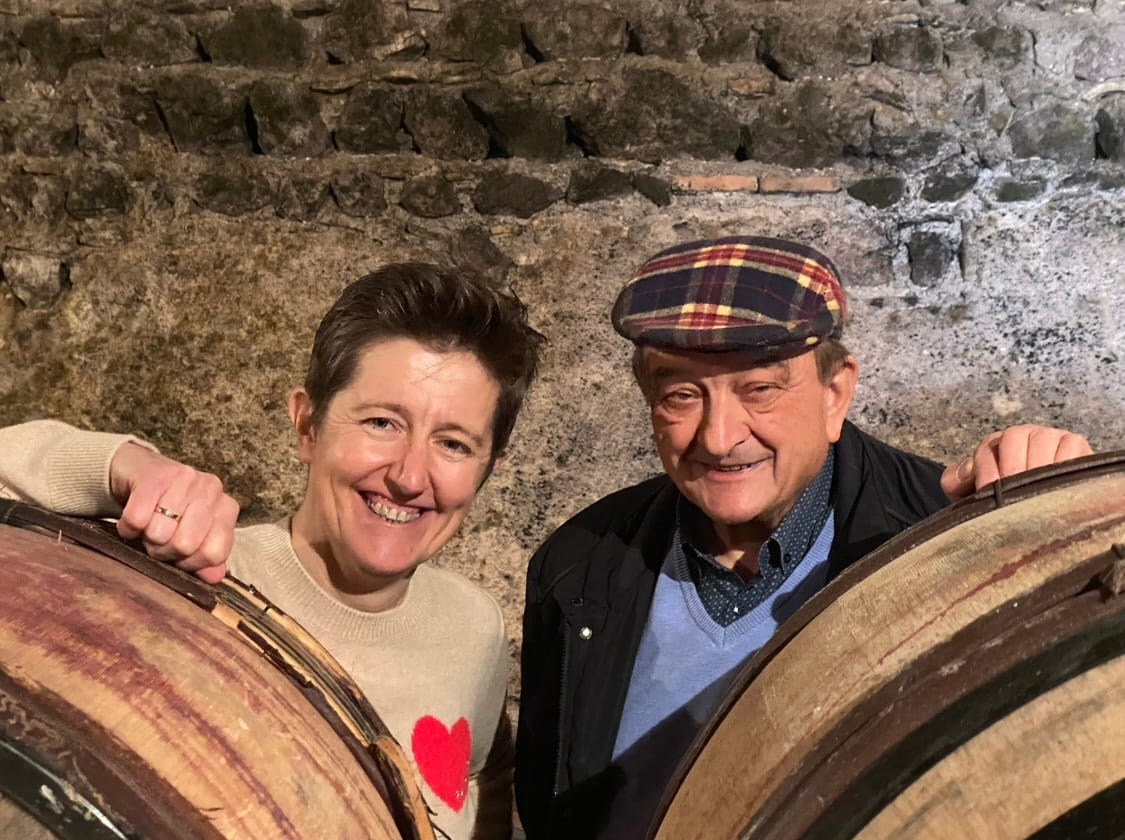
This brings us to Anita’s new partner, Guy Marion. Guy was chief winemaker for the house of Georges Duboeuf (Beaujolais's largest producer) where he worked for decades, and he’s a whole generation older than Anita. Not surprisingly, this strikes a bunch of people inside and outside the region as odd, or even worse. The truth is that they’re an unconventional alliance of talents and personalities: Anita and Guy dare to be different and radical innovation always demands daring!
New Beaujolais and Old Burgundy
Beaujolais is often compared with Burgundy, and that usually leads to it being declared the much smaller brother of Burgundy, or even worse. This perception remains widespread in places as different as Hong Kong and Germany, but is much less prevalent in places like Quebec and Japan; in the 21st century Planet Wine is complex. The rarely told truth about contemporary Burgundy is that it is weighed down by tradition and reluctant to innovate. With some notable exceptions, Burgundy only changes when it’s got no choice. Even the shift of consumer preference away from wines with flashy new oak character didn’t cause some famous Burgundian domains to tone down the smoke, toast and vanilla aromas in their wines. Running on empty!
In contrast to Old Burgundy, New Beaujolais embraces change and sees its future in stylistic and qualitative innovation. Of course, this doesn’t always work out exactly as hoped, but only through experimentation can the winemakers of New Beaujolais find out what’s really possible with the Gamay grape. All the red wines with a Beaujolais appellation are made exclusively from Gamay, a grape variety Burgundians have decried it since Philippe le Hardi, or Philippe the Bold, Duke of Burgundy passed an ordinance denouncing it in 1395. The reason for this is that although Gamay is well suited to the stony granite and volcanic diorite soils of Beaujolais, but it is poorly suited to the clay-limestone and marl soils of Burgundy.
Old Vines are Not Always Good Vines
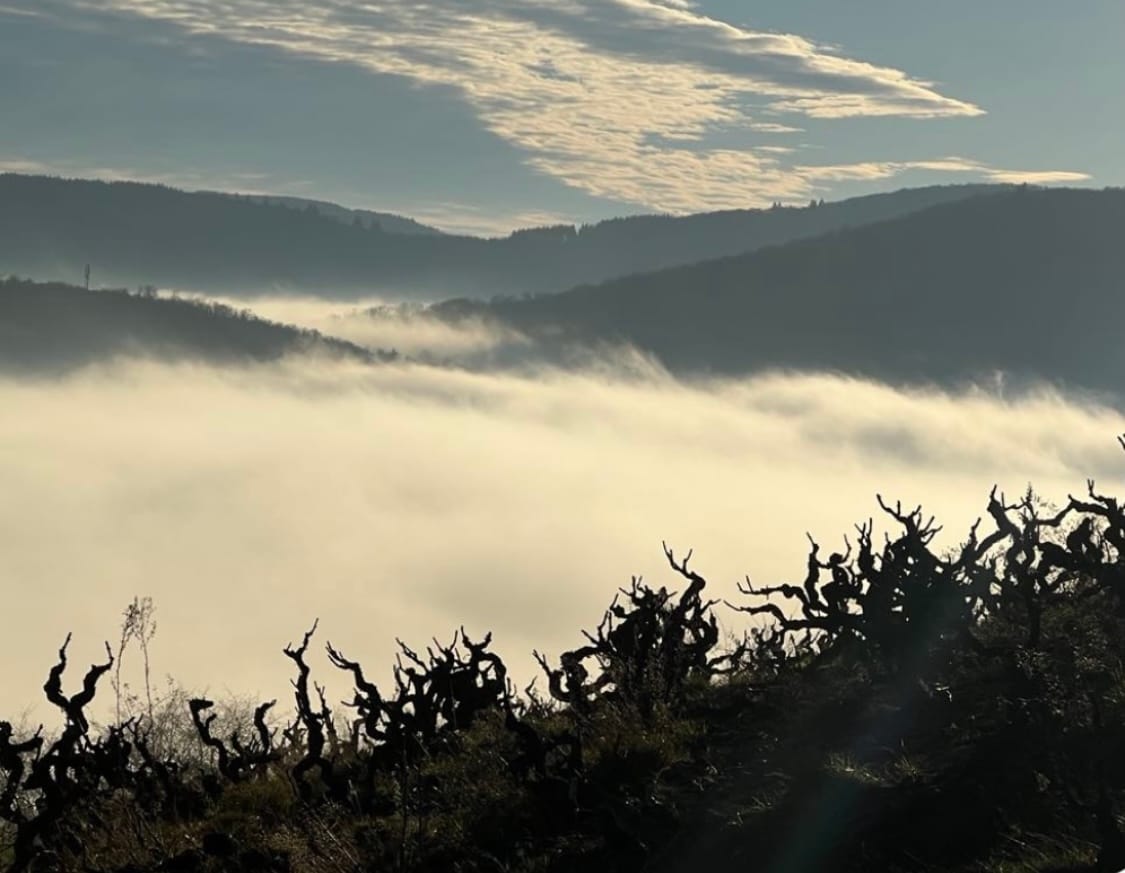
Nowhere are vieilles vignes, or old vines, more enthusiastically worshipped than in Old Burgundy, although almost everything planted there between 1960 and 1976 – now aged between 50 and 66 years – is vines of inferior clones! Driving around Beaujolais you see masses of old vineyards where the Gamay vines reach towards the heavens like gnarled, ancient hands. Alongside steep slopes and views of the Alps, this is one of the things that gives the region its special beauty.
The dramatic hill country of Beaujolais is surely one of the most beautiful wine landscapes in the world! It is also a complex region with 12 different appellations and more in the pipeline. The first time I tasted intensively in Beaujolais back at the beginning of 2019 I found it seriously confusing due to the enormous stylistic diversity. It was only when I returned for a whole week of deep immersion in March 2023 (both trips were while I was working for JamesSuckling.com) that I got to grips with it. Hence my decision to offer you this deep immersion in the wines of New Beaujolais in an easily digestible form: one story about each appellation for reds, plus an extra story about whites and rosés.
PART TWO: Fear Not, Help is on the Way!
In order to make sense of New Beaujolais you will have to abandon, or at least question, some of the things that are still taught about the region, particularly in old wine books. Thankfully, there’s an excellent new book that also helped me make sense of the region and its wines: The Wines of Beaujolais by Natasha Hughes MW (Academie du Vin Library, 2025). As she writes in the preface:
“Even some of the most educated people in the wine world believe that Beaujolais is a wine that tastes of bubblegum and candied red berries, a wine that can only last a year in the bottle before it gives up the ghost of any fruit it once had. The method by which it is made is, they will tell you, carbonic maceration, and all the Cru vineyards are planted on pink granite…”
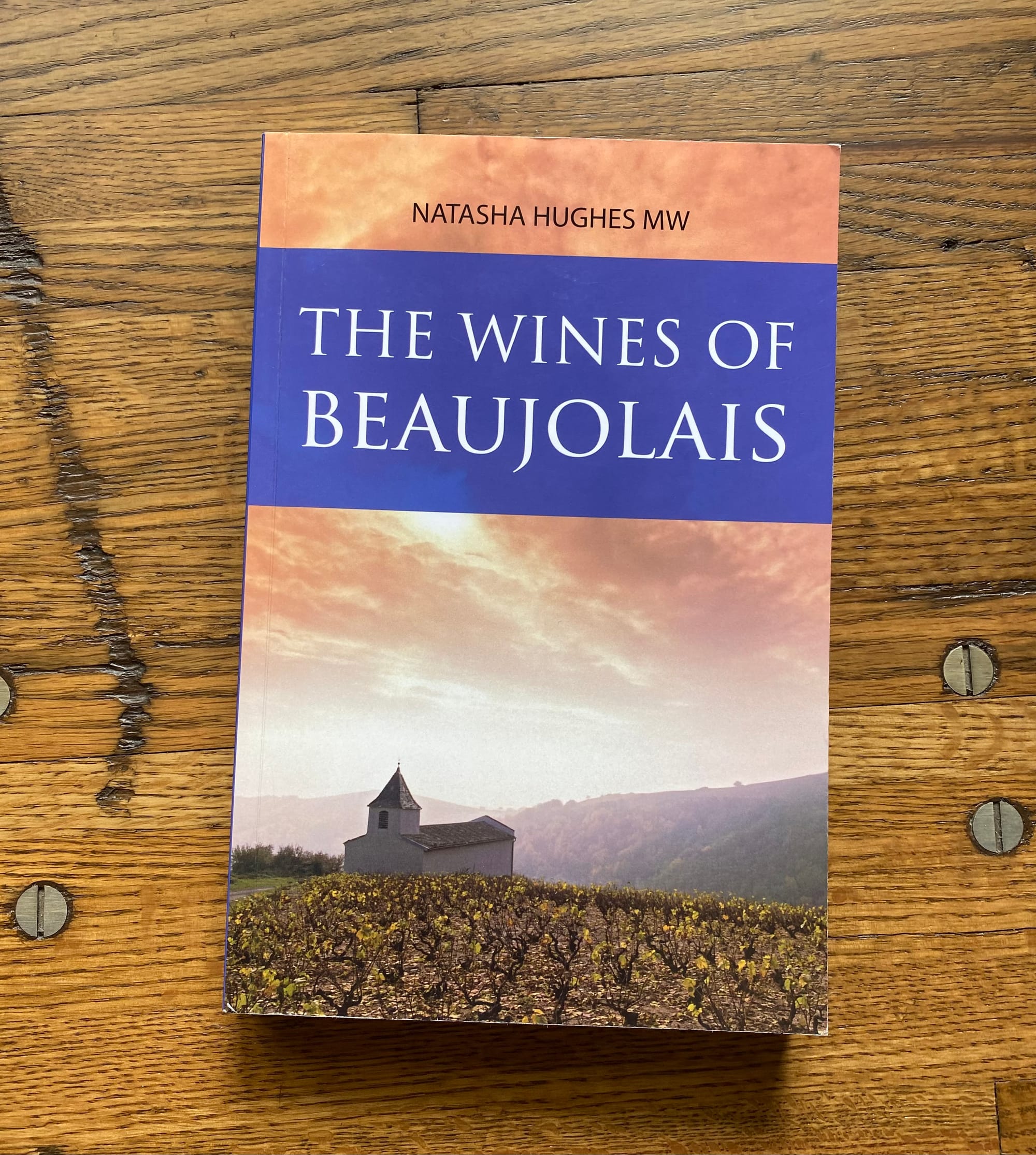
This is Natasha’s compelling thesis, and it reveals the pervasiveness of half-truths about Beaujolais in the wine world, also amongst professionals. To this, I can only add the age-old observation that a little bit of knowledge is a dangerous thing. And it’s particularly so when it is presented as the truth, the whole truth and nothing but the truth. Then, we’re in a so-help-us-God situation!
Of course, you can find the things those things Natasha lists as preconceptions about the region, but her whole point is that there’s so much more to New Beaujolais than just what those clichés describe. This is both the subject of her book and of this series of articles. Let me be frank with you: she has done some things far better than I would be able to do them, particularly the technical complexities of winemaking. For this, and so much else, I recommend her book (winemaking is Chapter 5).
Let me make an observation that explains the other reason I don’t want to get into the technicalities of winemaking. Sometimes I found that I couldn’t identify blind which wines were made using semi-carbonic fermentation (the most common method employed in the region) and those made using Burgundian-type winemaking methods (the norm before semi-carbonic maceration gained in popularity post World War II). I think this has a lot to do with the fact that when Gamay grows on stony granite soil regardless which way it is fermented the resulting wine smells and tastes intensely fruity. It strikes me that the combination of varietal and terroir (French for taste of the place) character in Beaujolais often trumps winemaking to a significant degree. I will therefore be focusing on wine character and originality.
The other thing Natasha’s book does brilliantly is to tell the stories of many of the leading producers, and here we’re in agreement that this is the meat on the bones of every good text about wine. However important terroir is, it is always particular people with particular ideas, preferences and dislikes who make wine. The group of New Beaujolais producers Natasha is most impressed by generously overlaps with my own selection of winemakers that deserve special attention, but each of us has made some discoveries that the other didn’t. This isn’t a sign of anyone’s failure, rather of the richness of talent that is transforming what was a relatively unimportant region for sophisticated and original wines into an extremely important source of them in France.
PART THREE: Good News, Bad News, Who Knows?
Seven years after beginning my exploration of the New Beaujolais I had gained a great deal of experience, and felt that I more or less understood what was going on there. But, sometimes you don’t see the things that are right in front of you, staring you in the face. Then, comes an abrupt moment of realization and the earth seems to move. The other day that happened to me at the Restaurant La Robe Rouge in Villié-Morgon/Beaujolais when the owner, winemaker Michel Guignier, said to me that the biggest problem for the region’s winemakers is “manqué d’assurance” or lack of self-confidence. I think the photograph of him belowmaktsclear that he wasn't referring to himself. However, it was a beautifully sunny day, and the contrast between the view out of the window, the delicious food on my plate, the beautiful wine in my glass and his words was stark.
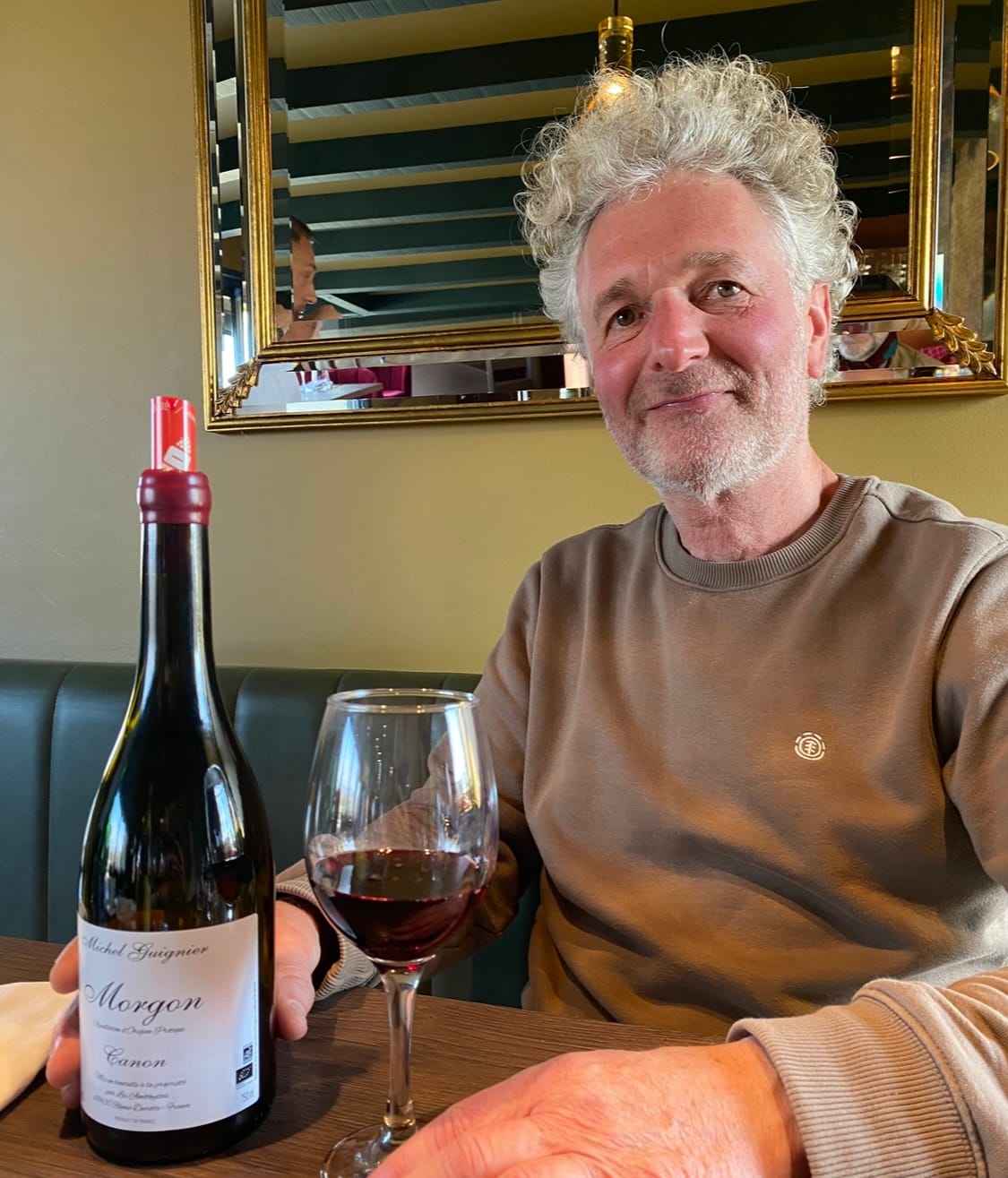
I’d just asked Michel what his Morgon Canon 2024 cost for French customers buying this compelling New Beaujolais directly from him and his reply was 16 Euro. In most of the EU it’s on wine store shelves for about 20 Euro and even in the US, where the three-tier system cranks up the prices of imported wines, it is around $35. So, it isn’t expensive, in fact, the Bourgogne Rouge from Louis Latour, an entry level wine from one of Burgundy’s most famous names is more expensive than this masterpieces of New Beaujolais! Provocatively, I suggested a 50 Euro per bottle price increase to bring it closer to the prices for comparably good wines from Burgundy. And it was then that he drew my attention to what had been right in front of my eyes the entire time since early 2019.
So, it’s not only the widespread preconceptions that’s Beaujolais light in body, character and aging ability that keeps prices down, rather it’s also the widespread lack of winemaker self-confidence. However, from the perspective of consumers this is advantageous, particularly those consumers who are able to overcome those common preconceptions. It means, that with very few exceptions, New Beaujolais is excellent value for money. All you need is some orientation, like Natasha’s book or this series of stories. On the other hand, slim profits for even the best winemakers pull the brakes on the development not only of many individual wineries, but also New Beaujolais as a whole. However, they’re out there, and the next 13 stories will tell you which wines are the greatest bargains in French reds!
PS Who drinks Beaujolais?
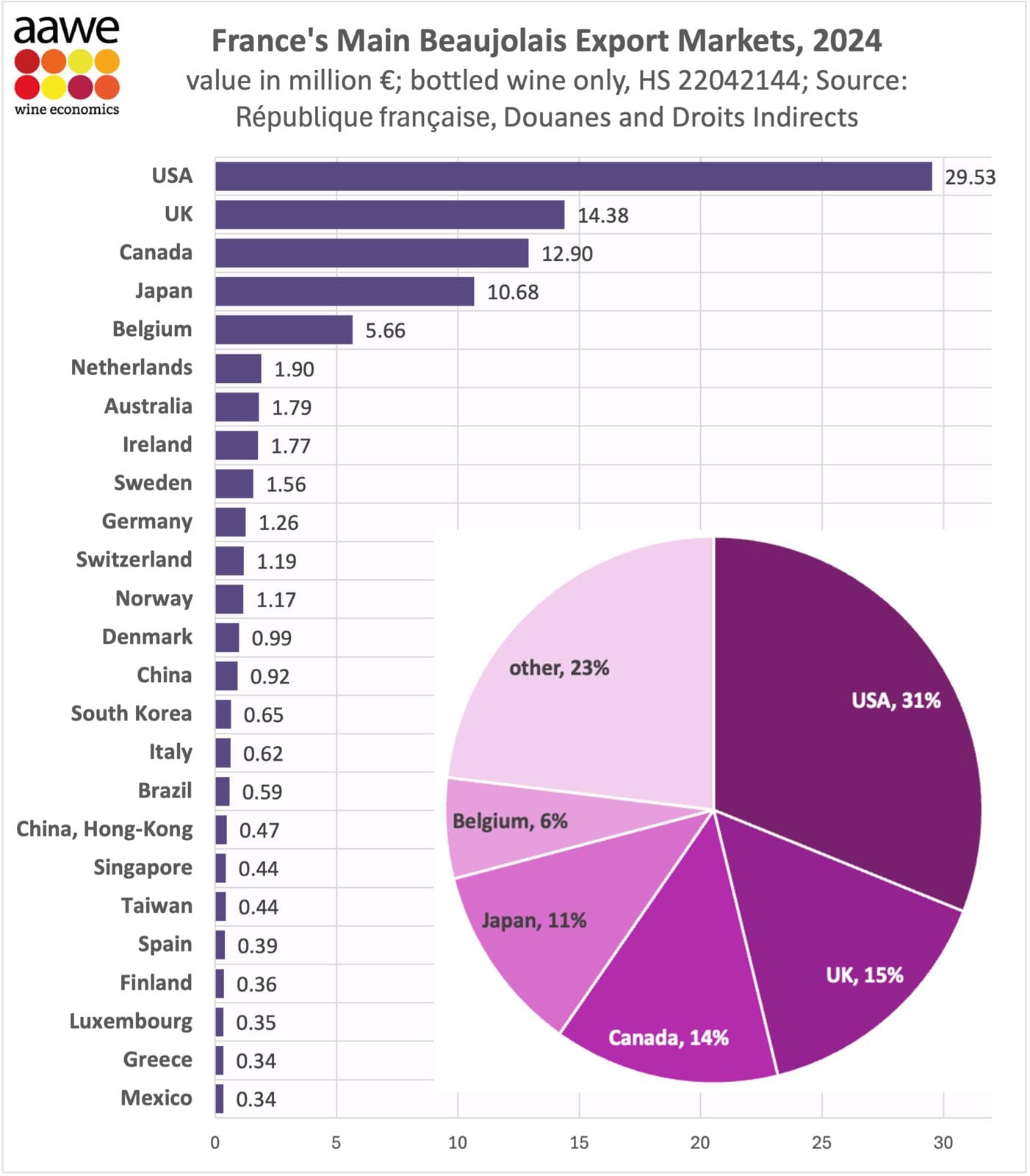
This graphic above shows how the exports of Beaujolais wines in bottle during 2024 break down by market. It was put together by German economist Karl Storchmann for the American Association of Wine Economists (see the excellent AAWE pages on Facebook and Instagram). Yes, the United States of America was the most important market, but in 2024 Americans spent Euro 86,220 per million of population (estimated 342.5 million) on Beaujolais, whereas Canadians spent Euro 311,068 per million population (officially 41.47 million). That’s 260% more than the Americans! Denmark and Sweden are other positive example of openness for New Beaujolais. For Germany the figure is just Euro 15,063 per million of population (estimated 83.65 million) or not quite 5% of the Canadian spend on Beaujolais. OUCH!