STEFAN DOKTOR Part 1: Sledding to Freedom
The icy ride to the top of the highest Riesling peak!
Text by Tim Eichelberger with tasting notes by Tim Eichelberger and Stuart Pigott - last revision: 01.10.26
One of the unexpected side-effects of the Covid crisis was Stefan Doktor pushing Schloss Johannisberg, arguably Germany's most famous winery, back to the very top. But who is he? Tim Eichelberger seeks answers. (SP)
A well-told story about a particularly successful or interesting person can tempt us to search for the things that made them, well, successful and interesting. American science writer Michael Shermer describes this as the "biography bias". In his most recent book, Truth, he points to Walter Isaacson’s biography of Apple founder Steve Jobs as a case in point. Success, of course, is the result of far more than a reproducible set of biographical choices, and biographies rarely account for all the similar stories that didn’t end quite so well. As Shermer puts it: "Want to be the next Steve Jobs, create the next Apple, and become the next billionaire? Attend an elite liberal arts college, drop out before graduation, move back in with your parents, and start a business with your buddy in the garage.”
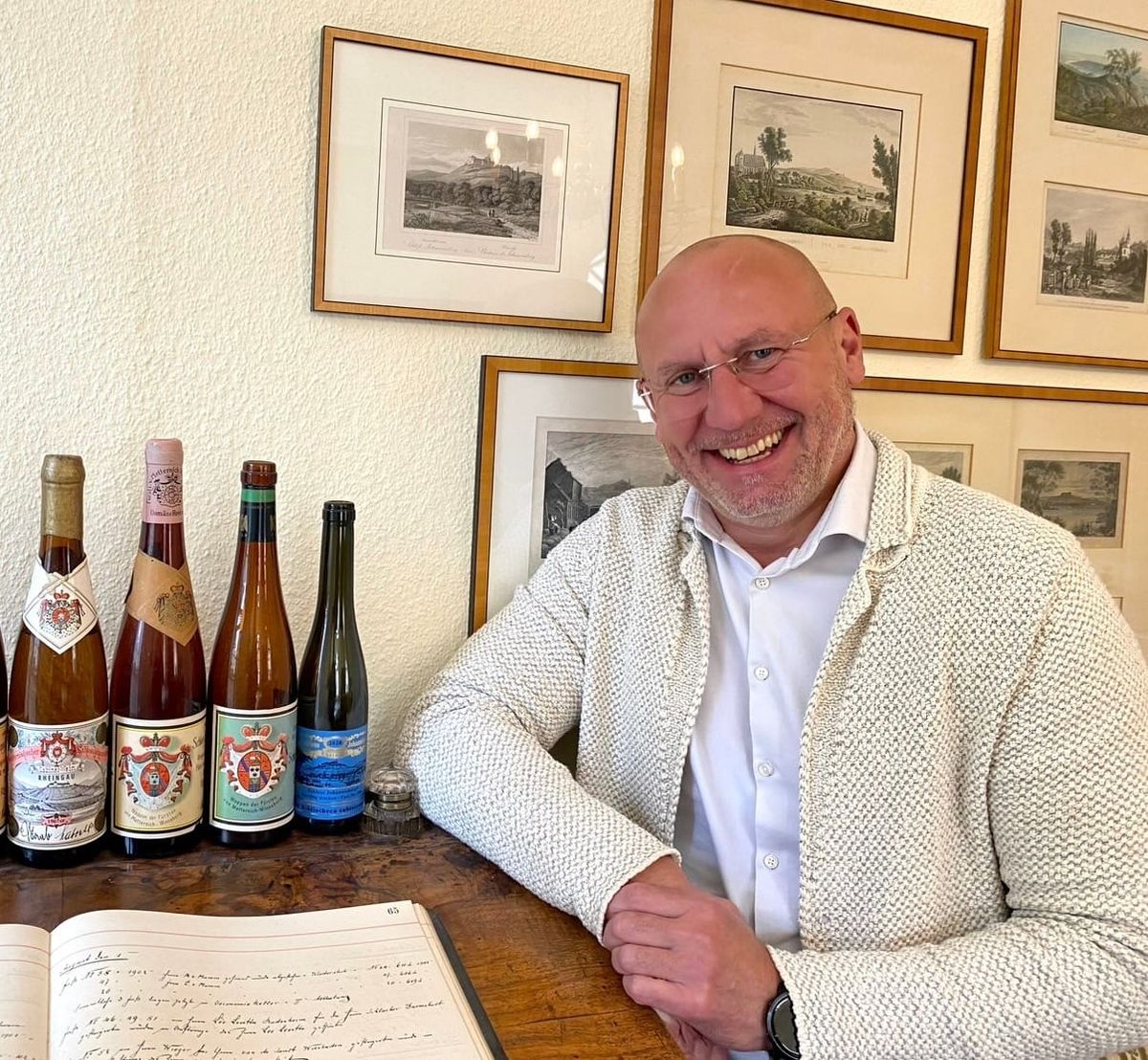
So, why am I telling you about the biography bias, Steve Jobs and success stories? Because when I spent an afternoon in early September with Stefan Doktor - one of two managing directors of Schloss Johannisberg in the Rheingau - I found myself falling for it, drawn into a story deserving of a biographer far better than me.
Let me try to do what Michael Shermer did above when talking about the success of Steve Jobs, but using Stefan’s story as a basis. Want to become a highly respected wine professional and, eventually, the managing director of one of Germany’s most iconic wine estates? Become a professional luge athlete, stop and completely change career paths, go into the hospitality industry, get an education in wine, work on cruise ships for five years, move to Germany, work in a Michelin-starred restaurant as a sommelier, go into sales at Schloss Johannisberg and then simply take over as managing director. Sounds simple, right?
Yeah. I didn’t think so either.
Stefan was born in 1972 along the southern slopes of Slovakia’s High Tatras, a dramatic resort region in the Carpathian Mountains, comparable in some ways to St. Moritz or Davos. Rather than a town in the traditional sense, the High Tatras are a collection of mountain settlements and resorts that had already become famous for winter sports and wellness. Two years before Stefan was born, in 1970, the region hosted the FIS Nordic World Ski Championships, an enormous undertaking that brought major investment and new infrastructure to the area.
Even during the 1980s, Stefan remembers the region as remarkably well maintained, with state-employed gardeners tending the public spaces and a level of care and investment that reflected its importance as a sporting destination. Stefan likes to speculate that the development of winter sports there, as in many of Europe’s great resort areas, owed something to “bored rich people” searching for new ways to occupy their time. His own route onto the slopes, however, was rather different.
Stefan’s mother worked in one of the sanatoriums that had grown up alongside the resorts and, as one of the benefits connected to her employment, Stefan was given unlimited access to the ski lifts and equipment. It allowed him to try alpine skiing for the first time and gave him something that would return repeatedly throughout our conversation: a sense of freedom. Flying down a slope was life-changing. Even decades later, the emotion remains palpable when he talks about it.
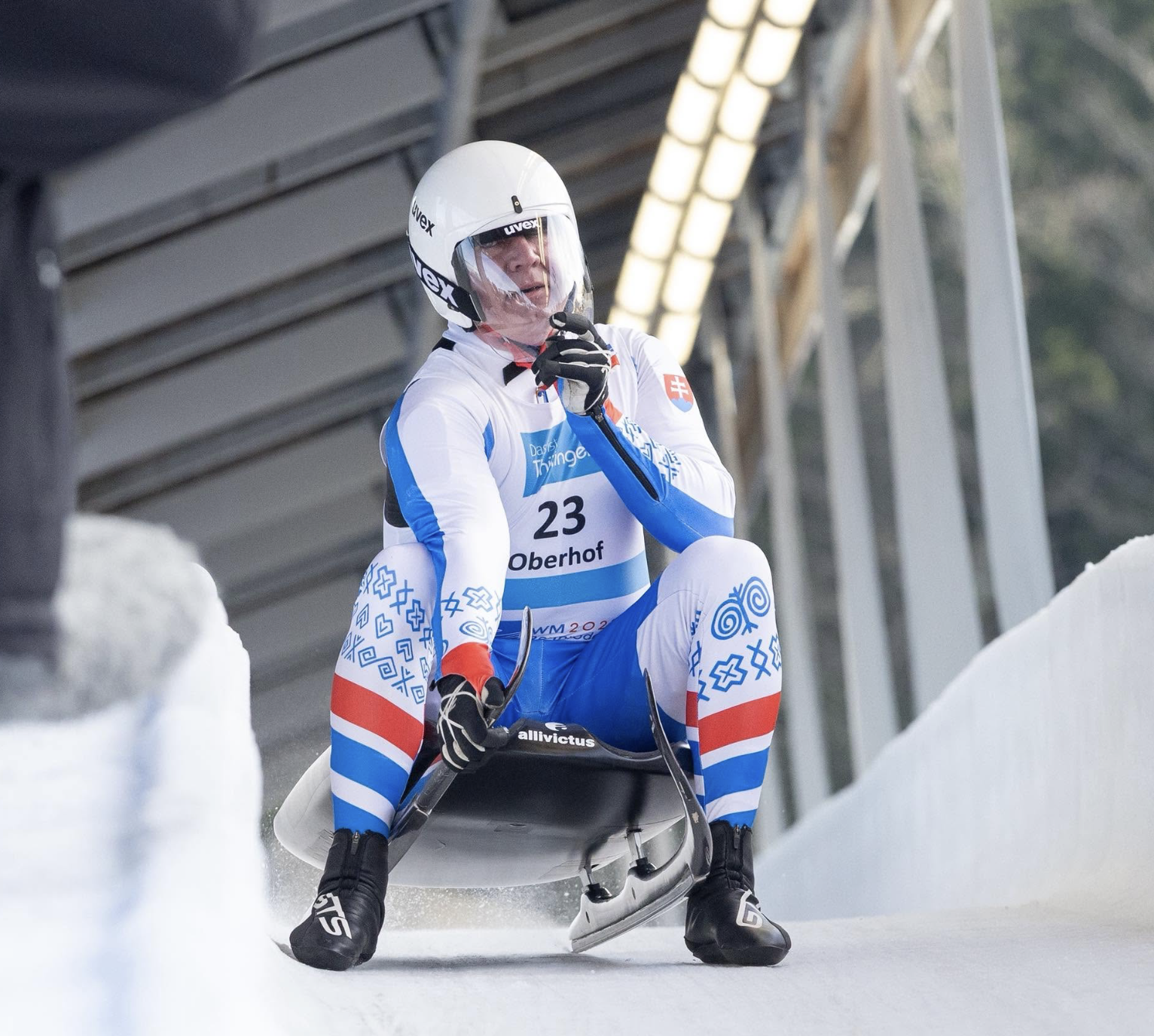
The freedom Stefan found in sport stood in sharp contrast to the constraints of ordinary life in communist Slovakia. He realized early that sport could offer him a small but meaningful degree of independence. Later, as a member of a competitive luge team, it also gave him opportunities to travel elsewhere in Europe and brought him into contact with people from the West.
Stefan remembers one member of the team whose family had escaped Czechoslovakia for the United States, but who was later allowed to compete for Slovakia. His presence helped bring American athletes to the High Tatras to train, giving Stefan greater exposure to what he describes as “western culture” and a certain “level of freedom.”
It was the gap between the freedom Stefan glimpsed through sport and the constraints of ordinary life that eventually brought our conversation to nostalgia, and to that curious human tendency to remember even authoritarian times more fondly than perhaps they deserve.
“When you look at social media, you can find so many people in my age group who say, ‘those were such good times, everything was regulated,’ but this is such bullshit,” Stefan told me. “In one way, yes, everything was regulated, but in the first case, you were not free. You were in a cage. This is what everybody forgets - typical for humans. They look back, they remember the good things, and they forget the bad. You think the past was better? It wasn’t.”
It brings to mind the old line often attributed to American humorist Franklin P. Adams: “Nothing is more responsible for the good old days than a bad memory.”
For Stefan, however, the difference between freedom and constraint would soon become much less abstract. Until then, the West had come to him only in fragments: foreign athletes, conversations, travel and brief glimpses of another culture. Then sport gave him the opportunity to cross the border into Austria for the first time.
And suddenly, as Stefan remembers it, the world went from grey to light.
MODERATELY PRICED AND WIDELY DISTRIBUTED
Schloss Johannisberg Rheingau Riesling Gelblack trocken 2025 – 12% / A stunningly refined and complex dry Riesling from the legend of Rheingau winemaking. Ripe pear, toasted straw and, surprisingly, a touch of fresh-cut garden herbs and sea salt on the long, beautifully structured finish. 93 (TE)
Schloss Johannisberg Rheingau Riesling Gelblack feinherb 2025 – 11.5% / This is a stunning off-dry Riesling, perfect for those who think they don’t like off-dry wines! Peach, white tea leaves and jasmine shine on the extremely well-balanced palate. The gorgeous acidic structure that makes this both floral and racy. What a beautiful glass of white wine for the summer! In most export markets this is the entry-level wine from Schloss Johannisberg. 93 (TE)
NOTE: Only for paying subscribers the notes for all 12 wines tasted can be found below. The ratings include one wine with 100!