STEFAN DOKTOR Part 2: The Mountain Road to Wine
Another great untold wine story!
By Tim Eichelberger -last updated: 17.11.26
Part 2
Do individual leaders really make a difference? It’s tempting to think so - to look for some special quality, be it intelligence, education or charisma, that drives them and those they lead to success. The trouble is, even sociologists, the people best placed to answer the question, struggle to do so. Part of the problem is that, in most cases, we already know how the story ends. And once we know the outcome, it’s remarkably easy to find the traits that seem to explain it. We all know where Stefan Doktor’s journey leads: to Schloss Johannisberg in the Rheingau/Germany, where he is one of two managing directors during one of the most successful periods in the estate’s history. But as Stefan crossed the Austrian border in 1988, none of that history had yet been written.
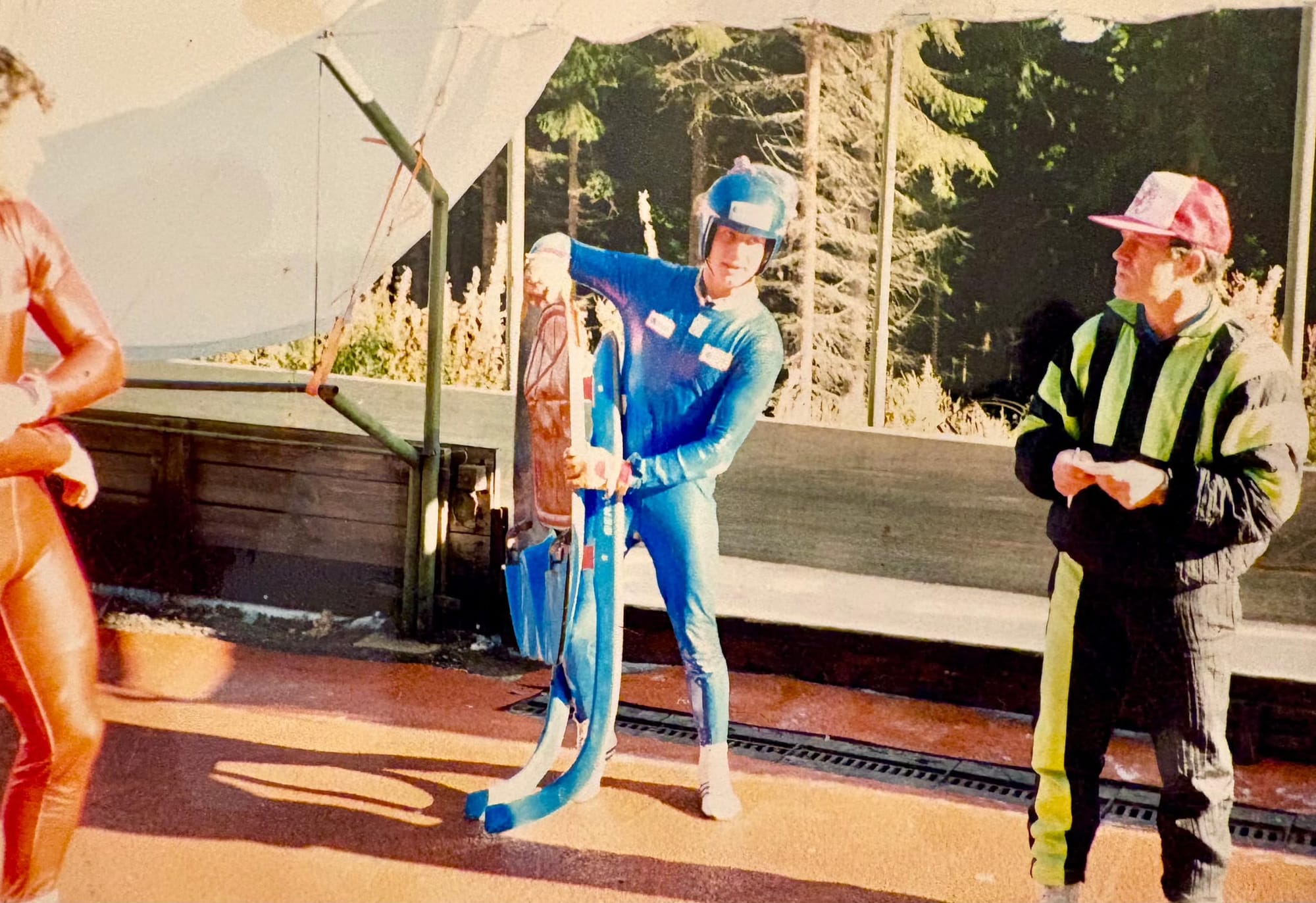
His path to the border began, of all places, in front of a television. Stefan laughs as he remembers his first glimpse of luge and the athletes of the day, who were not, by any modern measure, fit. “I remember my first experience with luge, sitting in front of the television and seeing these terrible, fat athletes,” he told me. “They weren’t athletes like today, everybody strong and fit. You know, if you want to be any good, you need to be powerful. But there they were on the track, and I was thinking, ‘What the hell is this? How can this possibly be a sport?’”
He wasn’t alone in asking. Six months later, at the beginning of September 1984, the Slovakian team changed tack. If it wanted to be competitive, it needed a different class of athlete, and recruiters began targeting students in the High Tatras: young and, let’s face it, fit. The campaign worked. Before long, the team had assembled a large group of young athletes under Mária Jasenčáková, a well-known athlete and coach in the region. Among them was an 11-year-old Stefan.
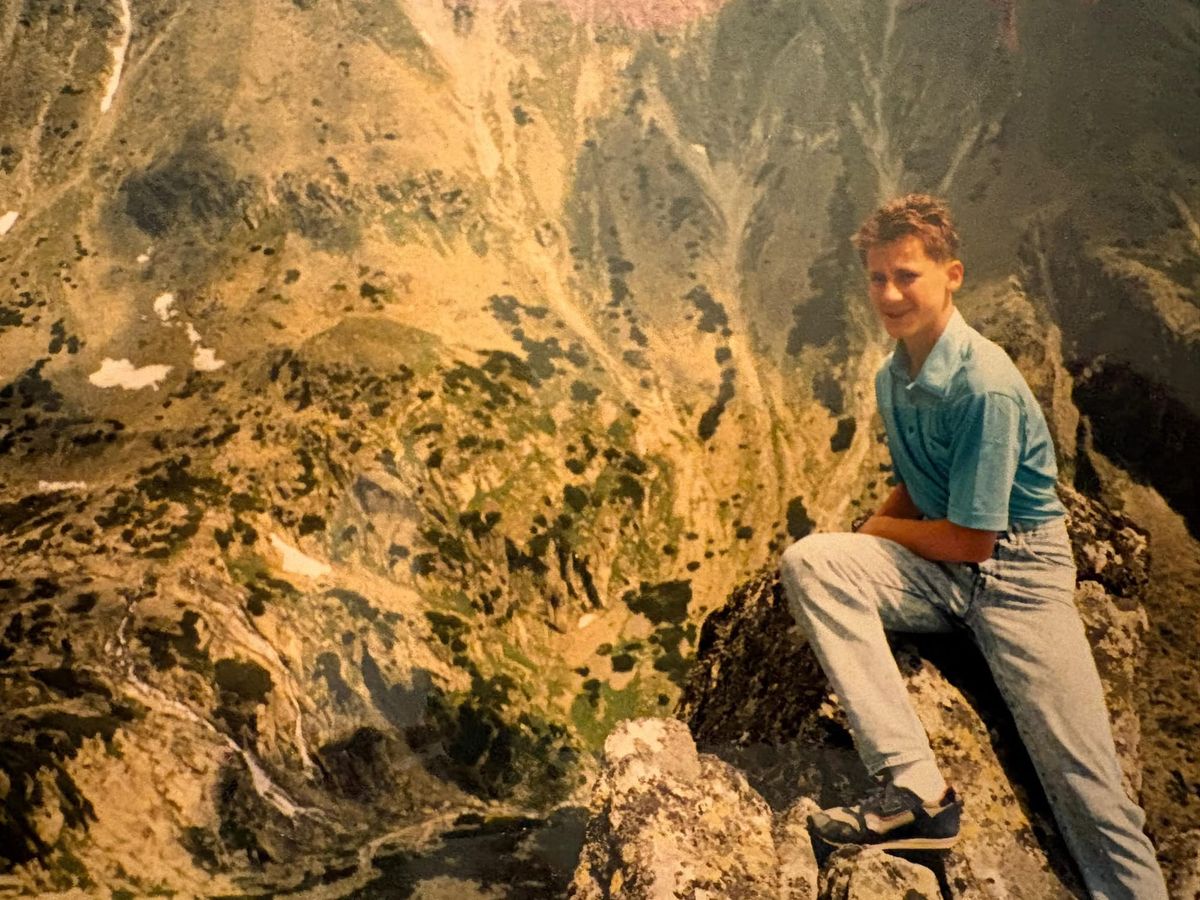
Four years later, he crossed into Austria with his teammates for the Junior World Cup. What struck him first wasn’t the mountains or the track, but the fuel stations. “I was so caught by light,” he recalls. “The fuel stations, Aral and Shell, with all of these lights! When we were in Slovakia there was just this one light. Everything was just grey. Never so nice as it was in the West.” For a teenager behind the Iron Curtain, that was reason enough to stay on the team. “At that time,” he said, “the biggest motivation was that you had some freedom.”
Freedom, though, didn’t mean ease. The team was large, and places were earned, not given: athletes had to fight their way through qualifying rounds to make the cut. Training took place at Oberhof, in what was then East Germany, a track Stefan remembers as brutally difficult. For young, inexperienced Slovak lugers, a run there often ended in a crash, and he was no exception. Yet even when his runs ended badly, his times were often the best. More than once, older athletes demanded re-runs, hoping to beat the newcomer at the second attempt. No such luck. Stefan qualified, against all expectations.
Then, in November 1989, the Velvet Revolution brought communist rule in Czechoslovakia to an end, and the freedom Stefan had glimpsed at the Austrian border was suddenly within reach. It came with a twist, though. With the borders open, the sport grew far more competitive, and when Czechoslovakia split in 1993 and Slovakia began competing as a nation in its own right, the team had to be cut drastically. Only one male and one female athlete would be allowed to compete at Lillehammer, and Stefan was not among them. After years of qualifying rounds, crashes and re-runs, the Olympic dream was out of his hands. The freedom that had drawn him to the sport had, in the end, narrowed his path through it.
Fortunately, he had seen it coming. Talented though he was, Stefan could already see that luge would never give him a lasting career, and while still training with the national team, he had begun a second, quieter apprenticeship in hospitality. Here, too, the region had plenty to offer. The same resort economy that had given him the ski slopes as a boy, and his mother her job at the sanatorium, had produced a long list of luxury hotels, and the standard of service in them was remarkably high.
“It wasn’t like it is today,” he says. “Now, if you are waited on in a restaurant or hotel, you should be happy if the waiter can remember your order. But in those times, they were really strong. They had contact with the West, spoke several languages, they were very well educated. It was a really good job.” Like sport, in other words, hospitality offered something scarce: a window onto the West.
Before he could commit to it fully, though, there was one more obligation to meet: mandatory military service. It might seem an unlikely chapter for someone who prizes freedom as highly as Stefan does. This is, after all, the man who described life under communism as a cage. Yet he talks about his time in uniform with real warmth, and he still believes in it. “I still think this is a very good idea,” he told me. “To make the transition from boy to man, you need some experience… It’s important to stand on your own two feet, and that’s what the military gave me.”
For Stefan, it seems, freedom and independence aren’t quite the same thing. And independence was something he would soon need. In 1996, he found himself back in Oberhof, the track where he had once crashed and still posted the best times, this time competing in the Luge World Championship. From there, he moved on to Italy, to Alto Adige, the German-speaking region in the country’s far north also known as South Tyrol. It was there that wine found its way into his life.