
SZEKSZÁRD: Hungary's New Sexy Red?
Let the Tantalizing Begin!
By Stuart Pigott - last revision: 11.06.26
Yes, I also struggle with the pronounciation of some Hungarian words and names, because the language isn’t a relative of either the Latin or Germanic languages that dominate in Europe. So, some years back it was helpful to learn that Szekszárd is actually pronounced Sex Hard, or perhaps I should write it SEX-HARD. Of course, this planted a question in my head,but I didn't attempt to answer it at the time: are the wines of Szekszárd sexy, and if so are they on the hard or the soft side?
Now I’ve said it there’s no dropping the ball, much less turning back. To be honest, the first moment I could have attempted aserious answer to the Sex-Hard Question was at the end of my previous visit in March 2022, but now I’m glad that I didn’t try then, because my recent tastings gave me a much better idea of what Szekszárd is all about than I had before. And now I think the second part of the question is easier to answer than the first, because these wines are almost never hard. The best proof of this is the most powerful red wine I tasted in the region, the Takler Szeksárd Cabernet Franc Szenta-Hegyi 2023, which has 15% alcohol and a serious tannin-structure, but still tastes silky. It is also one of the best Szekszárd reds that I evertasted. This leads me to the observation that Szekszárd is definitely soft, and in the positive sense of the word, meaning that the wines don't lack hardness.
Of course, what makes a wine sexy is wide open to discussion and I don’t see how you could resolve this question due to the enormous diversity of human sexuality. So, the only way to address this question is personally, pointing out that this is the case, rather than pretending there might be some universally applicable answer out there somewhere waiting to be discovered and revealed to a waiting world. Undoubtedly my first great red wine was also my first sexy red, the Château Cheval Blanc 1971 from St. Émilion/Bordeaux which I encountered in the spring of 1981 around the time of my 21st birthday. Yes, it had plenty of tannin, but the tannins were as tantalizing as the spicy and berry aromas. Tantalizing is what made it so sexy!
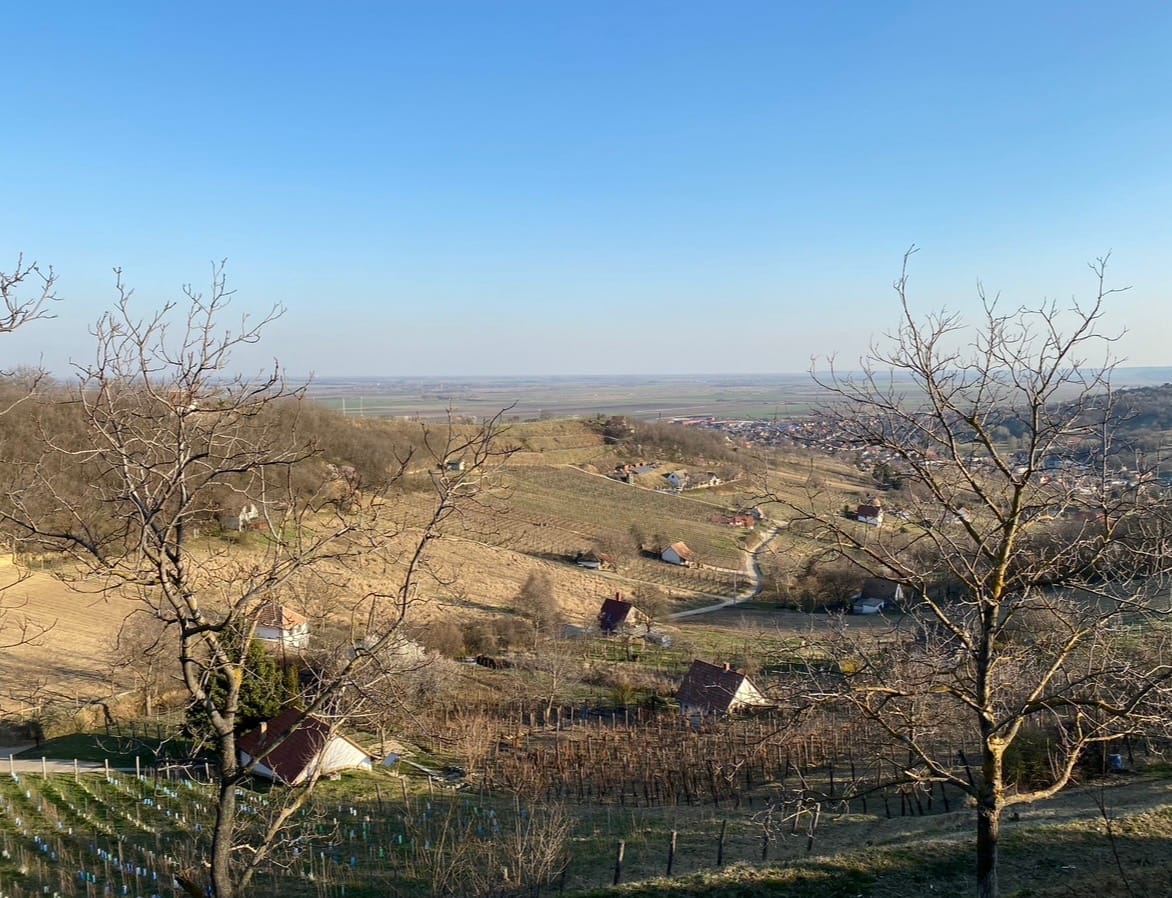
With this in mind let me turn back to Szekszárd. I have a personal connection with the region having met Zoli Heimann of the Heimann winery in the autumn of 2008 when we were both at the Geisenheim Wine University in the Rheingau/Germany.(he was a full student and I was guest student). In the spring of 2009 Zoli organized an official Geisenheim excursion to Hungary that took in many of the important winegrowing. My first impression of the landscape of Szekszárd was its gentleness. Yes, here and there are steep slopes and roads tight curves, but they are always short. It is beautiful in an understated way like certain English landscapes, rather than being dramatic like much of Tokaj is.
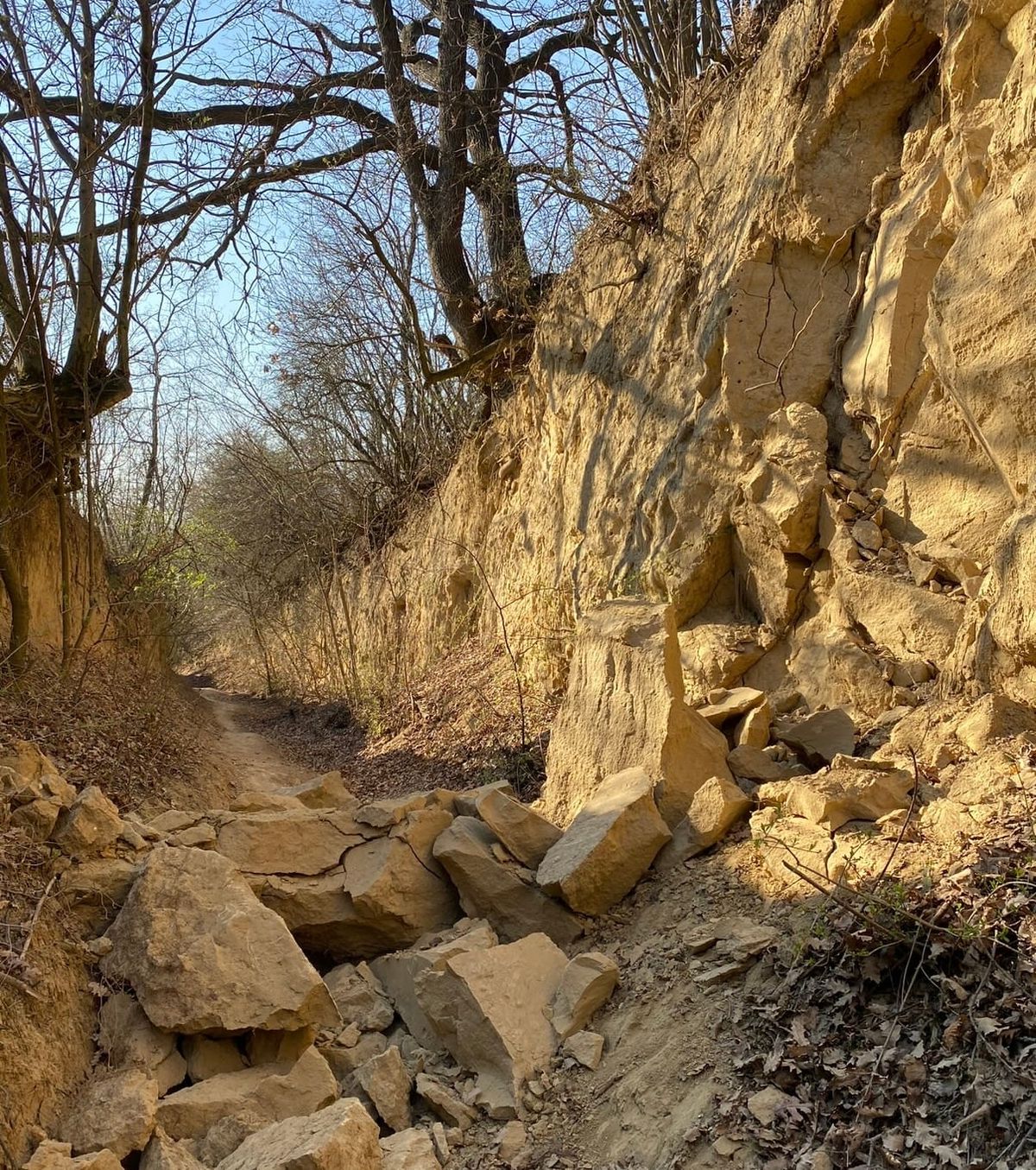
I think the often deep soils composed of loess - a yellowish powder blown great distances during the ice ages, that is water-retentive and nutrient-rich - accentuates this. However, I now think it’s rather clear that the best vineyardsites owe their superiority not only to propitious exposition, but also to deposits of red clay between layers of loess. This seem to add a bit more structure and tension to the wines that grow there, and without some tension wine can’t be tantalizing.
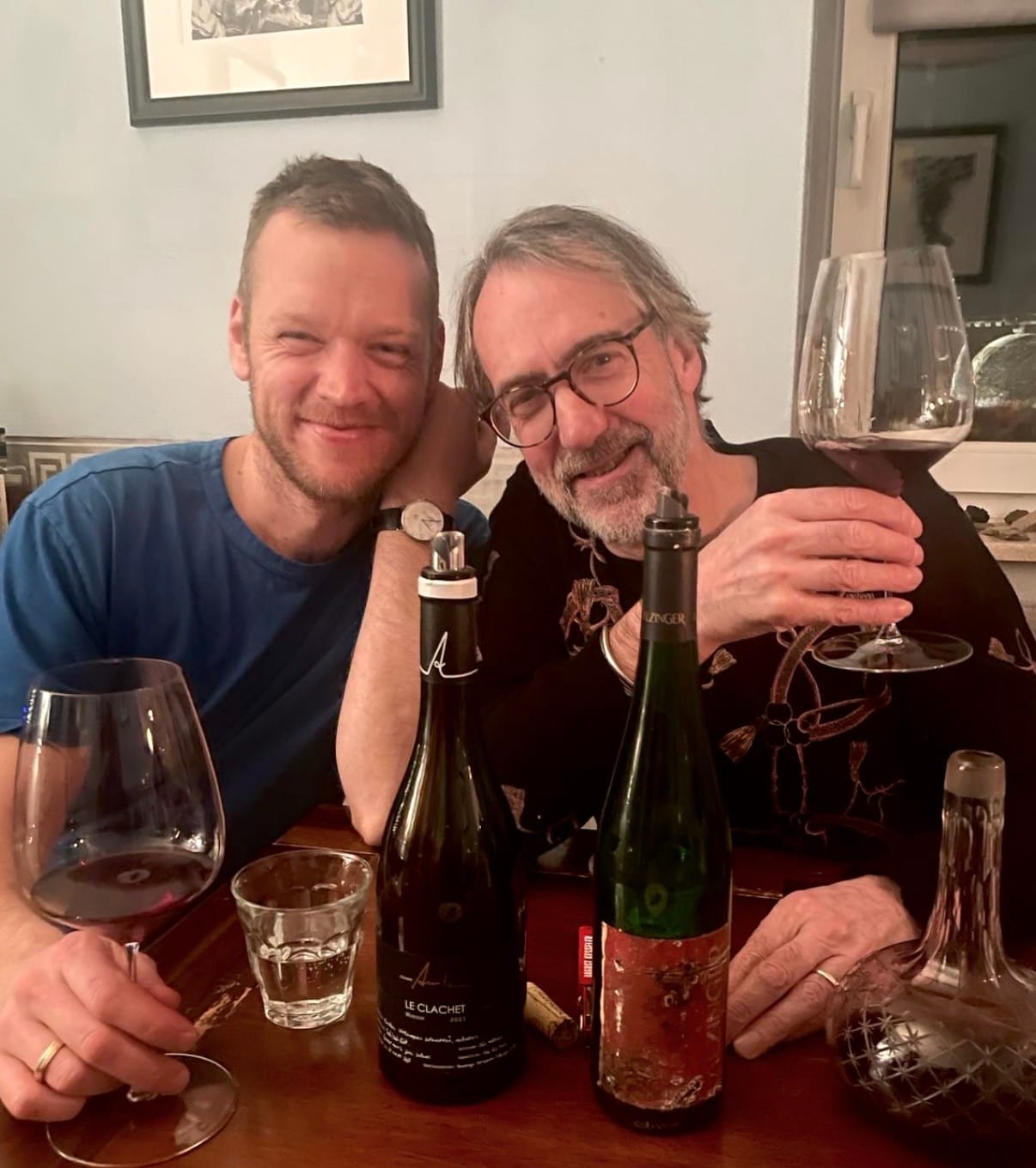
But maybe I’m wrong about all this, and the human dimension is much more decisive for the character of the wines. There's a real community of ambitious winemakers that I was able to experience one evening. However, I have to ask where the driven, obsessive personalities amongst the winemkaers of Szekszárd are ? I’m bot criticizing, just making an important observaztion. I enjoyed talking to all the winemakers I met, regardless whether I’ve known them for years like Zoli, or I just met them like János Márkvárt. He strikes me as a Natural Born Winemaker, whereas the Takler brothers are the most systematic of them, and Zoli is the deepest thinker.
Given this wealth of talent, I have to ask why Szekszárd is „only“ doing very well, rather than excelling and being widely acclaimed for that. Of course, for a long time the political situation in Hungary didn’t exactly encourage the kind of daring leaps of faith that can lead from a winemaker from doing very well to excelling. As true as this is, I think there’s an additional problem.
For me there’s no doubt that Kékfrankos, aka Blaufränkisch aka Lemberger is the grape variety that’s best suited to the region’s climate and soils. It has only been here for a couple of generations, but it is already the most widelyplanted grape variety in Szekszárd with 568 hecatres (all stats for the region are 2025), or 27% of the total 2,105 hecatres vineyard area. However, Kékfrankos is also the most widely planted grape variety in Hungary as a whole with 6,811 hectares (2023), which is more than double the vineyard area plented with Furmint; the most important white Hungarian grape for quality wines. The effect of this is sadly negative. „In Hungary there’s a lot of bad Kékfrankos…and that’s why it’s diffcult to sell good Kékfrankos,“ Csaba Vesztergombi observed to me. So, however good the mono-varietal wines are they’re a hard sell on the domestic market, and internationally winemakers need to explained that Kékfrankos is the same grape as Blaufränkisch in Austria. That puts Hungary into second position behind Austria, but the chances for these wines are best in the export markets in spite of this!
Yes, Kékfrankos also works extremely well as the base of blends, and since 1992 Szekszárd mostly sells these under the Bikavér designation. However, here too it is in second position behind Eger, Egri Bikavér being the most famous iteration of this type of red wine blend. Perhaps we should give the generic name Hungarian Red Blends, because French grapes always play the minor role in them when present. All this explains why today Szekszárd as a region is best known for reds from the Kadarka grape, which today is famous as one of the most important indigenous Hungarian grapes, although it actually came from somewhere further east (probably during the 17th century, but maybe the late 16th century).
When I first visited Szekszárd there were few exciting Kadarka’s because of the predominance of inferior clones. The wines were often pale, bland and low on structure. Zoli’s Bachelor thesis was focused on identifying superior clones, and he wasn’t the only one working on that. Today, there a bunch of excellent Kadarka’s from Szekszárd, and a few of them are even sexy…but there are just 75 hectares in Szekszárd planted with this grape,and there are also excellent Kadarka’s from other regions, so Kadarka is only apartial solution to building the region’s reputation. That it works better in the new climate situation than the old one may lead to its share of the vineyards increasing…from this small base. So, I don’t see the fundamental situation changing: this grape is important for a handful of producers, but it's not The Solution for the Szekszárd winemaking community.
Bordeaux varieties and Bordeaux blends stillaccount for a large chunk of the region’s production, because there are 770 hectares of Merlot,Cabernet Franc and Cabernet Sauvigon planted here. Someof these wines are very good, but they aren’t distinctive enough that I could describe what makes them different to wines of this kind from other parts of Hungary, Serbia, Bulgaria or even cool climate regions of California. Who needs more of Planet Wine's most common wine type, of which there's already a glut at every price point?
When the going gets tough I often say to myself, „nobody told you to climb Mount Everest, and nobody said that it would be easy!“ This can also be applied to winemakers and to consumers. For us wine drinkers, the challenge is to track down the Szekszárd wines that are tantalizing in sexy way. The notes below try to lead you in the right directions.
43 tasting notes, including two with 95 and seven with 94.
END OF THE VERSION AVAILABLE FREE OF CHARGE
ADDITIONAL MATERIAL ONLY FOR PAYING SUBSCRIBERS
TRIAL MONTH has been extended and ALL CONTENT IS FREE, but that will end with the completion of this series of reports! Producers please note that you cannot use the notes and scores published on this site for PR or publish them on your website without a PROFESSIONAL SUBSCRIPTION.
DRY WHITE
Vesztergombi Szekszárd Olaszrizling Ezer Töke 2023 - 14% / A rich and creamy dry white with fine tannins that neatly support the full bodied palate. Soft acidity, but it balances well. No hint of warmth from the alcohol. Contains about 10% Chardonnay. From a small plot at the top of a hill. Fermented and matured in barrique oak casks. 88 (SP)
DRY ROSÉ
Sebestyén Szekszárd Szél 2025 - 13.5% / A creamy and silky Provence-inspired rosé with pale colour and an elegant balance. I love the delicate nectarine and summer berry flavours at the elegant and zesty finish. A cuvée based on 59% Kékfrankos with the rest Cabernet Franc and Merlot. The first vintage of this wine. Matured sur lie for 5 months. 91 (SP)
Vida Péter Szekszárd Kékfrankos Hidaspetre 2024 - 13% / A concentrated and structured rosé that has excellent drive thanks to the mineral acidity. packed with nectarine and mandarin orange character, then a very complete finish Matured on full lees in stainless steel tank until April after the vintage. 92 (SP)
BIKAVÉR & SIMILAR RED BLENDS
Eszterbauer Szekszárd Bikavér Báró Steiner 2023 - 15% / A very generous and fleshy red that somehow manages to remain nimble on its feet. And this also has an excellent concentration of forest berry fruity wrapped around the serious tannic core. Lovely velvety finish. A cuvée of 50% Kékfrankos, 10% Kadarka, 25% Cabernet Sauvignon, 10% Merlot and 5% Cabernet Franc. 93 (SP)
Heimann Szekszárd Piros 2025 - 12.5% / A very pretty light red that can be drunk cool like a rosé. Bright cranberry and red cherry fruit with delicate summer flower aromas. Gentle tannins at the well-structured finish. A cuvée of Kékfrankos and Kadarka. 90 (SP)
Heimann Szekszárd Bikavér Bátor 2023 - 13% / Extremely bright and fragrant. Brimming with violets and ripe redberry aromas, plus a delicate spice this is a very charming and juicy red. Then, the moderately dry tannins plus notes of liquorice and dried ginger kick in at the animating finish. A cuvée of 73% Kékfrankos, 9% Kadarka, plus Cabernet Franc, Merlot and Pinot Noir. Matured for a year in 1,000 liter oak casks. 92 (SP)
IFJ. Márkvárt Szekszárd Bikavér 2024 - 14% / Off-dry reds get a bad rap, but this is a very harmonious wine that marries generous red fruit character with velvety tannins and attractive baking spice flavours. Long, fresh and structured finish. A cuvée of Kékfrankos, Cabernet Sauvignon, Merlot and Kadarka. Won’t be released until 2026-7. 91 (SP)
IFJ. Márkvárt Szekszárd Bikavér 2022 - 14% / Off-dry reds often get a bad rap, but this is a beautiful wine with ample blackberry fruit and velvet tannins that give it quite some power. Blackcurrant and baking spices on the long finish. A cuvée of Kékfrankos, Cabernet Sauvignon, Merlot,Syrah and Kadarka. 92 (SP)
IFJ. Márkvárt Szekszárd Bikavér 2019 - 14% / Off-dry reds get a bad rap, but this has matured beautifully. The 7 years of maturation have honed the tannins to finesse. Very polished palate. Serious depth at the long, elegantly dry finish. A cuvée of Kékfrankos, Cabernet Sauvignon, Syrah and Kadarka. 93 (SP)
IFJ. Márkvárt Szekszárd Jani 2022 - 14% / Big raspberry and wild blackberry fruit and slightly sappy tannins make for satisfying and refreshing experience. Good length. At 4 years of age this is still lively. A cuvée of Kékefrankos, Zweigelt, Syrah and Cabernet Sauvignon. 89 (SP)
Sebestyén Szekszárd Kékfrankos-Kadarka Görögszó 2024 - 13% / Forthright nose of violet pastilles. Very zesty with generous fruit on themid-palate, then the racy acidity focuses the long, very clean finish. Some blood orange character there. Just under 3,000 bottles produced. 91 (SP)
Sebestyén Szekszárd Bikavér Porkoláb 2022 - 13.5% / A very striking Szekszárd red blend that marries deep savoury character (think soy sauce) with a healthy tannin structure and bright acidity. Long, emphatically dry finish with firm, velvet tannins. Just at the beginning of its best drinking age. 93 (SP)
Sebestyén Szekszárd Bikavér Ivàn 2022 - 13.5% / A very concentrated and highly-structured with layer upon layer of spice, savoury. Huge density, but also excellent freshness, then a long powerful, and dry finish. From 9 different parcels in this site with vines up to 70 years old. Blended and bottled after 21 months in oak. 94 (SP)
Takler Szeksárd Bikavér Örökség 2023 - 14.5% / This remarkable Bikavér has a deep nose of beetroot/beets, gingerbread and savoury. Full-bodied and bold, but also very fresh. A lot of spice and liquorice at the long, seriously structured finish. A cuvée of 6 varieties with a small majority of Kékfrankos. Matured in 500 liter oak barrels of Hungarian and French oak. 94 (SP)
Vesztergombi Szekszárd Bikavér 2021 - 13.5% / This is a serious red with a friendly personality thanks to the ample, supple tannins. Brimming with blackberry, plumand cherry fruit, but no hint of overripeness or exaggeration ofany kind. Attractive harmony at the long, crisp and dry finish. A cuvée 45% Kékfrankos, 25% Merlot, 25% Cabernet Sauvignon and 5% Kadarka. Matured in large, almost neutral oak. 91 (SP)
Vesztergombi Szekszárd Bikavér Szent Lászlóról 2021 - 14% / A powerful wine for the Bikaver category which makes a bold statement. However, it easily carries the full body and ample soft tannins. Lots of smoky oak at the finish, that you either love or might find a bit too much, like I do. A cuvée of Cabernet Sauvignon, Cabernet Franc, Merlot, Shiraz, Kékfrankos and Kadarka. Matured in barrique oak casks. 89 (SP)
Vida Péter Szekszárd Bikavér Valles 2021 - 14% / A powerful and tannic Bikavér with lots of energy. Lots ofspice and some smoked bacon character. Now in a sweet spot, but this willage for many more years and that will surely develop the aromatic complexity. Long.moderatelydry finish with notes of clove and anise. 94 (SP)
KADARKA REDS
Eszterbauer Szekszárd Kadarka P.7 2025 - 12.9% / A generous Kadarka with a healthy tannin structure that needs a bit more timein bottle (it was bottledjust 4 weeks ago) to open up. Wild strawbery and blood orange aromas. A single-vineyard wine that’s a cuvée of 7 different clones of Kadarka. 88 (SP)
Eszterbauer Szekszárd Kadarka Nagyapám 2024 - A bit reductive at first, then plenty of red fruits and some floral notes. Likewise on the palate, at first a bit tight and lean, then (as the wine aerates) itmoves more in the fruity direction. A cuvée of three vineyards. 87 (SP)
Heimann Szekszárd Kadarka 2025 - 11.5% / Quite vegetal on the sleek, very crisp palate and that distracts from the cranberry and red berry. A little bit dusty too. The fruit expands with a bit of aeration. 84 (SP)
Heimann Szekszárd Kadarka 2024 - 12% / This is a deep well of cherry fruit and dried strawberry with soft tannins and an elegant acidity, meaning an almost ideal balance for a light-bodied red that’s not trying to impose its will upon the drinker. 91 (SP)
Heimann Szekszárd Kadarka Porkoláb 2024 - 12.5% / A stunning Kadarka with fine tannins and an elegance that’s rare with this grape. A wide spectrum of sour cherry, red berry fruit and delicate spice aromas. From Heimann’s first plantation of new Kadarka clones in 2012. 93 (SP)
IFJ. Márkvárt Szekszárd Kadarka 2025 - 13% / This starts out with delicate floral and spicy aromas, then the tannins kick in and it becomes much more serious. Quite some power at the generous, long and dry finish. 60% of the wine is from vines planted in 1935. Vinified in tank and bottled unfiltered. 93 (SP)
IFJ. Márkvárt Szekszárd Kadarka Sauli 2024 - 14.5% / Anyone who thinks that Kadarka is a light-bodied red needs to taste this widescreen epxression of the grape that has an enveloping bouquet of plum and peaony. Great concentration and moutfillingbody, yet so fresh. Very energetic long finish with velvety tannins and a wealth of delicate spicy notes. From hundred year old vines. Matured in three 500 liter oak barrels, of which one was new. 95 (SP)
Németh János Szekszárd Kadarka 2025 - 13% / You could easily mistake this for a Beaujolias Cru due to the effusive red cherry and strawberry fruit. Starts juicy, but then builds, turning drier and more herbal at long the finish. A cuvée of 12 different clones. Matured for 6 months in stainless steel. 90 (SP)
Sebestyén Szekszárd Kadarka 2024 - 11.5% / From the boquet and fist impression on the palate you could imagine that this is a Pinot Noir, even a Bourgogne rouge, but then the delicate clove and dried strawberry aromas come through and twist it in a distinctly Hungarian direction. From vines of 5 clones, including somethat are 70 years old. Matured exclusively in stainless steel. 88 (SP)
Takler Szeksárd Kadarka Szenta-Hegyi 2024 - 12.5% / This is a seriously structured wine for the Kadarka with the complex spiciness of the grape. The harmoniously dry tannins give this textural complexity and drive. Long, structured finish. The first vintage from young vines in this site. Wild-fermented. 93 (SP)
Vesztergombi Szekszárd Kadarka 2024 - 12% / A good introduction to serious reds from the Kadarka grape this has stacks of cherry fruit wrapped around soft tannins to create a satisfying whole. Slightly drying finish. A blend of wines from 100 year old and 15 year old vines of the same genetic material. 88 (SP)
Vida Péter Szekszárd Kadarka Petit Bonsai 2025 - 12.5% / A stunningly vibrant, light-bodied red with a wealth of cuper-fresh cherry fruit, fine powdery tannins and a crisp mineral finish that lights up the sky. Positive touch of astringency at the finish. From 13-14 year old vines of 4 heritage clones. 92
Vida Péter Szekszárd Kadarka Bonsai 2024 - 12.5% / Extremely elegant and sophisticated with fine tannins and a twist of liquorice that makes this very excting. Long, complete finish in which there’s a wonderfully delicate spiciness. Just over 3,000 bottles from vines planted in 1920. Made entirely in amphoras. 94 (SP)
KÉKFRANKOS REDS
Eszterbauer Szekszárd Tanyamacska 2025 - 13% / Quite a firm wine for an entry-level Kékfrankos with plenty of red fruit. Quite dry and zesty palate. Blood orange finish. 88 (SP)
Heimann Szekszárd Kékfrankos Baranya 2021 - 13.5% / Striking nose of gingerbread, liquorice and dust that’s just beginning to pick up a touch of bottle-aged character. Excellent concentration of red fruit character and complex tannins that provide a firm support for the generous body. Self-confidently, dry finish with excellent spicy complexity. From 50 year old vines in this producer’s top site. Matured for 14 months in 1,000 liter oak barrels. 94 (SP)
Heimann Szekszárd Kékfrankos Bati Kereszt 2023 - 12.5% / Cool with floral delicacy this has underplayed power and mountain freshness. Very animating, the moderately dry finish very expressive with notes of liquprice and anise. The excellent drive suggests this has many years of life ahead of it. From the highest-altitude vineyard of the appellation,which is also north-facing. 93 (SP)
Heimann Szekszárd Kékfrankos Baranya 2023 - 13% / Powerful and structured with great energy and freshness. The serious tannin structure needs more time to fully reseolve, but already excellent balance. Deep aromas of violets and damson plums. Intense chalky minerality at the finish. From 50 year old vines in this producer’s top site. Matured for 14 months in 1,000 liter oak barrels. 94 (SP)
Németh János Szekszárd Kékrankos 2024 - 15% / The deep and dark nose - red beets, elderberry and liqorice - makes you think it’s going to be dark and massive, but the wine turns out to be a lot more harmonious than you expect on the palate. Substantial velvet tannins at the fleshy finish. Matured in oak casks for one year. From red clay soil. 91 (SP)
Sebestyén Szekszárd Kékfrankos Porkoláb 2024 - ??% / Expressive aromas of wild blackberry, baking spices and violets pull you into this very clean and fresh Kékfrankos that has fine tannins and excellent balance. Matured in twice, third and fourth use oak casks. 92 (SP)
Takler Szeksárd Kékfrankos Szenta-Hegyi 2023 - 14% / Pure velvet with graceful tannins and a wealth of damson plum and summer flower aromas, this is seductive expression of the grape that caresses your palate. And the lively acidity makes 14% melt away into the seamless balance. Very long and complete finish. Matured in 500 liter oak barrels of Hungarian and French oak. 94 (SP)
Vesztergombi Szekszárd Kékfrankos. Porkolábvögly 2022 - 14% / Plenty of smoky oak, liquorice and leather. Powerfultannin structure and quite some (French) oak. A seriously structured wine with bold tannins that’s emphatically dry, in fact it’s slightly drying. Matured exclusively in oak barrique casks. 88 (SP)
Vida Péter Szekszárd Kékfrankos Hidaspetre 2022 - 12.5% / Striking, pepper,clove and flinty nose. So much energy on the well-structured, but not overly tannic palate. Bright acidity at the crisp and emphatically dry finish. Matured in 500 liter oak casks of which a couple were new. 93 (SP)
BORDEAUX RED VARIETIES & BLENDS
Takler Szeksárd Cabernet Franc Szenta-Hegyi 2023 - 15% / This really showswhat the potential of the Bordeaux grapes in Hungary is! Rich and ripe, yet fresh, refined and perfumed. Great depth of red and blackcurrant fruit and fine powdery tannins. All of this is completely in synch on the seductive palate. Pure velvet finish! 95 (SP)
Vesztergombi Szekszárd Malbec Kerékhegy 2023 - 14% / Forthright sour cherry fruit fills out the generous body of this striking Hungarian Malbec. And that helps it integrate the substantial,moderately dry tannins. Meaty, savoury and bitter chocolate complexity. Long,quite fleshy finish.Matured for two years in 300 and 500 liter oak barrels. 92 (SP)
Vesztergombi Szekszárd Csaba 2022 - 14.5% / A big, fleshy Bordeuay-inspired red that has the structure and weight of Cos d’Estournel, if not quite the finesse. Plenty of bitter chocolate and some hot dry earth character. Firmly structured on the self-confidently dry palate. The tannins really need a couple more years more bottle age to fully intgrate, but the fundamental balance is there. A cuvée of Cabernet Sauvignon, Cabernet Franc and Merlot that was matured in 300 and 500 liter oak casks. 92 (SP)
Vesztergombi Szekszárd Vintage 2021 - 14.5% / This has very good integration of smoky and spicy oak with dark berry fruit and ample body on the bold and fleshy palate. Well-integrated, moderately tannic core. Long, structured finish. A Bordeaux blend with 25% Kékfrankos in the cuvée that was matured in 300 and 500 liter oak casks. 92 (SP)
PINOT NOIR REDS
Vesztergombi Szekszárd Pinot Noir 2024 - 14.5% / For a warm climate and hot,dry vintage like 2024 this is an attractive Pinot noir with gentle tannins and good freshness. Glides over your palate. Lovely floral and delicate red berry aromas. 91 (SP)