THE GREAT ELI: Winemaker and Cosmopolitan
In Wine is Peace!
By Stuart Pigott - last revision 14.06.26
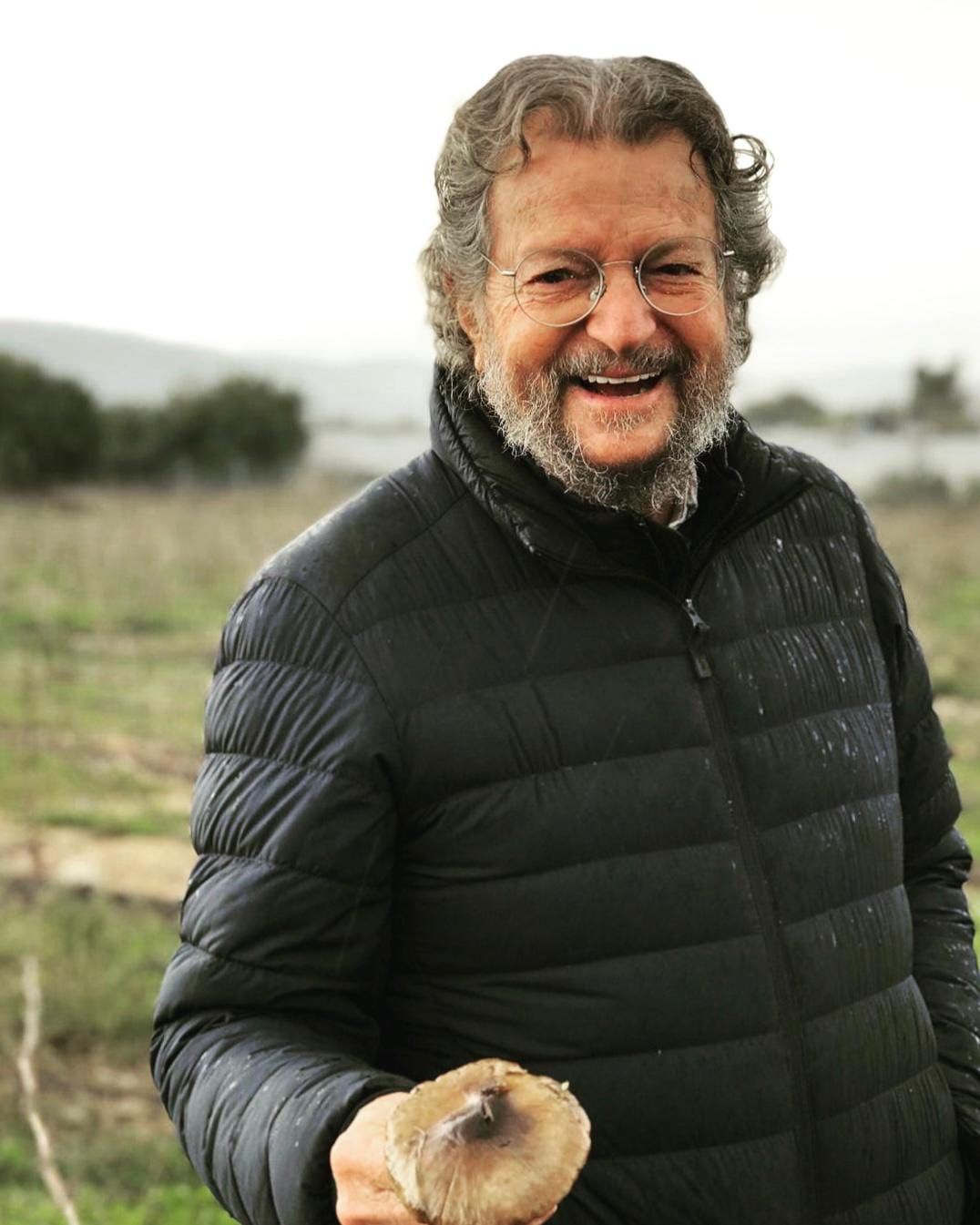
Alexandria in Egypt was one of the most important stations on the maritime version of the Silk Road that brought spices from South and Southeast Asia to Europe during what we call the Middle Ages. And for that reason it strikes me as appropriate that Eli should have been born there. At home his family spoke French, and this is surely the tap root of his Francophile approach to wine. That he went to school and university (where he read economics and languages) in England accentuated his cosmopolian nature, but finally each person pursues their own interests and inclinations - what you make of what you get is what makes you who you are.
In 1970 Eli moved to his present home country, which then had a very rudimentary wine industry, in spite of the fact that wine had been made there for thousands of years. I’m not sure that being a chicken farmer counts as an achivement, but that’s what Eli was before he opened Mamma Mia, the first restaurant serving fresh pasta in his new homeland in 1980. This surely counts, though! Its great success enabled him to plant a small vineyard and start building a winery. His first vintage was 1992 and Eli was already 48 when he harvested it.
To give you an idea of how daring this was, not only was winemaking in this part of the world very undeveloped, but 31° 45´North in the Eastern Mediterranean is not exactly where you would expect great Bordeaux Blend style reds to grow! In retrospect, it was visionary of him to see that a high altitude location and precise vineyard work could make this possible.
In 1995 Eli decided to risk being ridiculed by oone of the world’s greatest wine experts and sent a sample bottle of his first wine - he produced just two barriques, or 600 bottles. On the 15th August 1995 Serena Sutcliffe MW, the then head of Southeby’s Wine department wrote to Eli’s friend who hand-carried the bottle to London, saying that the wine was, „a real tour de force, billiantly made and very „classic“…“ Here was confirmation that he was on the right track and from the following year Eli’s winery became a more serious operation. The next step was selling Mamma Mia in 2002 and becoming a full-time wine producer, just 14 years after planting his first vines, and the first vines of modern times in his region.
Why have I deliberately so far not revealed some important details of this story? It took me a couple of years for me to realize how hampered my percepion of wine was by various prejudices and preconceptions I'd absorbed in London during the early 1980s. Already 40 years ago I started pushing myself to overcome this problem. In recent years, driven by many things including the social media, prejudice has become more widespread and intense. I’m therefore not revealing Eli’s full name, the name of his wineries or the country where all of them are located until the end of this story. It is my deep convction that if someone is to be judged, then it should be on their actually deeds, not on suppositions, much less things projected upon their national, ethnic or religious group. I see a direct parallel between this and how each wine should be judged on its aroma and flavour, rather than though preconceptions about the category to which it belongs.
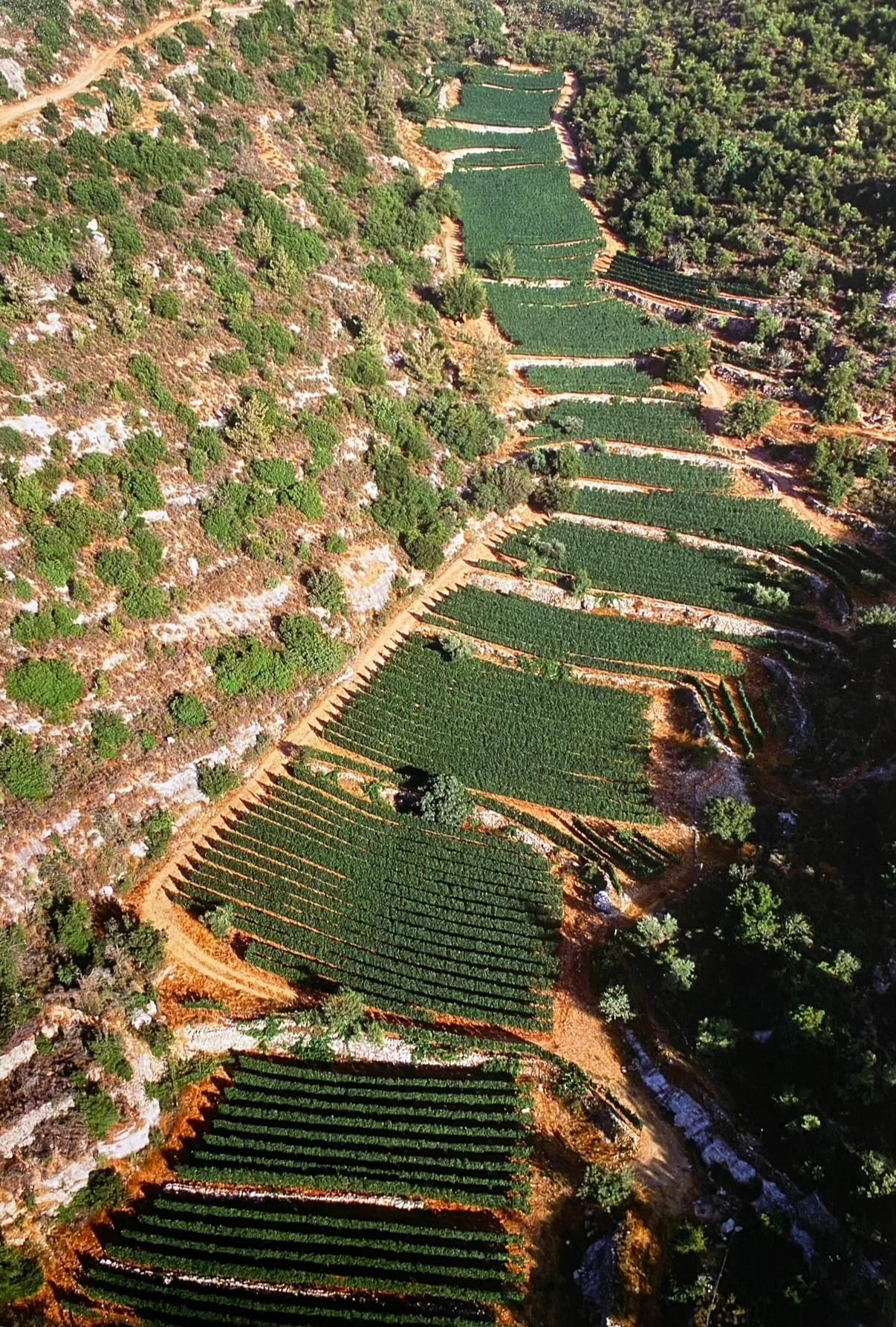
After having heard many stories and tasted a couple of wines, I first met Eli in April 2019 at his two wineries. There are now two, because after moving the original one into a beautiful new facility, he started a second winery using the original cellar and it is focused on red, dry rosé and whites from Mediterranean grape varieties in a style inspired by the wines of the Southern Rhône and Languedoc-Roussillion. The first vintage for this second winery was 2017 and progress was extremely rapid; the 2018s I tasted from cask were magnificent. Of course, it makes sense that Mediterranean-type wines should do well in a Mediterranean-type climate, but that’s no guarantee that this strategy leads to exciting quality. In 2019 I also clearly saw how the Bordeaux-inspired reds of his first winery had steadily improved over the previous years, as the winemaking was refined.
The success of every wine is down to the hard work and ideas of the winemaker. Eli is never afraid of hard work, has a great sensitivity and the desire to always learn more; an ideal combination for a winemaker. I immediately recognized in Eli a kindred cosmoplitan spirit, but of an altogether more remarkable kind then me. A wine journalist, however good or succesful, tends to have a parasitic relationship to the wine industry, though I try to move in the direction of a symbiotic relationship whenever possible. I always hope that I can give back, meaning that my spoken and/or written words might provide a useful stimulus for winemakers. That only works if both and I and the winemaker(s) are open-minded, likewise, my recommendations to you can only work if you are also open-minded, which I encourage you to be to the highest possible degree.
Curiosity is supposed to kill cats, but frankly I never saw that happen and I believe it’s just another preconception. I prefer what Albert Einstein said on this subject, „I have no special talent. I am only passionately curious.“ So many good and wonderful things happen when we abandoning prejudice and embracing openness. And that’s how I encourage you to approach the dramatically contrasting wines from Domaine du Castel, the original winery Eli-Gilbert Ben-Zaken founded in 1992, and Razi’el which he founded 2017. The tasting notes below provide an introduction and basic orientation. Quoting Einstein makes a lot of sense in this context, because Eli is Jewish and deeply creative, just like Einstein was. That all these wines come from vineyards close to Jerusalem in Israel only increases the number and intensity of preconceptions and prejudices that they face making their way in the world.
Of course, terrible things have happened in this part of the world during the last years, and enormous suffering has resulted. As a pacificst I condone none of these acts of violence, nor any other acts of violence, but I acknowledge that they have occured. This evening’s news may once again include reports of cruel acts in the Middle East. As a result, some of my colleagues refuse outright to taste these and other Israeli wines, and others are willing to taste them, but not to write about them. To my mind that is to inflict collective punishment on Israeli winemakers for the deeds of a government that many of them reject for the same reasons that I do, and many of you do too. Fundamentally, in wine is peace.
Note: The region that Eli calls Jérusalem - Haute Judée is more commonly refered to as the Judean Hills.
12 wines tasted, including two with 96 and one with 95.
END OF THE VERSION AVAILABLE FREE OF CHARGE
ADDITIONAL MATERIAL ONLY FOR PAYING SUBSCRIBERS
TRIAL MONTH has been extended and ALL CONTENT IS FREE, but that will end shortly! Producers please note that you cannot use the notes and scores published on this site for PR or publish them on your website without a PROFESSIONAL SUBSCRIPTION.
Razi’el Jérusalem - Haute Judée Blanc de Blanc Brut Nature NV - 11.5% / This israeli sprakling wine is very fresh, crispand flinty. Sleek with plenty of green apple and crisp pear fruit. Very harmonious at the clean, bright finish in spite of zero dosage A cuvée of Chardonnay from four vintages. 90 (SP)
Razi’el Jérusalem - Haute Judée Blanc de Blanc Brut Nature 2019 - 12% / The interplay of creaminess, lemony and flinty character makes this a remarkable sparkling for such a warm location. Excellent depth and length, the finish precise and polished. Disgorged in the spring of 2025 after five years maturing on lees in the bottle. 92 (SP)
Razi’el Jérusalem - Haute Judée Rosé Brut Nature NV - 11.5% / The delicate aromas of red berries, lemon and rosesmake this an enticing sparkling wine. Light bodied and very animating,this is zesty, crisp, properly dry sparkling rosé and very refreshing. A cuvée of Chardonnay and Pinot Noir from four vintages. 92 (SP)
Domaine du Castel Jérusalem - Haute Judée Blanc du Castel La Vie 2025 - 12% / A good introduction to modern Israeli dry whites. Pale in colour and extremly fresh, this has vivid aromas of lemon blossom, apple and Asian pear. Very clean thanks to the discreetnes of the tannins, this is an extremely refreshing wine with bright acidity at the crisp finish. 88 (SP)
Domaine du Castel Jérusalem - Haute Judée Blanc du Castel „C“ 2024 - 13% / You could mistake this youthful Chardonnay for a Meursault from a warm vintage thanks to its combination of creaminess and aromas of carmelized apple and pear. Restrained toasty oak completes the picture on the concentrated, yet elegant palate, where the wine has excellent harmony. Long, chalky finish with excellent vitality. Gains a lot of complexity with aeration, so not yet at its peak! From 30 year old vines growing in a hilltop site with a very shallow limestone soil. Fermented, then matured sur lie for 10 months in 600 liter oak casks of varying ages. 94 (SP)
Razi’el Jérusalem - Haute Judée Blanc 2024 - 14% / This forthrightly Mediterranean dry white has generous aromas of candied lemon peel, ripe pear, white peach and dried flowers that pullyou inexorably into it. Wonderful textural richness, aromatic subtely and a remarkable elegance, even if the acidity is analytically modest. Very long, structured, yet silky finish. A cuvée based on Roussanne with just a touch of Viognier that wasfermented, then matured for 8 months in 600 liter oak casks. Onlythe second vintage of this wine! 95 (SP)
Domaine du Castel Jérusalem - Haute Judée Rosé du Castel 2024 - 13% / The bright aromas of ripe nectarine and melon with a touch of redcurrant make this is immediately appealing, but has a lot more structure than the rosé norm, and there’sno strawberry festival (which would probably have started fading by now!) Verygood length. Delicious now! A cuvée of Merlot, Cabernet Franc, Malbec and a touch of Syrah. 90 (SP)
Razi’el Jérusalem - Haute Judée Rosé 2024 - 13% / A beautiful Mediterranean dry rosé that blind I would have confidently placed in Rioja! Very floral, but not a jot loud, this glides over your palate, at once mouthfilling yet graceful. A cuvée based on Mourvèdre with some Grenache and Syrah that was fermented, then matured for 8 months sur lie in 600 liter oak casks . 93 (SP)
Domaine du Castel Jérusalem - Haute Judée Rouge du Castel La Vie 2024 - 14% / The cassis and blackberry aromas leap out of the glass at you, but there are also more subtle notes of mushrooms and forest floor. I love the balance of all this with the silky tannins on the beautifully balanced palate. A cuvée of Cabernet Sauvignon, Merlot, Petit Verdot that was matured primarily in concrete tanks and partly in oak barrels. 90 (SP)
Domaine du Castel Jérusalem - Haute Judée Petit Castel 2024 - 15% / I love the dense nose of ripe cassis and blackberry with touches of graphite and smoke. This has generous body, but the ample velvety tannins carry this with ease, in fact they buildg to an impressive crescendo at the bold, yet polished finish. Quite some spice there. A cuvée of Merlot, Cabernet Sauvignon and Petit Verdot that was matured for 12 months in a mix of new and used barrels. 93 (SP)
Domaine du Castel Jérusalem - Haute Judée Grand Vin 2023 - 15% / The enveloping nose is a cornucopia of ripe red and black berries, delicate spice and toast aromas. Very concentrated and highly-structured, but not ion the slightest exaggerated, this great Bordeaux blend is only just beginning to show what it’s made of. Extremely long, complete finish. Try to be patient, because this has decades of aging potential. A cuvée of Cabernet Sauvignon, Merlot and PetitVerdot that was matured for 18 months in 50% new oak barriques. 96 (SP)
Razi’el Jérusalem - Haute Judée Rouge 2023 - 14% / This Southern Rhône style red that has terrific freshness for a wine from such a warm region in exactly the same way as great Gigondas does! Ripe red fruit aromas (sour cherry!) with notes of liquorice, bark and smoke. The, full velvety tannins are wrapped in vivid fruitand the wine has terrific drive at the long, straight yet spicy finish. A cuvée based on Syrah with some Mourvèdre and Carignan that was matured for 16 months in 600 liter oak casks of varying ages. 96 (SP)