
WACHAU NOW Part 1: Dynamism (again)!
And a Question Mark about the Future.
By Stuart Pigott - last revision: 08.09.26
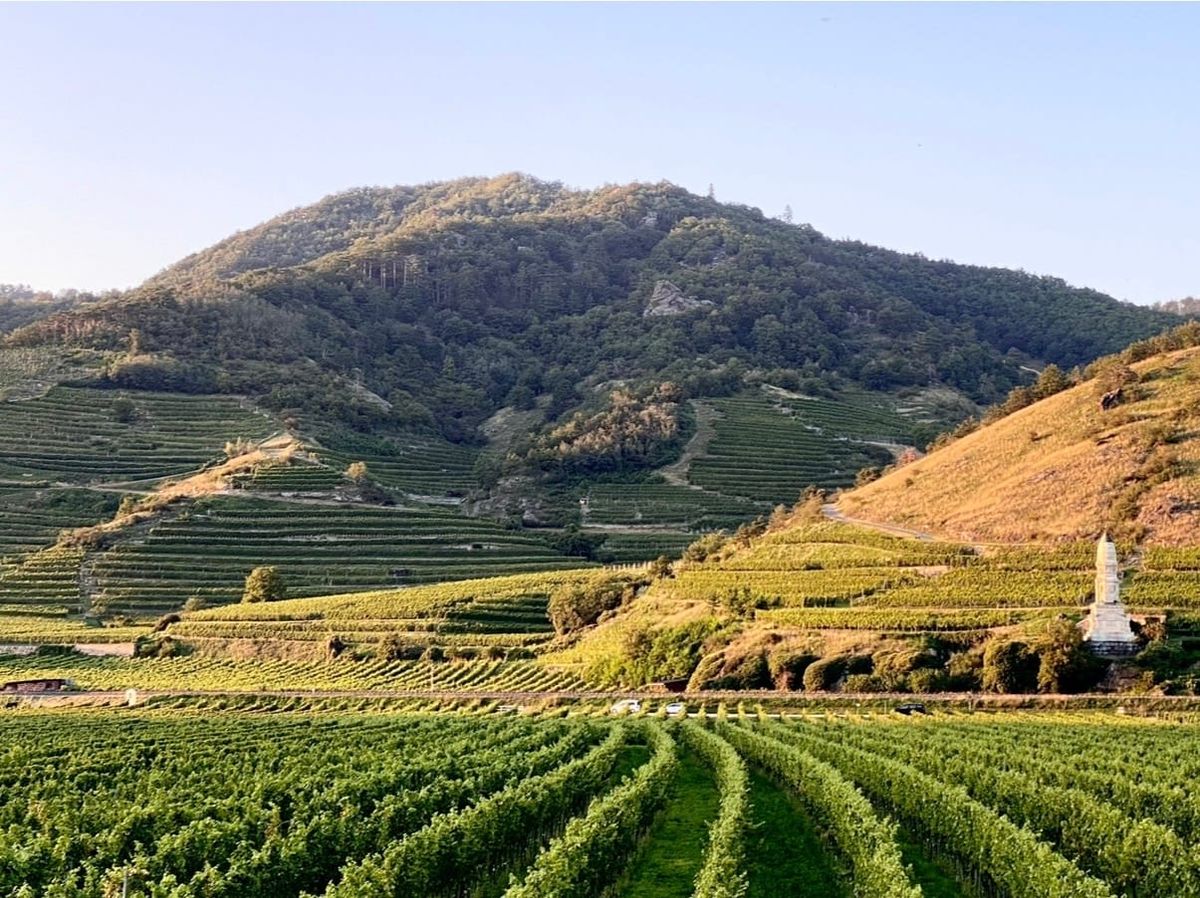
When the story of the Wachau is conventionally told the steep, terraced vineyards in the Danube Valley with their Ugestein soil form the stage over which mythical winemaker heroes stride in timeless triumph. Of course, this is a harmless piece of storyselling, as the Korean-German philosopher Byung-Chul Han calls this kind of marketing. And with few a few exceptions it has worked very well for the region during last 40 years, but the impression of timelessness is always a house of cards that looks impressively tall and wide until it comes tumbling down.
40 years is almost exactly the span of time that I've been following this beautiful region's triumphs and struggles. And anyone who thinks there are no struggles there should think back to the storm and floods that began on the 13th September, 2024, not quite two years ago. This makes it abundantly clear that the Wachau is not some kind of Grüner-Veltliner-plus-Riesling-Paradise-on-Earth!
The illusion of Wachau timelessness is the product of a deep desire to be considered one of the clcassic winegrowing regions of the world like the Côte d'Or in Burgundy, the Médoc in Bordeaux or the Langhe in Piemont/Italy. However, all of these are much larger than the circa 1,285 hectares of vineyards in the Wachau, and the reason for this is that the borders of the region were drawn very restrictively in order to keep the vineyards of the city of Krems an der Donau out. Alone the members of the Winzer Krems coopertaive winery cultivate more than a thousand hecatres of vines! So, the Wachau is rather like an exclusive club, and the price of this exclusivity is reduced scale and weight. It strikes me that this only increased the demand for timelessness as a pathway to importance.
As a Brit who trained as a cutltural historian, it is obvious to me that the loss of the British Empire resulted in all kinds of substitute activity to compensate for the reduction in Britain's importance in the world. The same applies to France, and I think Austria too. For at least two generations of wine critics in Vienna the top wines of the Wachau served to swell their own sense of Austrian greatness, and much the same applied to a large part of their readership. This is also what drove the myth that the Wachau is all terraced vineyards with Urgestein, when they actually account for only about 30% of the region. And, of course, all this wasn't unwelcome to the wine producers whose success was increased by these things. But, what about the wines? I hear you call.
Yes, after all this talk of myths I must turn to the wines of the Wachau, because the best of them are amazing. I am not decrying the beauty of the landscape or the terraced vineyards which optically dominate it, much less the long history of the region, but unquestionably the quality and distinctiveness of the wines from the top producer's are the prime reason for the fame and renown of the Wachau. And they are anything but timeless.
For example, when I visited Franz Hirtzberger in Spitz for the first time in November 1988 I was only able to talk to Franz Snr. briefly because the first stainless steel tanks were being installed in his cellar. Amongst the wines I tasted was the 1987 dry Riesling from the Singerriedel, the very first vintage of this now legendary wine. During the same trip I also tasted the just fermented wines of the 1988 vintage from Franz Xaver Pichler, and it was immediately clear to me that F.X. Pichler would become a world-famous producer. So, right from the beginning I was impressed by the dynamism of the top producers, and that continues to be true to this day.
To anyone who dismisses this argument I suggest that you read the notes for the Pinot Noir reds from F.X. Pichler of the 2022, 2023 and 2024 vintages; the first serious wines of this grape variety from the Wachau and the first significant reds from the region I encountered. Of course they have been controversial, but controversy is the child of innovation. Then, there are the wines of Domäne Roland Chan, a new winery founded in 2017. And this is far from being the only new producer in the Wachau, indeed the Spitzer Graben sub-region (in a tributary valley of the Danube) is home to a handful of such small new wineries, most notably Grabenwerkstatt (sadly not represented in the tasting notes below). Also, the wines from Domäne Wachau, the regional cooperative winery are daringly modern is the positive sense, and the best wines made here since the late 1990s.
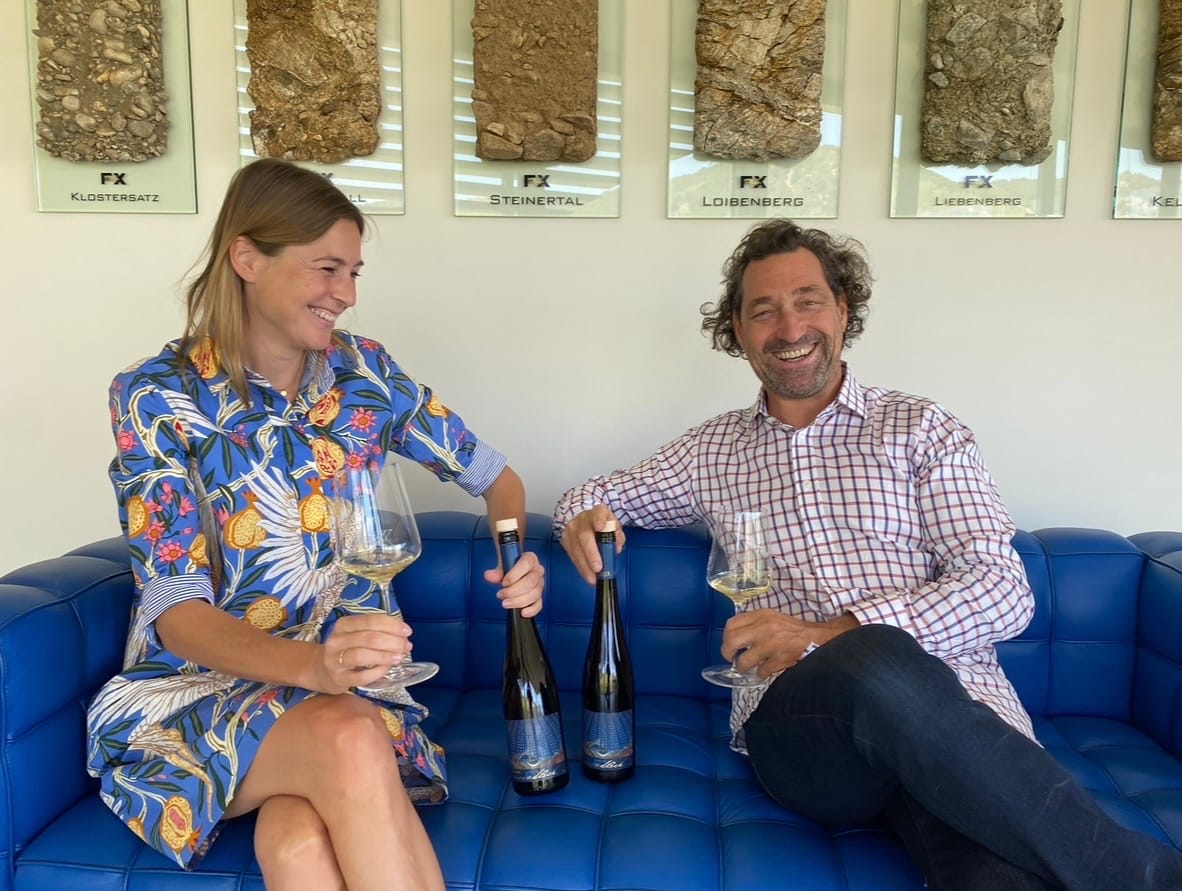
Since at least a decade Wachau dyanamism has been about moving away from richness and poweer - the traditional goals for leading winemakers in the region - and in the direction of freshness and subtlety. The wines of Franz Hirtzberger are often held up as the ultimate expression of Wachau traditionalism, but the truth is that during the last years Franz Jr. has done a lot of work to gently accentuate their elegance and delicacy. That finds full and sensational expression in the wines of the 2025 vintage. Lucas and Johanna Pichler of F.X. Pichler moved decisively in this direction from the 2021, and they are now the masters of this new style in its full-throttle form.
Although this wesbite is all about strong opinions that are well argued, this doesn't mean that we force our stylistic preferences upon you. Quite the opposite! We are open for all manner of styles, as I think the notes for the wines of Nikolaihof prove. We love and celebrate diversity, and the best of the Nikolaihof wines are unique in a way that some will consider "natural".
I could go on and on. And I will. Within a couple of weeks many more notes will be added to those below. The Wachau is an endlessly fascinating subject, and deserves all the atttention that is lavished on it because of the wealth of winemaker ambition and dedication there. In their contrasting ways, the leading winemakers of the region achieve a vinous beauty that reflects the beauty of the region. Each of them enables you to "see" it through their eyes.
FINAL NOTE: A fundamental question mark hangs over the future of the Wachau and it was Franz Hirtzberger Snr. and Emmerich KnollSnr.who made me aware of it earlier this year. The leading producers of the Wachau only cultivate a minority of the vineyards, meaning less than 20%, so what happens to the majority of them when the ownership passes to the next generation. Will they want to continue to cultivate them, and if not what happens to the optics and economics of the region?
WACHAU MASTERPIECES THAT MONEY CAN BUY
Franz Hirtzberger Wachau Grüner Veltliner Honivogel Smaragd 2025 - 14% / Breathtakingly beautiful even at this early stage in what will surely be a very long life. The tropical flower and papaya and candied citrus aromas are so fresh and refined. Wonderful mid-palate succulence without any impression of heaviness. The power is all under the surface, until you reach the finish where it slowly surfaces, cascading you with candied citrus and herbal flavours. 98 (SP)
Prager Wachau Grüner Veltliner Ried Zwerithaler Kammergut Smaragd 2025 - 13.5% / Hang your nose into the glass and let yourself dissolve in this poolof wild herb and vegetal beauty! Extremely young and a bit closed now. As it aerates the white peach aroma expands and expands. Very concentrated, yet almost weightless. Then you sink into a fjord of wet-stone minerality and become one with the universe. From vines planted in 1907! 99 (SP)
Gritsch Wachau Riesling Ried 1000-Eimerberg 2024 - 13.5% / This great dry Wachau Riesling has a remarkablesynthesis of stony minerality and vibrant stone fruit aromas. Concentrated and racy with a very long finish that’s at once powerful and silky. The best wine I ever had from this famous site! 96 (SP)
F.X. Pichler Wachau Riesling Dürnsteiner Ried Kellerberg 2025 - 12.5% / How can a dry Riesling with this moderate alcohol have such an extraordinary concentration as well as the finesse that I associate with the greatest wines from this grape? Incredible finesse and subtelty, in spite of the cornucopia of stone fruit aromas. Seemingly endless finish. Cask sample. 100? (SP)
Emmerich Knoll Wachau Riesling Dürnsteiner Ried Kellerberg Smaragd 2024 - 13% / Welcome to the Wet-Stone Zone where Riesling is all about racy minerality, and the fruit is the wallpaper all stands in stands in front of. Fantastic wild herb freshness that stops you dead in your tracks. 97 (SP)
Domäne Wachau Riesling Ried Achleiten Smaragd 2024 - 13% / A compelling expression of the great Achleiten site, this has stunning peach and Mirabelle plum aromas with wild herb complexity. At once crisp yet silky with a very long peach and Mandarin orange finish, that’s deftly underlined by a touch of fine tannin. Terrific power at the finish. 96 (SP)
Nikolaihof Niederösterreich Riesling Ried Steiner Hund 2019 - 12.5% / Very complex nose of fresh and dried herbs. Very focused on the elegant and stony palate. Great wet-stone intensity at the very expressive, long finish. 96 (SP)
118 wines tasted, 63 of which rather 95 points or higher