
WAGRAM ÖTW: Loess, Loess Land
By Stuart Pigott - last revision: 24.07.26
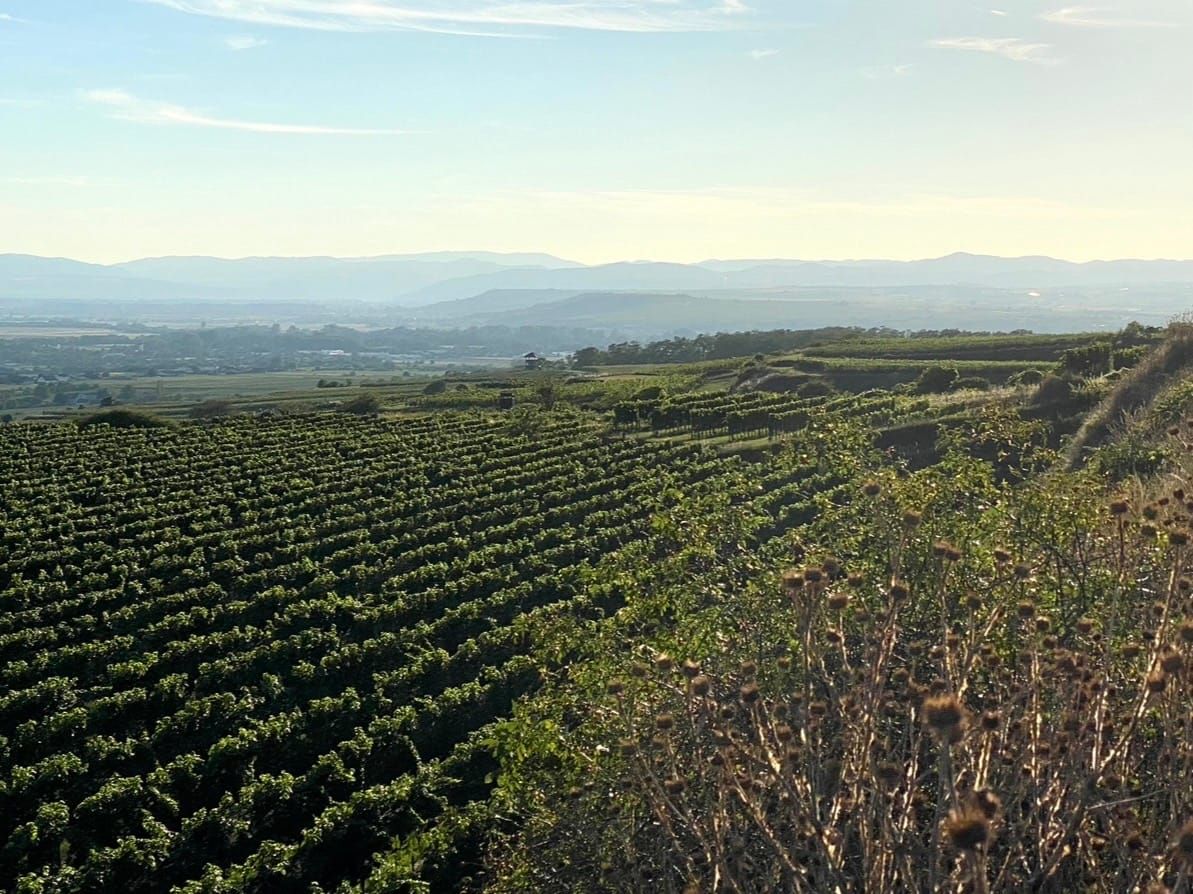
At first glance the Wagram is not a cool place and there’s a very simple reason for this: the predominance of loess soils. You see, loess is ochre yellow powdery material that was carried by the wind and deposited during the ice ages of the last rought 3 million years. It is found in layers ranging from a few centimeters thick and to hundreds of meters deep. On the surface that looks like ordinary soil, and not obviously „mineral“ like the rocky soils that the Austrian wine industry refers to as „Urgestein“, (literally translated ancient rock perhaps better translated as primary rock). A very large part of the world’s wheat production is grown on loess soils and, of course, there’s nothing sexy about that for the wine industry. In fact, traditionally French winemakers looked down their collective noses at any vineyard with a soil that would grow wheat. That’s both a very narrow view and scientifically incorrect, or as we like to say here, bullshit.
However, for a long time I wasn’t the only one in the German-speaking wine scene to regard loess as a second-class soil: the type of soil in which you can grow nice fruity wines, but seldom "great“ wines. The fact that a lot of wines grown on loess soils were nice and fruity, but not very exciting, reinforced the assumptions we were making. The things which the wine industry regards as going without saying often fall into the category of assumptions that don’t hold up when subject to scientific scrutiny. For example, the image of loess as a non-mineral soil is ridiculous, because loess is basically crushed rock, and the chalk (scientific name: calcium carbonate) content of loess can reach well over 20%. That’s not ideal for every grape variety, but it’s great for Grüner Veltliner as are the high water-retentiveness of loess and its richness in nutrients. For the Wagram region these are crucial factors given the dominance of Grüner Veltliner.
The next point is that many contemporary wines from the region taste very different to those of just 20 years ago. Yes, some producers like Leth continue with a fruit-forward style, but this is done with consistency and an excellent feeling for balance. We don’t judge which wine styles are cool or not, rather we are try report in a fair and even-handed way on all the wine styles produced in each region we cover. It’s up to you to decide which wine style(s) you prefer, or find cool. The wines from Fritsch and Ott are aromatically less showy, but have more tension, plus floral and herbal complexity. They’re light years removed form the fruit-driven, juicy old cliché of Wagram wines. This is a major stylistic innovation and has been noticed by many of those in the international wine scene looking for terroir wines. There’s a healthy demand for this new kind of Wagram wine,and if you're not yet aware of them, then I suggest you try these exciting additions to the great range of Austrian Grüner Veltliner .
NOTE: Two Ott wines from the Kamptal region are included here, so that they can be seen within the perspective of this producers other wines.
STANDOUT WINES
Ott Wagram Grüner Veltliner Ried Rosenberg 1ÖTW 2023 - 13% / If the Mirabelle plum has a soul, then it’s in this wine! And this is as elegant as Grüner Veltliner gets. This masters the of reaching a stunning level of concentration and originality without the wine blowing up to the size of a Zeppelin! Long finish with a seamless inegration of restrained creaminess, chalky minerality and spring-like freshness. 96 (SP)
Fritsch Wagram Riesling Ried Mordthal 1ÖTW 2023 - 12.5% / Summer is ending but the autumn rains are still on the other side of the horizon and suddenly this delicate beauty appears in your glass. What more do you want if subtelty iswhat you seek? Long, fundamentally crisp and refined finish in which minerality and stone fruit are beautifully intertwined. 96 (SP)
25 wines tasted, with only one below 92 points!
THE FULL TASTING NOTES