WEEDENBORN: Home to the Sauvignon Queen of Germany
The Wonnegau in Rheinhessen can do more than dry Riesling and Pinot Noir reds!
By Stuart Pigott - last revision: 18.10.26
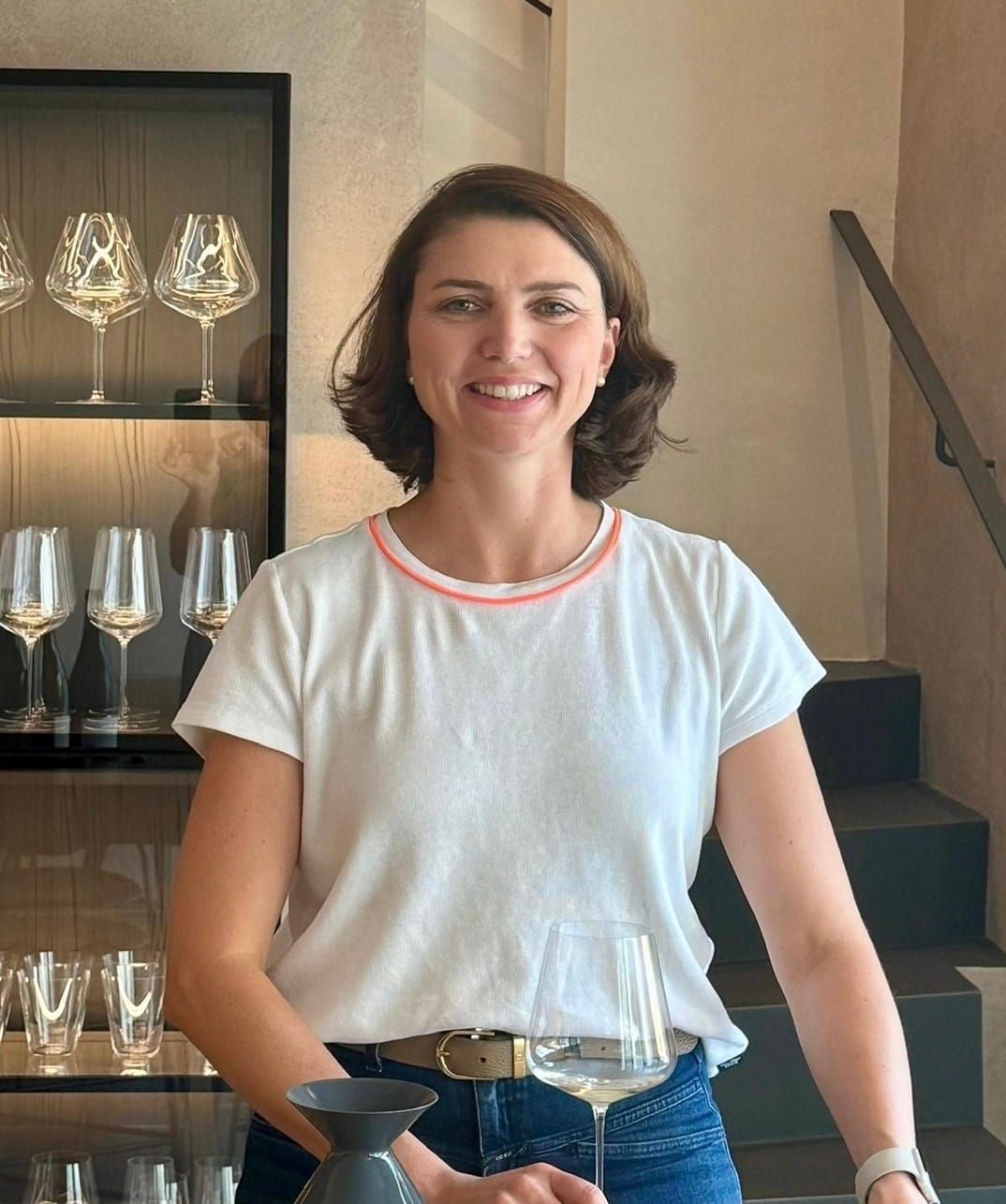
Back in the 1990s the legalization Chardonnay in Germany, followed some years later by that of Sauvignon Blanc was a welcome opening of the nation's wine industry to new possibilities, but it also resulted in some winemakers unsuccessfully trying to imitate the wines of these grapes' home regions, respectively Burgundy and the Loire. Recently, a lot has been written about how German Chardonnay has come of age, and the best wines are world class. In comparison, the somms and critics of Planet Wine have been a deafeningly silent on the subject of German Sauvignon Blanc. This is absurd given the fact there are now more than 2,000 hectares of Sauvignon planted in Germany and the best wines are both well balanced and distinctive. Those made by Gesine Roll at the Weedenborn winery in Monzernheim are far more than that!
So how come many readers haven’t yet heard of Gesine? Firstly, she is more commited to Sauvignon Blanc than any other producer in Rheinhessen, more than half of her 25 hectares of vineyards being planted with this grape. Secondly, Riesling is a minor speciality for her, a dramatic contrast to her most famous colleagues in the Wonnegau sub-region of Rheinhessen: Keller and Wittmann. Although she is a very determined and intelligent young woman with a healthy self-confidence, she doesn’t dive for the spotlight like some German winemakers do. Also, Gesine never had a dramatic breakthrough success that catapulted her into the limelight, instead her wines steadily become better with every vintage as she developed a style that’s entirely her own. However, if I think back to the first Sauvignons from Weedenborn I tasted almost 20 years ago and compare them with the current wines, then it's clear how her wines made a huge leap forward.
This time I took my e-bike with me on the train and the steady uphill ride from the Mettenheim railway station to Monzernheim and Weedenborn rubbed in how Gesine’s vineyards belong to high-altitude Rheinhessen every bit as much as the famous Heerkretz site of Siefersheim in the far West of the region does. I also struggled against the intensity of the wind; a climatic factor rarely considered. So, though Sauvignon Blanc is a relatively early-ripening grape variety, both altitude and wind pull the brakes on the ripening process. I think this already shows in the aromatic diversity of the entry-level Weedenborn Sauvignon Blanc, in contrast to the majority of modestly priced German Sauvignon where paprika and passion fruit dominate. I think that one-dimensionality has a lot to do with what I call the SB Recipe, a set of techniques in the press house that virtually guarantee these aromas. Combined this with little canopy management in the vineyard to cut costs and early picking to insure no Botrytis results in this style, in short: Cheap Cutlivation + Zero Risk Harvesting + SB Recipe winemaking = boring wine.
Gesine’s Sauvignon Blanc Terra Rossa Westhofen is light-years removed from those wines, yet remains excelllent value for money. It's from the Steingrube site of Westhofen and is made about 65% in Stockinger oak casks and 35% in stainless steel tanks, spending 9 months on the lees and 9 months in the bottle before release. Since 2019 it has been in Burgundy shaped bottles, before which it was filled in flutes. Since 2016 the top Weedenborn Sauvignon Blanc has been called Réserve, before which it was called Fumé. It comes from the highest section of the Morstein GG site at 265 meters where the limestone soil is very rocky. It’s fermented and matured entirely in oak casks, mostly 500 liters in size, spending 18 months on the full lees before bottling. „In the early years the wine was pretty Baroque, also due to the new oak,“ Gesine told me, „then I found the right cooper and the wines became sleeker and fresher.“ Her most expensive wine is the Grande Réserve, a rare cuvée of Sauvignon Blanc and Chardonnay (the other grape with which the Weedenborn winery shines), which has been made since 2017.
Vertical tastings of Sauvignon Blanc of any kind are also rare. The strength of the Weedenborn wines from the hot and dry 2020 and 2022 vintages is proof that this grape has a bright future in Rheinhessen and Germany, since this kind of vintage is beoming more common. 2026 was the most extreme year of this kind so far! However, the development of Gesine’s winemaking craftsmanship is most strikingly displayed by the two Sauvignon’s of the 2025 vintage that have so far reached the market, the moderate alcohol further accentuating the elegance. My conclusion? There is no conclusion in sight to the continuing development of this remarkable winemaker!
THE CURRENT RELEASES
Weedenborn Rheinhessen Sauvignon Blanc trocken 2025 - 12% / For an entry-level wine this is brimming with fruit and has excellent depth. I love the ripe citrus, gooseberry, melon and passion fruit aromas. Long, precisely contoured and well-structured finish. 80,000 bottles of this were produced. 92 (SP)
Weedenborn Rheinhessen Sauvignon Blanc Terra Rossa Westhofen trocken 2025 - 12% / The enveloping nose is a basket of yellow fruits and passion fruit with yellow capsicum, green asparagus and a touch of oyster shell. Great energy and brilliance are married to excellent substance on the sleek and focused palate. Stunning wet-stone minerality at the very long finish. 95 (SP)
NOTE: Only for paying subscribers the notes for all 22 wines tasted can be found below. The Sauvignon Blancs go back to the 2016 vintage and the ratings include two wines with 98.