Wine isn't the Problem. The Price Tag is!
Our First Guest Story by Guillaume Jourdan
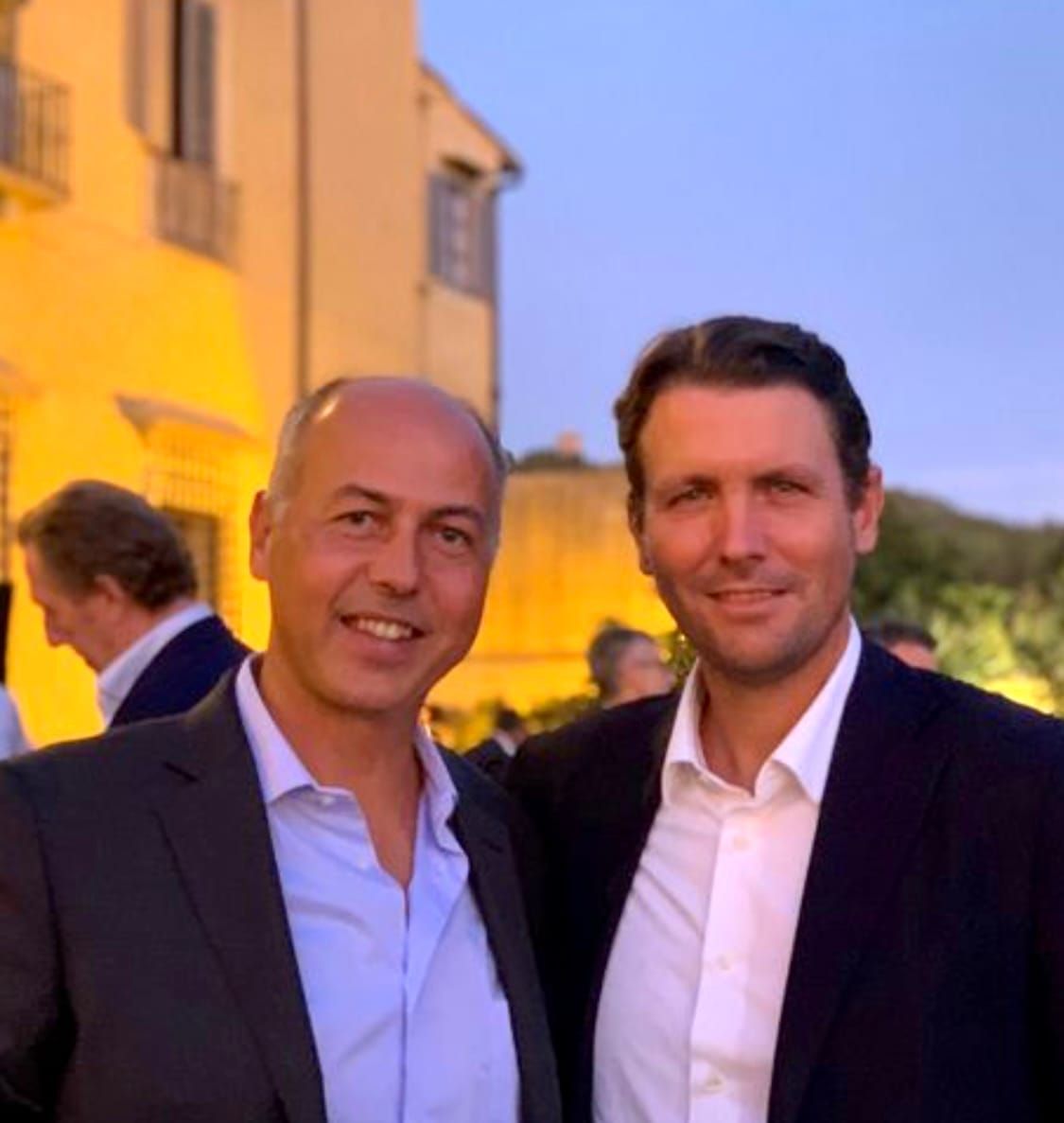
By Guillaume Jourdan of Vitabella
First published on vitabella.fr on the 2nd April, 2026.
Faites défiler vers la bas pour voir l'original en français.
This is one of the best and most original things I ever read about wine, so it's a pleasure to be able to make it the first guest story on StuartPigott.com. Guillaume Jourdan is the CEO of Vitabella, a strategic marketing agency focused on wine that's based in Paris.
A sentence I encountered this week in a Wine Searcher article stopped me in my tracks: “Who knows what restaurants will be charging by-the-glass in 10 years? It’s already way too much.” Ten words. A verdict. And a truth: wine is too expensive in the United States.
In reality, it is too expensive everywhere in the world. Whether in Paris, Rome, Istanbul, Dubai, New Delhi, Shanghai, Tokyo, New York, or countless other cities, my observation remains the same: the first step toward wine has, all too often, become insurmountable. I am not speaking of great wines. I am not speaking of mythical labels. No — I am speaking of the ordinary glass: the one at the restaurant where you go for a simple lunch, or the one shared around a table among friends.
For therein lies the heart of the matter: Wine may be a luxury — I have always maintained as much — but it must not be only a luxury.
What sets wine apart from the luxury handbag is the depth of its cultural rootedness. A Hermès can afford to do without ordinary customers. Wine cannot. Hermès may target the elite from the outset, building its allure upon scarcity and inaccessibility. It has no memory to betray, no popular history to disavow. Wine, by contrast, carries a history of democratisation. It is the drink of the family meal, of celebration, of the Italian trattoria, of the tapas bar in Madrid, of the Parisian zinc counter. In abandoning that space to join the march of sweeping premiumisation, the industry has sawn off the very branch upon which it had rested for centuries.
A product of exception that loses touch with the culture that gave it life ultimately loses its soul. And the consumer does not wait. He turns elsewhere — to a beer, a cocktail, an alcohol-free drink — bringing to that new choice the same curiosity and the same thirst for meaning he would have devoted to wine, had wine deigned to extend its hand to him. This is, in a sense, the cruel distillation of what this article tells us: not the death of wine, but its desertification from above.
Must we despair? No. And signals of hope do exist — precise, tangible ones. The spectacular rise of La Vieille Ferme across the world, and more particularly on the UK market in 2025, is one such signal: a wine priced at £8–9, offered in all three colours, carried by bold marketing built around the now-celebrated “Chicken wine” concept, and a genuine success — notably among younger generations — not because it is cheap, but because it is right. Right in price, right in tone, right in intention. In Asia, I have witnessed those same new generations, so often said to be indifferent to wine, crowding into tastings organised by critic James Suckling. They wish to learn. They wish to understand. They wish to be welcomed — beginning with an accessible entry point, rather than one already swathed in ultra-premiumisation.
Admittedly, taxes, customs duties, and the margins distributed along the supply chain lie beyond the domain’s control. But pricing strategy at the estate does not. And to build a sustainable market is to build a foundation — not merely a summit. Despite the difficulties we know today, I am convinced that things will change. I feel it. A new era of wine is taking shape — different from those that preceded it, carried by other codes, other narratives, other channels. But animated by the same desire, the same enthusiasm, the same fundamental humanity that wine has always known how to embody, when it consented to be, simply, within everyone’s reach. For there must be wine for all. At every price. That is what we had forgotten over the course of this past decade.
Le Problème, ce n’est pas le Vin. C’est son Prix.
L’original en français:
Une phrase, lue cette semaine dans un article de Wine Searcher, m’a interpellé : « Who knows what restaurants will be charging by-the-glass in 10 years? It’s already way too much. » Dix mots. Un verdict. Et une vérité: le vin est trop cher aux États-Unis.
En réalité, il est trop cher partout dans le monde. Que ce soit Paris, Rome, Istanbul, Dubaï, New Delhi, Shanghai, Tokyo, New York et bien d’autres, mon constat est le même: la première marche pour accéder au vin est devenue trés souvent infranchissable. Je ne parle pas des grands vins. Je ne parle pas des étiquettes mythiques. Non, je parle du verre ordinaire, celui du restaurant où vous irez déjeuner simplement ou celui de la table partagée entre amis.
Car voilà le nœud du problème : le vin peut être un luxe, je l’ai toujours dit, mais il ne doit pas être qu’un luxe.
Ce qui distingue le vin du sac à main de luxe, c’est la profondeur de son enracinement culturel. Un Hermès peut se passer de clients ordinaires. Le vin, lui, non. Un Hermès peut cibler d’emblée l’élite, construire son désir sur la rareté, l’inaccessibilité. Il n’a pas de mémoire à trahir, pas d’histoire populaire à renier. Le vin, lui, a une histoire de démocratisation. Il est la boisson du repas de famille, de la célébration, de la cantine italienne, du bar à tapas à Madrid et du zinc parisien. En quittant cet espace pour rejoindre la premiumisation généralisée, la filière a scié la branche sur laquelle elle était assise depuis des siècles.
Un produit d’exception qui perd le contact avec la culture qui l’a engendré finit par perdre son âme. Et le consommateur, lui, n’attend pas. Il se tourne vers autre chose — une bière, un cocktail, une boisson sans alcool — avec la même curiosité et la même soif de sens qu’il aurait mis au service du vin, si le vin avait daigné lui tendre la main. C’est, en quelque sorte, la synthèse cruelle de ce que nous dit cet article : non pas la mort du vin, mais sa désertification par le haut.
Faut-il pour autant désespérer ? Non. Et les signaux d’espoir existent, précis, tangibles. La progression spectaculaire du vin ‘La Vieille Ferme’ à travers le monde et plus particulièrement sur le marché UK en 2025 est de ceux-là : un vin à £8–9, proposé dans les trois couleurs, porté par un marketing audacieux autour du fameux « Chicken wine », et qui est un succés — notamment auprès des jeunes générations — non pas parce qu’il est bon marché, mais parce qu’il est juste. Juste de prix, juste de ton, juste d’intention. En Asie, j’ai vu ces mêmes nouvelles générations que l’on dit désintéressées du vin se presser aux dégustations organisées par le critique James Suckling. Ils veulent apprendre. Ils veulent comprendre. Ils veulent être accueillis. En commençant par un entrée de gamme abordable et non pas ultra-premiumisé.
Certes, les taxes, les droits de douane, les marges distribuées tout au long de la chaîne ne sont pas du ressort du domaine. Mais la stratégie de tarification l’est. Et construire un marché durable, c’est construire une base. Pas seulement un sommet. Malgré les difficultés que l’on connait aujourd’hui, je suis convaincu que les choses vont changer. Je le sens. Une nouvelle époque du vin se prépare — différente des précédentes, portée par d’autres codes, d’autres récits, d’autres canaux. Mais avec la même envie, le même engouement, la même humanité fondamentale que le vin a toujours su incarner, quand il acceptait d’être, simplement, à la portée de tous. Car il en faut pour tous. A tous les prix. C’est ce que nous avions oublié durant cette dernière décennie.